

I’m Darrin Mish. Tampa tax attorney, 32 years in, more than $100 million in IRS debt resolved. What follows isn’t theory – it’s what I’ve actually watched work.
When you're facing overwhelming tax debt, the IRS collection process can feel like a relentless machine that won't stop until it gets every penny. But here's something you might not know: you have options, and the right legal representation can make all the difference between financial devastation and a manageable resolution. A tax settlement lawyer specializes in negotiating with the IRS on your behalf, exploring settlement options that could significantly reduce what you owe or structure payments in a way that doesn't crush your finances. Whether you're dealing with back taxes from years ago, penalties that have spiraled out of control, or wage garnishments that are making it impossible to pay your bills, understanding how a tax settlement lawyer works could be your first step toward financial freedom.
What Does a Tax Settlement Lawyer Actually Do?
You might be wondering what sets a tax settlement lawyer apart from a regular accountant or a tax preparer. The difference is substantial.
A tax settlement lawyer brings legal expertise to the table that goes beyond number crunching. They understand the Internal Revenue Code, IRS procedures, and the legal protections available to taxpayers. More importantly, they have attorney-client privilege, which means your conversations are protected in ways they wouldn't be with other tax professionals.
Key Services Provided
When you hire a tax settlement lawyer, you're getting someone who can:
- Negotiate directly with IRS agents on your behalf, removing the stress of those intimidating phone calls
- Evaluate your eligibility for various settlement programs like Offer in Compromise or Currently Not Collectible status
- Represent you in appeals if the IRS denies your settlement request
- Stop collection actions such as wage garnishments, bank levies, and tax liens
- Prepare and file necessary paperwork with precision that meets IRS requirements
The truth is, the IRS deals with experienced tax attorneys differently than they deal with individual taxpayers. They know that a lawyer understands the rules and won't accept unfair treatment. This knowledge alone often leads to better negotiation outcomes.

Common Tax Settlement Options Your Lawyer Will Explore
Not all tax settlements are created equal, and your specific situation will determine which path makes the most sense. Let's break down the most common options.
Offer in Compromise (OIC)
This is the holy grail of tax settlements, but it's harder to qualify for than most people think. An Offer in Compromise allows you to settle your tax debt for less than the full amount you owe. The IRS accepts these offers when they believe it's the most they can reasonably collect from you.
According to the IRS manual on attorney representation, lawyers can help present your financial situation in the best possible light while remaining completely honest and compliant with IRS requirements.
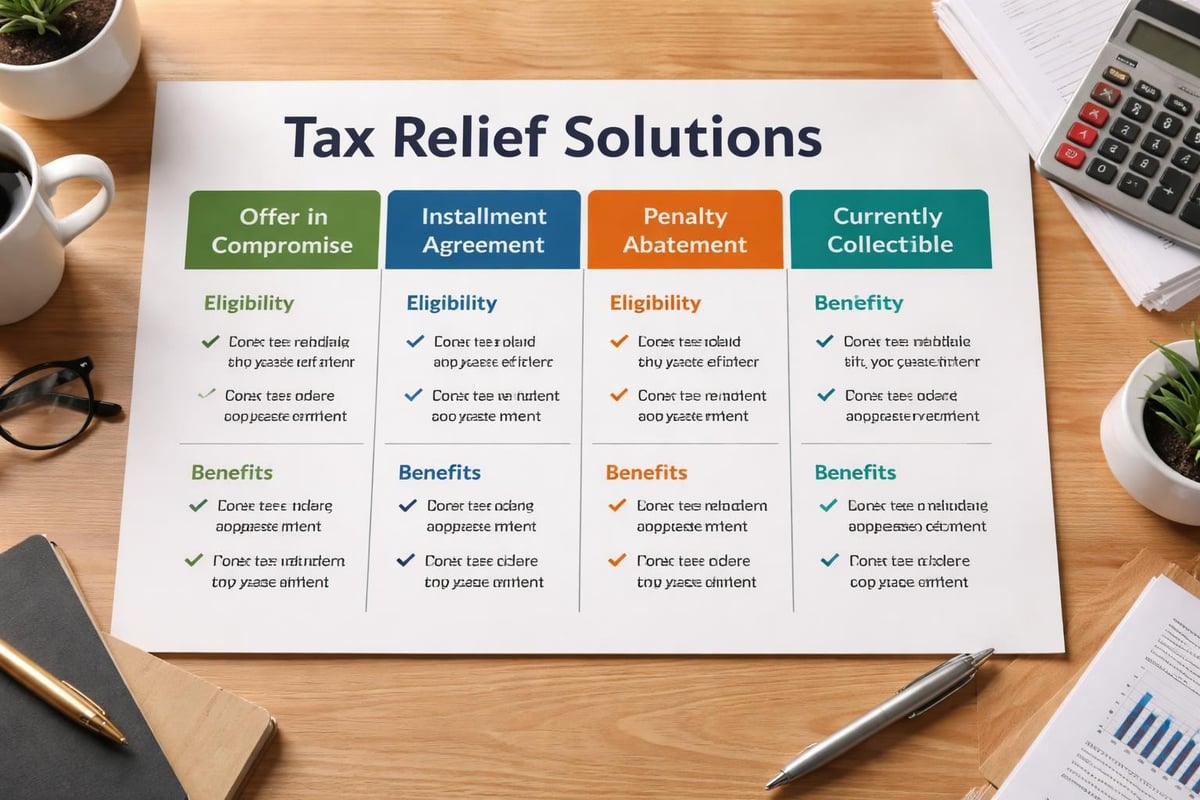
| Settlement Type | Who Qualifies | Typical Reduction | Timeline |
|---|---|---|---|
| Offer in Compromise | Genuine financial hardship | 10-90% of debt | 6-12 months |
| Installment Agreement | Ability to pay over time | No reduction, but manageable payments | 1-3 months |
| Currently Not Collectible | Temporary severe hardship | Temporary pause | Immediate to 1 month |
| Penalty Abatement | First-time penalty or reasonable cause | Penalties only | 1-3 months |
Installment Agreements
If you can't settle for less but need more time to pay, an installment agreement might be your best bet. Your tax settlement lawyer can negotiate terms that work with your budget rather than the IRS's aggressive collection timeline.
There are several types of installment agreements:
- Guaranteed Installment Agreement: For debts under $10,000, the IRS must approve if you meet certain conditions
- Streamlined Installment Agreement: For debts up to $100,000, with simplified approval process
- Partial Payment Installment Agreement: Monthly payments that won't pay off the full debt before the collection statute expires
The strategy here isn't just getting an agreement. It's getting one that you can actually maintain without defaulting.
Currently Not Collectible Status
Sometimes the best settlement is no payment at all, at least temporarily. If your financial situation is dire, your tax settlement lawyer can request that the IRS classify your account as Currently Not Collectible. This stops collection actions while you get back on your feet.
This status requires proving that paying the IRS would prevent you from meeting basic living expenses. Your lawyer will need to present detailed financial documentation showing your income, necessary expenses, and assets.
When Should You Hire a Tax Settlement Lawyer?
Timing matters. You don't necessarily need a lawyer for simple tax questions, but certain situations demand professional legal help.
Red Flag Situations
You should seriously consider hiring a tax settlement lawyer if:
- The IRS has filed a tax lien against your property
- Your wages are being garnished or the IRS has threatened garnishment
- You owe more than $10,000 in back taxes
- The IRS has levied your bank account or other assets
- You're facing criminal tax investigation or allegations of fraud
- Previous settlement attempts failed when you tried handling it yourself
- You have complex financial situations like business ownership or international assets
For those dealing with persistent tax problems, waiting often makes things worse. Interest and penalties continue accumulating at rates that can quickly double your original debt.
The Cost-Benefit Analysis
I know what you're thinking: "Can I afford a lawyer when I already can't afford my tax debt?" It's a fair question.
Consider this: the average tax settlement lawyer might charge between $2,500 and $10,000 depending on your case's complexity. But they might save you tens of thousands in reduced debt, eliminated penalties, or prevented collection actions. The math often works strongly in your favor.
Additionally, if you're concerned about tax settlement scams, hiring a reputable lawyer protects you from predatory companies that promise unrealistic results.
How the Tax Settlement Process Actually Works
Understanding the process helps you set realistic expectations and prepare properly. Here's what typically happens when you work with a tax settlement lawyer.
Initial Consultation and Case Assessment
Most reputable tax attorneys, including those specializing in federal tax law, offer free initial consultations. During this meeting, your lawyer will:
- Review your tax transcripts to understand what you owe
- Analyze your financial situation including income, assets, and expenses
- Identify which settlement options you might qualify for
- Explain the realistic outcomes you can expect
- Discuss their fees and payment arrangements
Be completely honest during this consultation. Your lawyer can't help you if they don't have the full picture, and remember, attorney-client privilege protects your disclosures.
Investigation and Documentation
Once you've hired your lawyer, they'll conduct a thorough investigation. This involves:
- Obtaining power of attorney to represent you before the IRS
- Requesting complete tax transcripts for all years in question
- Gathering financial documentation including bank statements, pay stubs, and asset valuations
- Identifying any errors in IRS calculations or assessments
- Researching applicable tax laws and precedents that support your case
This phase is critical. Rushing through documentation is one of the main reasons settlement requests get denied.
Negotiation and Settlement
With everything prepared, your tax settlement lawyer begins negotiations. This is where their expertise really shines. They know how to present your case persuasively while following IRS procedures exactly.
The negotiation might involve:
- Submitting formal settlement offers with supporting documentation
- Responding to IRS requests for additional information
- Appealing unfavorable decisions to higher IRS authorities
- Adjusting settlement strategies based on IRS feedback
- Negotiating specific terms like payment schedules and interest calculations
Resources like professional tax settlement strategies can help attorneys maximize favorable outcomes for their clients.
What Makes a Good Tax Settlement Lawyer?
Not all lawyers are created equal, and you need someone who specializes in this specific area. Here's what to look for.
Essential Qualifications
Your ideal tax settlement lawyer should have:
- Specific tax law credentials: Look for attorneys who focus primarily or exclusively on tax issues
- Years of experience: At least 5-10 years dealing with IRS settlements
- Successful track record: Ask about their success rates with different settlement types
- Good standing: Check their bar association status and any disciplinary history
- Clear communication style: They should explain complex issues in ways you understand
Warning Signs to Avoid
Be cautious of lawyers or firms that:
- Guarantee specific outcomes before reviewing your case
- Pressure you to sign up immediately without proper consultation
- Require full payment upfront before doing any work
- Make unrealistic promises about settling "pennies on the dollar"
- Have numerous negative reviews or complaints with the Better Business Bureau
The warning signs of tax settlement scams apply to lawyers too, though reputable attorneys are generally more trustworthy than settlement mills.
The Real Cost of Not Getting Professional Help
Trying to handle complex tax settlements on your own might seem like the frugal choice, but it often backfires spectacularly.
What You Risk by Going Solo
- Missed deadlines that eliminate settlement options
- Incorrectly prepared offers that get automatically rejected
- Saying the wrong thing to IRS agents that hurts your case
- Not knowing about options you actually qualify for
- Accepting unfavorable terms because you don't know better
- Increased collection actions while you're figuring things out
Professional firms that specialize in negotiating tax settlements understand the nuances that make the difference between success and failure.
Time and Stress Factors
Beyond the financial risks, there's the personal toll. Dealing with the IRS is stressful, time-consuming, and emotionally draining. Many people describe it as a second full-time job they didn't sign up for.
When you hire a tax settlement lawyer, you're not just buying expertise. You're buying back your time and peace of mind.

Special Situations That Require Specialized Knowledge
Some tax situations are particularly complex and absolutely require a tax settlement lawyer's expertise.
Business Tax Debt
If you own a business and have accumulated payroll tax debt, you're in especially dangerous territory. The IRS treats unpaid payroll taxes seriously because you're holding employee withholdings in trust for the government.
The Trust Fund Recovery Penalty can make you personally liable for your business's payroll tax debt, even if your business operates as a corporation or LLC. A tax settlement lawyer can help you:
- Determine who the IRS can hold personally responsible
- Challenge Trust Fund Recovery Penalty assessments
- Negotiate settlements that protect your personal assets
- Structure payment plans that keep your business operating
International Tax Issues
Have foreign bank accounts, offshore assets, or income from international sources? These situations involve additional reporting requirements and potential penalties that can dwarf your underlying tax debt.
A tax settlement lawyer experienced in international tax compliance can help you come clean through programs like the Streamlined Filing Compliance Procedures while minimizing penalties.
Criminal Tax Investigations
If the IRS Criminal Investigation Division is involved, you need a lawyer immediately. Not next week, not after you "figure things out." Immediately.
The difference between a civil tax dispute and criminal tax prosecution is enormous. One results in financial penalties; the other can result in federal prison time. Don't navigate these waters alone.
How Tax Settlement Law Continues to Evolve
Tax law isn't static, and the settlement landscape changes regularly based on new regulations, IRS policy shifts, and court decisions.
Recent Developments in 2026
This year has brought several changes that affect tax settlements:
- Updated financial standards: The IRS periodically updates allowable living expense standards used in settlement calculations
- Fresh Start program expansions: Certain provisions have been modified to help more taxpayers qualify
- Increased scrutiny: The IRS has received additional funding for enforcement, making professional representation even more valuable
Your tax settlement lawyer stays current on these changes so you don't have to. They understand how new policies might create opportunities or challenges for your specific situation.
The Impact of Technology
The IRS has been modernizing its systems, which affects how settlements are processed. Electronic filing of settlement requests, digital communication channels, and improved data matching all change the dynamics of negotiation.
A tech-savvy tax settlement lawyer understands how to use these systems effectively while avoiding the pitfalls that come with increased IRS automation and data analytics.
Making the Decision: DIY or Professional Help?
Let's be practical. Not everyone needs to hire a tax settlement lawyer. But if you're reading this article because you're facing serious tax debt, you probably do.
The DIY Threshold
You might successfully handle your own tax settlement if:
- Your debt is under $5,000
- You have straightforward finances (W-2 employment, no business ownership)
- You clearly qualify for a simple installment agreement
- No liens, levies, or garnishments are in place
- You're comfortable navigating bureaucracy and paperwork
For everyone else, especially those dealing with multiple tax years, complex financial situations, or aggressive IRS collection actions, professional help isn't a luxury. It's a necessity.
Questions to Ask Yourself
Before deciding, honestly answer these questions:
- Do I fully understand my rights as a taxpayer?
- Can I identify which settlement options I actually qualify for?
- Do I know how to calculate reasonable collection potential?
- Am I prepared to spend months navigating IRS procedures?
- Can I afford to make a mistake that makes my situation worse?
If you answered "no" to most of these, consulting with a tax settlement lawyer is the smart move. Many offer free consultations where you can get professional opinions before committing to anything.
Navigating tax debt doesn't have to be a solo journey that keeps you up at night wondering if you'll ever get ahead. Whether you're facing wage garnishments, tax liens, or just the overwhelming weight of back taxes you can't pay, a qualified tax settlement lawyer can evaluate your situation and fight for the best possible resolution. The Law Offices of Darrin T. Mish, P.A. has spent over 32 years helping taxpayers across the globe resolve their IRS problems through personalized legal solutions, and they offer free consultations to help you understand your options and take that critical first step toward financial relief.