

I’m Darrin Mish. Tampa tax attorney, 32 years in, more than $100 million in IRS debt resolved. What follows isn’t theory – it’s what I’ve actually watched work.
When you receive that dreaded envelope from the IRS, your heart probably sinks. You're not alone in feeling overwhelmed by tax problems, and you shouldn't have to navigate these complex issues by yourself. A tax attorney IRS specialist can be your strongest advocate when dealing with everything from audits to wage garnishments, offering legal expertise that goes far beyond what a regular accountant can provide. With over three decades of experience helping taxpayers resolve their IRS challenges, we've seen firsthand how the right legal representation can transform what feels like an impossible situation into a manageable resolution.
Understanding What a Tax Attorney IRS Specialist Does
Ever wondered what exactly separates a tax attorney from other tax professionals? The distinction matters more than you might think, especially when you're facing serious IRS issues.
A tax attorney IRS specialist is a licensed lawyer who has completed law school and passed the bar exam, with additional specialization in tax law. Unlike CPAs or enrolled agents, tax attorneys can provide attorney-client privilege, represent you in tax court, and handle criminal tax matters. They're uniquely qualified to negotiate with the IRS on your behalf and develop comprehensive legal strategies for complex tax situations.
The Legal Authority Behind Tax Representation
Under IRS regulations, specifically outlined in IRS Publication 947, several types of professionals can represent you before the IRS. However, understanding practice before the IRS and power of attorney requirements reveals critical differences in what each professional can do.
Who Can Represent You:
- Tax attorneys (unlimited representation rights)
- Certified Public Accountants (CPAs)
- IRS Enrolled Agents
- Annual Filing Season Program participants (limited representation)
Tax attorneys stand out because they can handle all aspects of your case, including litigation in United States Tax Court. When you grant power of attorney using IRS Form 2848, your tax attorney IRS specialist receives authorization to handle virtually all interactions with the agency on your behalf.

When You Should Consider Hiring a Tax Attorney IRS Expert
Not every tax situation requires an attorney. Filing a simple tax return? You probably don't need one. But certain red flags signal it's time to bring in legal expertise.
Critical Situations Requiring Legal Representation
Have you received an audit notice? Determining whether you need a tax attorney for an IRS audit depends on the complexity of your situation. Here's when you definitely should consider professional help:
- Criminal Tax Investigations: If the IRS Criminal Investigation Division contacts you, hire an attorney immediately before speaking to anyone.
- Substantial Tax Debt: Owing more than $10,000 often requires negotiation strategies only attorneys can properly execute.
- Business Tax Issues: Payroll tax problems, particularly payroll tax complications, carry personal liability risks for business owners.
- Wage Garnishment Actions: When the IRS starts seizing your wages, quick legal action can protect your income from garnishment.
- Tax Liens on Property: A federal tax lien damages your credit and complicates property transactions.
The decision between doing your own taxes or hiring a professional becomes even more crucial when you're already facing IRS enforcement actions. Choosing the right professional makes all the difference.
Understanding the Scope of IRS Problems
| Issue Type | Severity Level | Attorney Recommended? |
|---|---|---|
| Simple audit (W-2 verification) | Low | Maybe |
| Complex audit (business expenses) | Medium | Yes |
| Offer in Compromise negotiation | High | Strongly Yes |
| Criminal tax fraud investigation | Critical | Absolutely Essential |
| Innocent spouse relief claim | Medium-High | Yes |
Tax attorneys can help with various IRS matters, from routine correspondence to complex litigation. The key is recognizing when your situation crosses the line from simple to serious.
How Tax Attorneys Negotiate With the IRS
You might be wondering whether a tax attorney can actually negotiate with the IRS on your behalf. The answer is a resounding yes, and they do it more effectively than most taxpayers could on their own.
Available Resolution Options
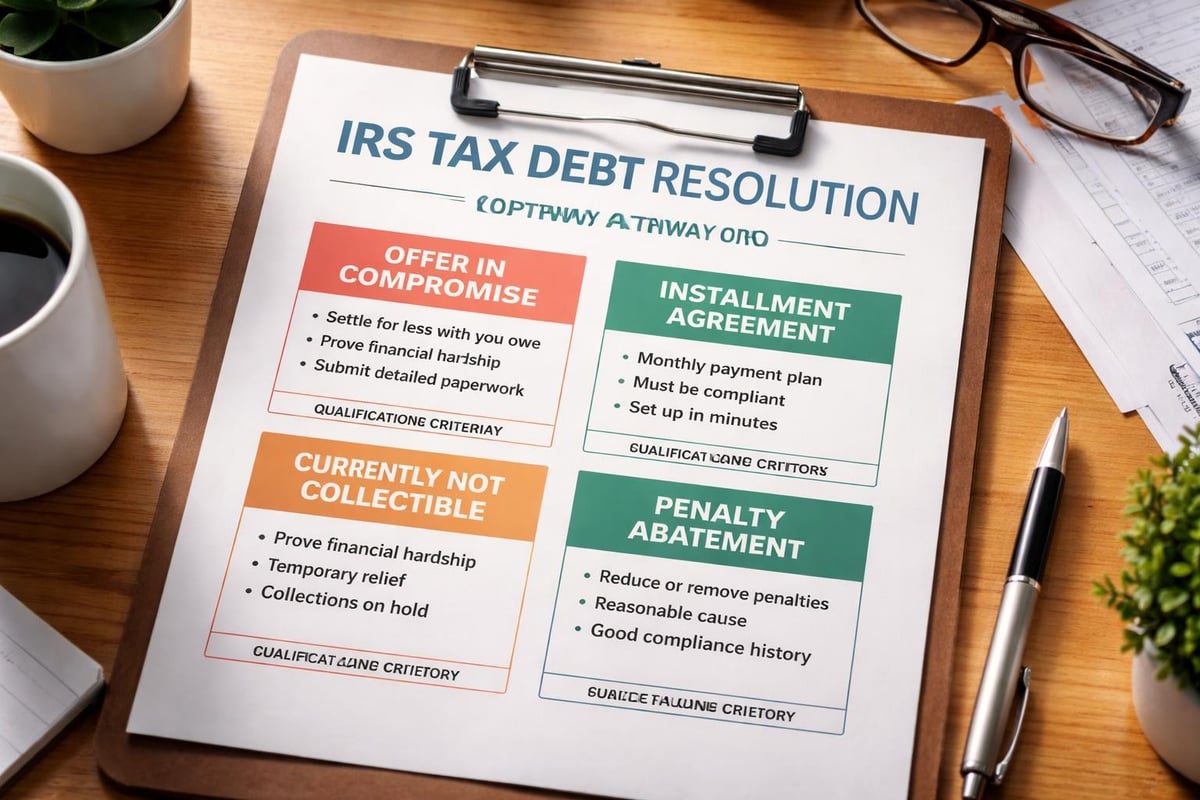
When you owe back taxes, the IRS offers several resolution programs. A skilled tax attorney IRS specialist knows which option fits your unique circumstances and can advocate for the best possible outcome.
Common IRS Resolution Strategies:
- Offer in Compromise (OIC): Settling your tax debt for less than the full amount owed
- Installment Agreements: Setting up monthly payment plans you can actually afford
- Currently Not Collectible Status: Temporarily halting IRS collection when you can't pay
- Penalty Abatement: Removing or reducing penalties for reasonable cause
- Innocent Spouse Relief: Protecting you from your spouse's tax mistakes
Each strategy requires different documentation, financial disclosures, and legal arguments. For instance, achieving Currently Not Collectible status involves proving you lack the means to pay basic living expenses while covering your tax debt.
The Negotiation Process Explained
When a tax attorney IRS professional represents you, they follow a structured approach to resolution. First, they'll analyze your complete financial picture and review all IRS correspondence. Then they'll determine which resolution path offers the best outcome based on your income, assets, and expenses.
During negotiations, your attorney presents compelling legal and financial arguments to IRS revenue officers or appeals officers. They understand the Internal Revenue Manual guidelines that IRS employees must follow, giving them leverage in negotiations. This expertise often results in significantly better outcomes than taxpayers achieve representing themselves.
Navigating IRS Audits With Legal Representation
Did you know that the IRS audits less than 1% of individual tax returns, yet those selected face intense scrutiny? If you're among the unlucky few, having a tax attorney IRS specialist can make the difference between a favorable outcome and a devastating tax bill.
Types of IRS Audits
The IRS conducts three main types of audits, each with different complexity levels:
- Correspondence Audits: Conducted entirely by mail, these typically address specific line items on your return
- Office Audits: You meet with an IRS examiner at a local IRS office to discuss your return
- Field Audits: An IRS revenue agent visits your home or business to conduct a comprehensive examination
Understanding IRS audits helps you prepare appropriately. Field audits involving businesses or substantial income require the most extensive preparation and typically benefit most from attorney representation.
Your Rights During an Audit
Under the Taxpayer Bill of Rights, you have specific protections during IRS examinations. You have the right to professional representation, meaning the IRS must deal with your tax attorney instead of you. You also have the right to appeal IRS decisions within the agency and in court.
Your attorney can object to improper IRS questions, negotiate the scope of the audit, and ensure the examination doesn't expand beyond the original audit notice. They'll gather supporting documentation, prepare explanations for questioned items, and present your case in the most favorable legal light.
Dealing With IRS Collection Actions
When you ignore IRS notices, the agency eventually moves from sending letters to taking your money directly. These collection actions escalate quickly and can devastate your finances if you don't respond appropriately.
Understanding IRS Levies and Liens
The IRS has extraordinary collection powers under the Internal Revenue Code. They can seize bank accounts, garnish wages, and even take your property without going to court. A federal tax levy is an actual seizure of your property to satisfy tax debt, while a tax lien is a legal claim against your property that protects the government's interest.
IRS Collection Timeline:
| Days After Assessment | IRS Action |
|---|---|
| 0-30 days | Initial balance due notice |
| 30-60 days | First reminder notice |
| 60-90 days | Final notice before levy |
| 90+ days | Levy rights granted |
| 120+ days | Active collection enforcement |
Once the IRS issues a Final Notice of Intent to Levy, you have only 30 days to respond before they can legally seize your assets. This is when having a tax attorney IRS expert becomes crucial.
Stopping IRS Collection Actions
A skilled tax attorney can halt IRS collection activities through several mechanisms. Filing for an installment agreement triggers automatic collection holds in many cases. Submitting an Offer in Compromise also suspends most collection while the IRS reviews your proposal.
Your attorney might request a Collection Due Process hearing, which stops levy actions and gives you an opportunity to present alternatives to collection. In extreme cases, they might help you understand whether certain accounts cannot be garnished, protecting your essential resources.
The Cost of Hiring a Tax Attorney IRS Specialist
Let's talk about money, because you're probably wondering whether you can afford a tax attorney when you already owe the IRS. The truth is, professional representation often saves you far more than it costs.
Fee Structures and What to Expect
IRS attorney fees, costs, recovery, and deductibility vary based on your case complexity and the attorney's experience level. Most tax attorneys charge in one of three ways:
- Hourly rates: Ranging from $200 to $500+ per hour depending on complexity and location
- Flat fees: Fixed prices for specific services like Offer in Compromise preparation ($3,000-$7,000)
- Retainer arrangements: Upfront payments that the attorney bills against as work is completed
For taxpayers in Tampa and throughout Florida, rates typically fall in the middle range nationally. The investment often pays for itself through reduced tax liability, eliminated penalties, or favorable payment terms.
When Attorney Fees Are Tax Deductible
Under current tax law, some tax attorney fees may be deductible as miscellaneous itemized deductions, though the Tax Cuts and Jobs Act of 2017 eliminated many of these deductions for individual taxpayers through 2025. However, if your tax attorney work relates to business income or the production of income, those fees might still be deductible.
The key is discussing fee structures upfront during your initial consultation. Many firms, including those with decades of experience in tax law, offer free consultations to evaluate your case and provide transparent cost estimates.

Finding the Right Tax Attorney for Your IRS Problem
Not all tax attorneys are created equal. How do you find someone who'll actually solve your problem rather than just take your money?
Essential Qualifications to Look For
When searching for a qualified tax preparer or attorney, verify their credentials thoroughly. Your tax attorney should be licensed to practice law in your state and in good standing with the state bar association. They should also have specific experience with IRS matters, not just general legal practice.
Key Credentials:
- Juris Doctor (J.D.) degree from an accredited law school
- State bar license in active status
- LLM in Taxation (preferred but not required)
- Years of specific IRS representation experience
- Membership in tax law professional organizations
Look for attorneys who focus their practice on tax law rather than handling it occasionally alongside other legal matters. A generalist lawyer might handle a simple audit, but complex negotiations require specialized expertise.
Questions to Ask During Your Consultation
Your initial consultation reveals whether an attorney truly understands your situation. Ask about their experience with cases similar to yours. How many Offers in Compromise have they successfully negotiated? What's their success rate with penalty abatement requests?
Don't be shy about asking for references or reviews from past clients. A reputable tax attorney IRS specialist should have testimonials demonstrating their track record. Also inquire about their communication style. Will you work directly with the attorney or primarily with paralegals and staff?
Current IRS Challenges Affecting Taxpayers in 2026
The IRS landscape has shifted dramatically in recent years, creating new challenges for taxpayers and opportunities for those with skilled representation. Understanding these changes helps you appreciate why professional help matters more than ever.
IRS Staffing and Service Issues
The IRS faces significant operational challenges in 2026. Workforce reductions and new tax law implementations have created backlogs in processing and responding to taxpayer inquiries. While some improvements in taxpayer services have occurred, many taxpayers still experience delays.
These staffing challenges mean that reaching the IRS by phone has become increasingly difficult, with wait times sometimes exceeding an hour. When you have a tax attorney representing you, they have direct lines to IRS divisions and know how to navigate the bureaucracy efficiently.
Strategic Advantages in the Current Environment
IRS staffing constraints actually create opportunities for taxpayers with representation. Revenue officers handling large caseloads are often more willing to negotiate reasonable settlements quickly. An experienced tax attorney IRS professional understands how to leverage these circumstances in your favor.
They also stay current on temporary IRS relief programs and policy changes that might benefit your situation. For example, penalty abatement requests often succeed during periods when the IRS focuses on clearing backlogs rather than maximizing revenue.
Special Tax Situations Requiring Attorney Expertise
Some tax problems are more complex than others, requiring specialized knowledge that only an experienced tax attorney can provide.
Business and Employment Tax Issues
If you own a business, payroll tax problems carry severe consequences. The IRS aggressively pursues unpaid employment taxes because these involve funds withheld from employees. Under the Trust Fund Recovery Penalty provisions of the Internal Revenue Code, the IRS can hold business owners and responsible parties personally liable for unpaid payroll taxes.
A tax attorney IRS specialist can help you navigate these dangerous waters by negotiating payment plans, challenging responsible party determinations, or settling with the IRS on favorable terms.
Cryptocurrency and Modern Tax Challenges
The rise of cryptocurrency has created new tax compliance challenges. The IRS treats cryptocurrency as property, not currency, meaning every transaction potentially creates taxable events. Many taxpayers didn't realize they owed taxes on crypto transactions until receiving IRS notices.
If you're facing cryptocurrency tax problems, you need an attorney who understands both tax law and digital assets. They can help you reconstruct transaction histories, calculate accurate tax liability, and negotiate with the IRS regarding underpayment penalties.
Innocent Spouse Claims
Sometimes you end up liable for your spouse's or ex-spouse's tax mistakes. The IRS offers innocent spouse relief under Internal Revenue Code Section 6015, but obtaining it requires proving specific legal elements.
These claims involve complex factual and legal arguments about your knowledge, benefit, and equity considerations. A tax attorney can gather supporting evidence, present your case effectively, and appeal if the IRS initially denies your claim.
The Appeals Process and Tax Court Litigation
What happens when negotiations with the IRS fail? That's when having a tax attorney IRS specialist becomes absolutely essential.
Administrative Appeals
Before going to court, you can appeal IRS decisions within the agency's Office of Appeals. This independent office reviews disputes and often provides more reasonable resolutions than IRS examination divisions. Your attorney can present legal arguments, precedent cases, and hazards of litigation that appeals officers consider when evaluating settlements.
The appeals process offers opportunities to achieve relief from IRS demands through compromise and settlement. Appeals officers have broader settlement authority than revenue agents and consider factors beyond just the tax law, including litigation risks and administrative burden.
United States Tax Court
If you can't resolve your dispute administratively, Tax Court litigation might be necessary. Only attorneys (and some CPAs and enrolled agents in limited situations) can represent you in Tax Court. This is where the legal expertise of a tax attorney IRS professional truly shines.
Tax Court handles disputes over tax deficiencies before you pay them, while other federal courts require you to pay first and sue for refunds. Your attorney can file a petition challenging the IRS's determination, engage in discovery, negotiate settlements even during litigation, or try your case before a Tax Court judge.
Preventive Tax Planning to Avoid Future IRS Problems
The best time to hire a tax attorney isn't when you're in crisis, but before problems develop. Strategic tax planning prevents many IRS issues before they start.
Proactive Strategies for Business Owners
If you own a business, quarterly tax planning reviews help you stay ahead of obligations. Your attorney can structure your business entity appropriately, ensure proper payroll tax withholding and remittance, and develop strategies to minimize audit risk.
They can also help you maintain proper documentation and implement accounting systems that support your tax positions. When you have good records and defensible positions from the start, IRS challenges become much easier to handle.
Compliance for High-Income Taxpayers
High-income taxpayers face increased audit scrutiny. If you earn substantial income, own multiple businesses, or have complex investments, regular consultation with a tax attorney IRS expert helps ensure compliance while minimizing tax liability.
They can review your returns before filing, identify potential red flags, and prepare explanations for items likely to raise questions. This preventive approach costs far less than resolving audit deficiencies later.
Dealing with IRS problems can feel overwhelming, but you don't have to face them alone. Whether you're dealing with audits, wage garnishments, tax liens, or simply need help navigating complex tax laws, experienced legal representation makes all the difference. The Law Offices of Darrin T. Mish, P.A. has helped thousands of taxpayers worldwide resolve their IRS challenges over more than three decades of dedicated tax law practice. If you're ready to take control of your tax situation and explore your options, reach out to Law Offices of Darrin T. Mish, P.A. for a free consultation today.