

I’m Darrin Mish. Tampa tax attorney, 32 years in, more than $100 million in IRS debt resolved. What follows isn’t theory – it’s what I’ve actually watched work.
Living in the Sunshine State comes with many perks, but navigating the tax landscape can still feel overwhelming. Whether you're dealing with property taxes, sales tax obligations, or more serious IRS debt issues, understanding your options for tax relief in florida is essential. Florida has made significant strides in recent years to ease the tax burden on residents and businesses, while federal programs continue to offer solutions for those struggling with IRS problems. Let's walk through everything you need to know about finding relief in 2026.
What Makes Florida Unique for Tax Relief?
You might already know that Florida is one of the few states without a personal income tax. That's a huge advantage right off the bat. But tax relief in florida goes far beyond this single benefit.
The state has implemented multiple programs designed to put money back in your pocket. From sales tax holidays to property tax rebates, Florida lawmakers have been actively working to reduce the financial pressure on families and businesses.
Recent State Tax Relief Initiatives
Florida has been on a roll with tax relief packages. Governor Ron DeSantis has consistently pushed for record-breaking tax relief, and 2026 continues this trend.
Here's what you've seen in recent years:
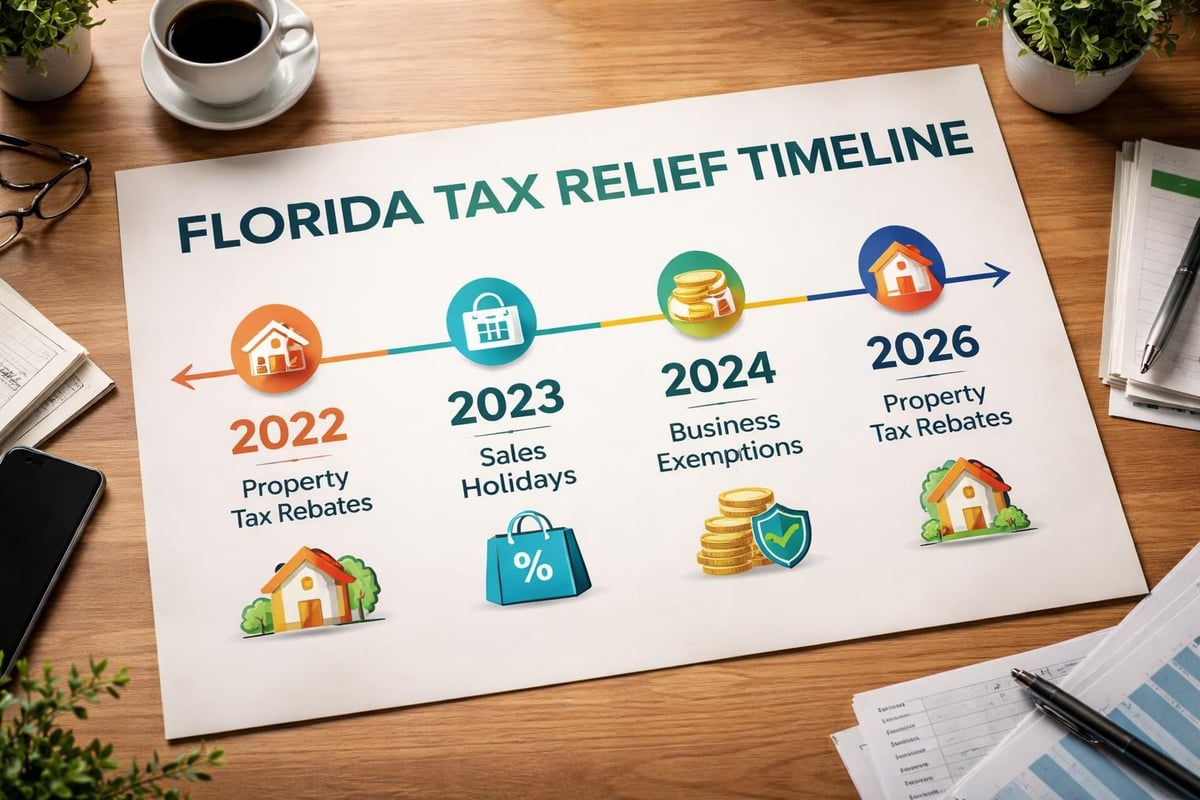
- 2022: Over $1.2 billion in tax relief through various exemptions and holidays
- 2023: A massive $2.7 billion tax relief package
- 2024: $1.07 billion in additional relief measures
- 2025: Proposals including $1,000 property tax rebates for homeowners
These aren't just numbers on a page. They represent real savings for Florida families and businesses. The 2025 property tax rebate proposal alone could put a significant chunk of change back in your bank account.
Sales Tax Holidays: Your Practical Savings Opportunities
Let's talk about something you can use right now. Sales tax holidays are specific periods when you don't pay sales tax on certain items. Think of them as the state's way of giving you a discount on things you're already planning to buy.
Current Sales Tax Holiday Programs
| Holiday Type | Typical Duration | Items Covered | Estimated Savings |
|---|---|---|---|
| Back-to-School | 2 weeks | Clothing, school supplies, computers | $150-$300 per family |
| Disaster Preparedness | 2 weeks | Generators, batteries, emergency supplies | $100-$500 |
| Freedom Month | July | Entertainment, outdoor activities | $50-$200 |
| Tool Time | 1 week | Tools for skilled trades | $200-$1,000+ |
The 2025 sales tax holiday changes introduced some exciting updates. The back-to-school tax holiday has been extended, and there's a new hunting, fishing, and camping sales tax holiday.
But here's the thing: you need to plan ahead. Mark these dates on your calendar. Make a list of what you need. The savings add up quickly when you're strategic about timing your purchases.
Permanent Sales Tax Exemptions
Beyond the temporary holidays, Florida has created permanent exemptions that provide ongoing relief. Baby and toddler necessities like cribs, strollers, and diapers are now permanently exempt from sales tax. That's a big deal if you're raising young children.
Starting in 2025, clothing and shoes under $75 became permanently exempt from sales tax. This one change could save the average Florida family hundreds of dollars annually.
Property Tax Relief for Homeowners
Property taxes can be one of your biggest annual expenses as a Florida homeowner. Fortunately, there are several ways to reduce this burden.
Homestead Exemption Updates
The homestead exemption is your first line of defense against high property taxes. If you're a permanent Florida resident, you can exempt up to $50,000 of your home's value from property taxes.
Here's the breakdown:
- First $25,000: Applies to all property taxes, including school district taxes
- Second $25,000: Applies to non-school taxes only (kicks in for home values above $50,000)
But there's more good news. Florida voters approved linking the homestead exemption to the national inflation rate, which means your exemption amount could increase over time to keep pace with rising home values.
Additional Property Tax Benefits
Beyond the standard homestead exemption, you might qualify for additional relief:
- Senior Exemption: Additional exemptions for homeowners 65 and older with limited income
- Disability Exemptions: For totally and permanently disabled homeowners
- Veterans Exemptions: Various exemptions based on service-connected disability ratings
- Widow/Widower Exemptions: Available to surviving spouses of military members, first responders, and others
The key is knowing what you qualify for and actually applying. Many Floridians leave money on the table simply because they don't realize they're eligible.
Federal IRS Relief Programs Available to Floridians
While state tax relief in florida is fantastic, what happens when you're dealing with IRS debt? This is where federal tax relief programs come into play, and they're available to all taxpayers regardless of where you live.
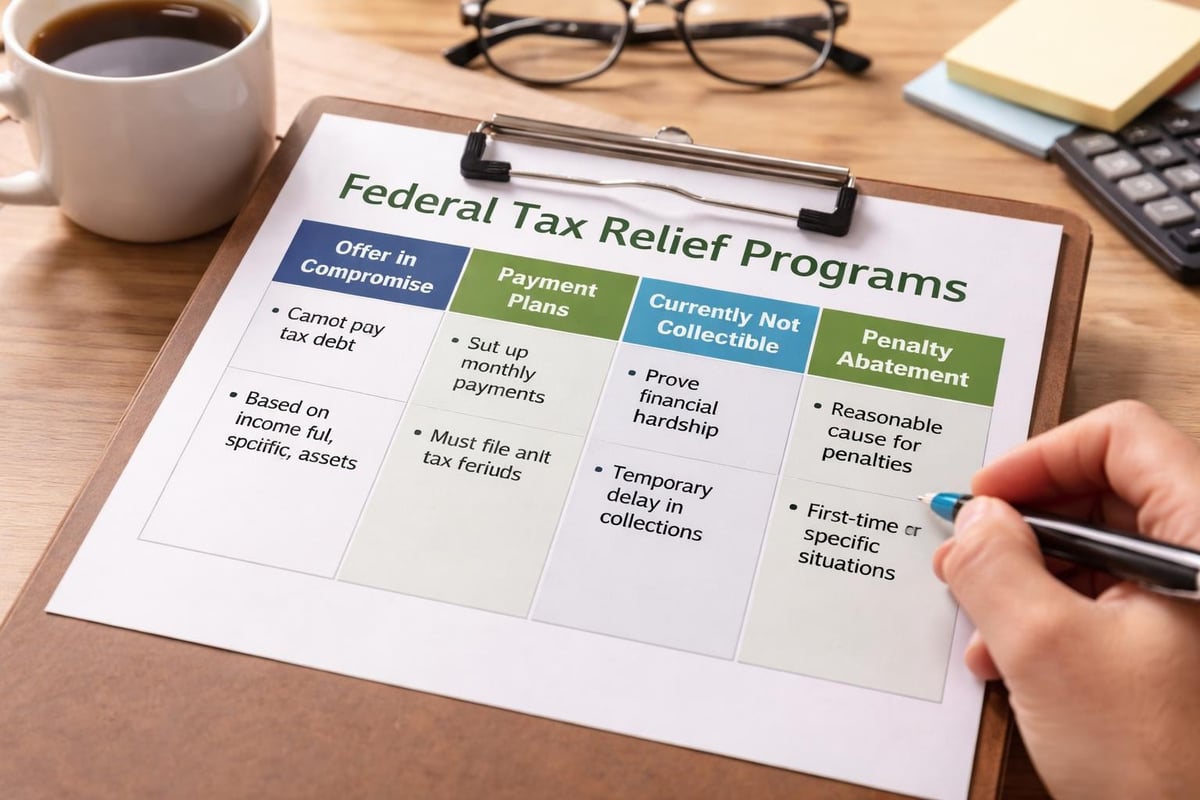
Offer in Compromise
An Offer in Compromise (OIC) lets you settle your tax debt for less than the full amount owed. Under 26 U.S.C. § 7122, the IRS can compromise any civil or criminal case arising under internal revenue laws.
Think of it this way: if the IRS determines that collecting the full amount would create economic hardship or if there's doubt about whether you actually owe the full amount, they may accept a reduced payment.
Eligibility considerations include:
- Your ability to pay
- Your income and expenses
- Your asset equity
- Your overall financial situation
Success with an OIC isn't guaranteed, and the process is complex. You need to demonstrate that the amount you're offering is the most the IRS can reasonably expect to collect within a reasonable timeframe.
Installment Agreements
Can't pay your tax bill all at once? An installment agreement under 26 U.S.C. § 6159 allows you to pay your tax debt over time through monthly payments. This keeps the IRS from taking more aggressive collection actions while you work toward resolving your debt.
There are several types of installment agreements:
| Agreement Type | Maximum Debt | Duration | Special Requirements |
|---|---|---|---|
| Guaranteed | $10,000 or less | 3 years | Meet specific conditions |
| Streamlined | $50,000 or less | 72 months | Limited financial disclosure |
| Partial Payment | Any amount | Varies | Full financial disclosure |
| Non-Streamlined | Over $50,000 | Varies | Extensive documentation |
The beauty of IRS payment plans is that they're relatively accessible. For smaller debts, the approval process is straightforward and doesn't require extensive financial disclosure.
Currently Not Collectible Status
Sometimes life throws you a curveball, and you genuinely can't afford to pay anything toward your tax debt. In these situations, you might qualify for Currently Not Collectible (CNC) status under IRS procedures.
When you're placed in CNC status, the IRS temporarily stops collection activities. They acknowledge that collecting from you would cause significant financial hardship. Your basic living expenses exceed your income, and you have no assets the IRS can levy.
Here's what you need to understand: CNC status isn't forgiveness. Your debt doesn't disappear. Interest and penalties continue to accrue. But it gives you breathing room when you need it most. You can learn more about IRS Currently Not Collectible status and whether it might apply to your situation.
Penalty Abatement
Did you know the IRS can remove or reduce penalties under certain circumstances? Penalty abatement under 26 U.S.C. § 6404 is one of the most overlooked forms of tax relief.
Reasons for penalty abatement include:
- Reasonable cause (circumstances beyond your control)
- First-time penalty abatement (clean compliance history)
- Statutory exceptions
- Administrative waivers
The first-time penalty abatement is particularly valuable. If you have a clean tax compliance history for the prior three years, the IRS may remove failure-to-file, failure-to-pay, and failure-to-deposit penalties for a single tax year.
Understanding IRS penalty abatement options can save you thousands of dollars. Penalties can often equal or exceed the underlying tax debt, especially if you've been dealing with tax problems for multiple years.
Business Tax Relief Options in Florida
If you run a business in Florida, you have access to specific relief programs designed to support economic growth and job creation.
Business Rent Tax Elimination
Florida previously imposed a tax on commercial rent, which was essentially a hidden tax on businesses. Good news: recent legislation eliminated the business rent tax, providing significant relief to businesses across the state.
This elimination represents real savings. If you were paying $5,000 monthly in rent, you were previously paying an additional $300 in tax. That adds up to $3,600 annually that now stays in your business.
Tax Credits for Hiring
Florida offers various tax credits and incentives for businesses that hire employees from certain groups. The 2024 tax relief package included credits for businesses employing persons with disabilities.
While these are state programs, you should also be aware of federal tax credits like the Work Opportunity Tax Credit (WOTC), which provides federal tax credits for hiring individuals from targeted groups.
Sales Tax Exemptions for Business Equipment
Certain business equipment and machinery may qualify for sales tax exemptions. This varies based on your industry and the specific use of the equipment, but it's worth investigating whether your business purchases qualify.
Navigating IRS Liens and Levies in Florida
When tax debt goes unresolved, the IRS can take aggressive collection actions. Understanding your rights and options is crucial.
Tax Liens
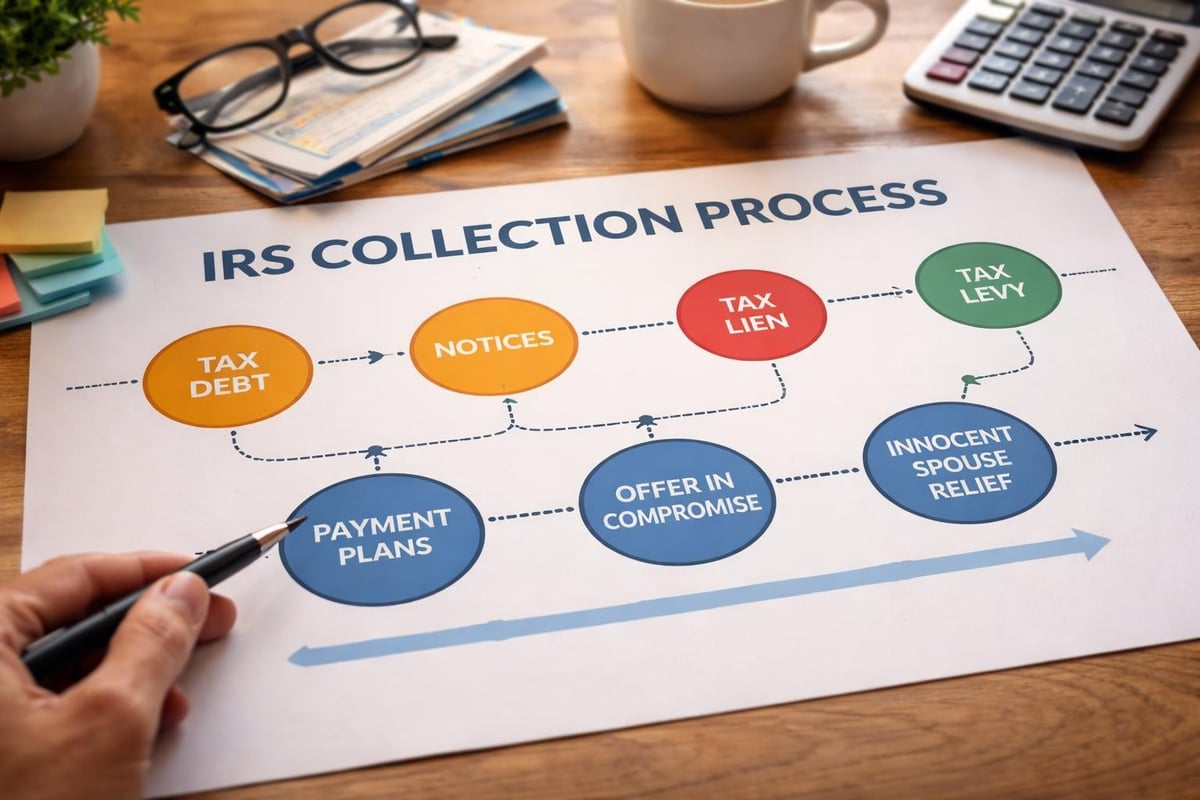
A federal tax lien is the government's legal claim against your property when you neglect or fail to pay a tax debt. Under 26 U.S.C. § 6321, a lien arises automatically when you fail to pay your tax debt after demand.
The lien attaches to all your property and rights to property, including real estate, vehicles, and even future assets. It becomes public record, which can devastate your credit score and make it nearly impossible to sell or refinance property.
Options for dealing with tax liens:
- Pay the debt in full (lien releases within 30 days)
- Discharge of property (removes lien from specific property)
- Subordination (allows other creditors to move ahead of the IRS)
- Withdrawal (removes public notice of lien)
Getting help with IRS tax debt before it reaches the lien stage is always preferable, but even if you're already facing a lien, solutions exist.
Wage Garnishments and Bank Levies
The IRS can levy your wages, bank accounts, and other assets under 26 U.S.C. § 6331. A levy is different from a lien. While a lien is a claim used as security for the tax debt, a levy actually takes the property to satisfy the tax debt.
Wage garnishments can take a significant portion of your paycheck, leaving you unable to meet basic living expenses. Bank levies can wipe out your account in a single day.
But here's what you need to know: you have rights. Before the IRS can levy your property, they must provide notice and an opportunity for a Collection Due Process (CDP) hearing. At this hearing, you can propose alternatives like installment agreements or offers in compromise.
Innocent Spouse Relief: When Your Partner's Debt Isn't Yours
What happens when you filed a joint return, but the tax debt stems from your spouse's actions? Under 26 U.S.C. § 6015, you may qualify for innocent spouse relief.
This provision can relieve you from additional tax, interest, and penalties if your spouse (or former spouse) improperly reported items or omitted items on your joint return.
Three types of relief exist:
- Innocent Spouse Relief: For understated tax due to erroneous items
- Separation of Liability Relief: Allocates additional tax between you and your spouse
- Equitable Relief: For all other situations where holding you liable would be unfair
The requirements are specific and the application process detailed. Understanding IRS innocent spouse relief can protect you from tax debt that rightfully isn't your responsibility.
How to Choose the Right Relief Program
With so many options for tax relief in florida, how do you know which path to take? The answer depends on your specific situation.
Assessing Your Tax Situation
Start by gathering all relevant information:
- Total amount of tax debt (including penalties and interest)
- Your current income and expenses
- Your assets and their values
- Any special circumstances (medical issues, job loss, etc.)
- Your compliance history
Be honest about your financial situation. The IRS has access to extensive financial information, and attempting to hide assets or income will only make matters worse.
When to Seek Professional Help
Some tax situations are straightforward enough to handle yourself. Others require professional expertise. Consider getting help from a tax attorney when:
- Your tax debt exceeds $10,000
- You're facing liens, levies, or wage garnishments
- You're considering an Offer in Compromise
- You need innocent spouse relief
- You have multiple years of unfiled returns
- Criminal charges are possible
Working with experienced professionals who understand IRS tax debt relief programs can mean the difference between successfully resolving your debt and facing years of financial struggle.
Taking Action on Your Tax Relief Options
Knowledge without action doesn't solve problems. If you're dealing with tax issues, whether state or federal, the time to act is now.
State Tax Relief Action Steps
For Florida state tax relief programs:
- Review upcoming sales tax holidays and plan major purchases accordingly
- Verify you've claimed all property tax exemptions you qualify for
- Check if your business qualifies for any available credits or exemptions
- Stay informed about new legislation that might benefit you
Federal Tax Relief Action Steps
For IRS tax problems:
- Respond to all IRS notices promptly (ignoring them makes everything worse)
- File all required tax returns, even if you can't pay
- Explore which relief program best fits your situation
- Gather necessary financial documentation
- Consider professional representation for complex cases
The worst thing you can do is nothing. The IRS won't forget about your debt, and their collection powers are extensive. But when you take proactive steps toward resolving your tax debt, solutions emerge.
Your Rights as a Florida Taxpayer
Whether you're dealing with state or federal tax issues, you have rights. Under the Taxpayer Bill of Rights, you're entitled to:
- Professional and courteous treatment
- Privacy and confidentiality
- Clear explanations of IRS decisions
- Representation by yourself or an authorized representative
- Appeal IRS decisions in an independent forum
- Finality (knowing when the IRS can no longer audit or collect)
Understanding these rights empowers you to advocate for yourself or work effectively with a tax professional who can advocate on your behalf.
Tax relief in florida encompasses both state-level programs that reduce your everyday tax burden and federal options that help resolve serious IRS debt problems. The key is understanding what's available and taking action before small tax issues become overwhelming financial crises. Whether you're navigating property tax exemptions, planning purchases around sales tax holidays, or facing serious IRS collection actions, professional guidance can make all the difference. The Law Offices of Darrin T. Mish, P.A. has over 32 years of experience helping Florida taxpayers resolve IRS problems, from wage garnishments and tax liens to offers in compromise and penalty abatement, with free consultations available to discuss your specific situation.