

I’m Darrin Mish. Tampa tax attorney, 32 years in, more than $100 million in IRS debt resolved. What follows isn’t theory – it’s what I’ve actually watched work.
Worried about how you’ll pay your IRS tax bill this year? You are not alone. Each year, millions of people face the same anxiety and risk of growing penalties.
The good news is, there is a way to regain control. When you set up irs payment plan, you can spread out what you owe, reduce stress, and protect your finances.
This guide will walk you through every step, from understanding your options to applying and managing your plan. Ready to take action and breathe easier? Let’s get started.
Understanding IRS Payment Plans in 2026
Are you worried about how to set up irs payment plan for your tax bill this year? You are not alone, and the good news is that the IRS offers options to help you pay what you owe over time.
IRS payment plans are formal agreements that let you pay off your tax debt in manageable installments, rather than all at once. These plans can be a lifesaver when your tax bill feels overwhelming. But which plan should you choose, and how do you know if you qualify?
Let's break it down. There are two main types of installment agreements: short-term and long-term. A short-term plan gives you up to 180 days to pay your full balance, and you can qualify if you owe less than $100,000 in combined tax, penalties, and interest. Long-term plans, on the other hand, allow you to pay over 72 months (six years), but your total debt must be less than $50,000 to be eligible.
Here is a quick comparison to help you visualize the differences:
| Feature | Short-Term Plan | Long-Term Plan |
|---|---|---|
| Maximum Duration | 180 days | Up to 72 months |
| Debt Limit | $100,000 | $50,000 |
| Setup Fees | None | Some fees apply |
| Application Method | Online, Phone, Mail | Online, Phone, Mail |
Wondering why you might want to set up irs payment plan instead of waiting? These plans can significantly reduce the risk of harsh IRS enforcement actions, like wage garnishments or tax liens. While interest and some penalties still accrue, they are generally lower than if you ignore your bill or miss payments.
IRS payment plans cover most types of tax debt, including individual income taxes, certain business taxes, and even payroll taxes for small businesses. However, keep in mind that setting up a payment plan does not wipe your slate clean with credit agencies, but it can prevent things from getting worse.
If you meet all the requirements and follow the steps, you can avoid aggressive collection tactics and stay in good standing. Plus, the IRS has announced that in 2026, online applications will be processed even faster, and more taxpayers will qualify for streamlined approval.
Curious about the details for each payment plan type and how to apply? You can find a detailed breakdown in this IRS installment agreements explained guide, which covers requirements, benefits, and step-by-step instructions.
Picture this: You owe $25,000 in back taxes. Depending on your budget, you can choose a short-term plan if you expect to pay it off within 180 days, or a long-term plan if you need more time. That flexibility is why so many taxpayers choose to set up irs payment plan every year.
Taking action now to set up irs payment plan puts you back in control, helps you avoid the worst penalties, and keeps the IRS off your back.

Step-By-Step Process to Set Up an IRS Payment Plan
Setting out to set up irs payment plan with the IRS in 2026 can feel daunting, but breaking it into clear steps makes it much more manageable. Let’s walk through the process together so you know exactly what to expect and how to avoid common pitfalls.
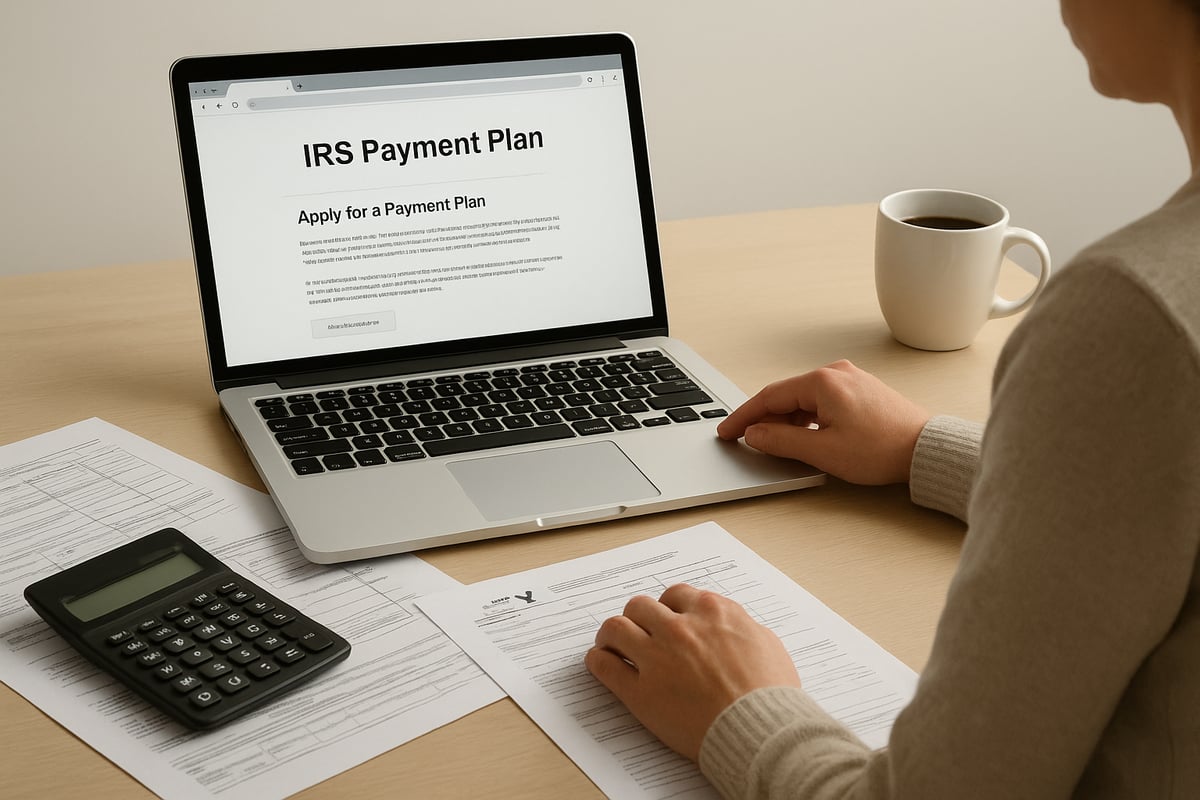
Step 1: Gather Your Documents
Before you start to set up irs payment plan, collect all your recent IRS notices, filed tax returns, and details about your finances. This includes your bank account information and any documentation showing your income and expenses.
Keeping these documents handy will save you time and help you answer any questions that come up during the setup process.
Step 2: Determine Exactly What You Owe
Check your most recent IRS notice or sign in to your IRS online account to find out your total balance. Accurate numbers make it easier to set up irs payment plan that fits your situation.
If you are unsure about additional penalties or interest, the IRS account portal will show your up-to-date balance.
Step 3: Choose the Right Payment Plan
There are two main options when you set up irs payment plan: short-term (180 days or less) and long-term (installment agreements, up to 72 months). Consider how much you can realistically pay each month.
If you owe less than $50,000, you can usually qualify for an individual long-term plan. For debts under $100,000, a short-term plan may be available.
Step 4: Decide How You Will Pay
Think about how you want to make your payments. The most common options when you set up irs payment plan are direct debit from your bank account, sending a check, using a debit card, or paying by credit card.
Direct debit is usually the simplest and helps prevent missed payments.
Step 5: Apply Online or by Mail
The fastest way to set up irs payment plan is online using the IRS Online Payment Agreement application. The online tool walks you through each step and gives instant approval for most people with debts under $50,000.
If you prefer, you can fill out IRS Form 9465 and mail it in with your tax return or as a standalone application. However, mail applications take longer to process and may have higher fees.
| Application Method | Processing Speed | Approval Odds | Fees (2026) |
|---|---|---|---|
| Online (OPA) | Fastest | High | Lowest |
| Mail (Form 9465) | Slow | High | Higher |
Step 6: Review and Await IRS Approval
After you submit your request to set up irs payment plan, the IRS will review your application. If you applied online and owe less than $50,000, you might get approved instantly.
For mail applications, approval can take several weeks. Watch for confirmation letters outlining your agreement terms.
Step 7: Set Up Automatic Payments
Once approved, set up irs payment plan with automatic withdrawals if possible. This reduces the risk of missing a payment and falling out of compliance.
You can adjust your payment method in your IRS online account if your situation changes.
Step 8: Monitor Your Plan and Stay Compliant
After you set up irs payment plan, don’t forget to keep an eye on your IRS online account. Make sure your payments post correctly and watch for any IRS correspondence.
If your finances change, update your payment amount or due date as needed. Staying proactive helps you avoid penalties or plan termination.
Example: Walking Through the Online Application
Let’s say you owe $30,000. You log in to the IRS Online Payment Agreement tool, confirm your balance, and select a long-term installment plan over 60 months. You choose direct debit, enter your bank details, and get instant approval.
You receive a confirmation letter, set up automatic payments, and monitor your progress online each month.
Key Insights and Best Practices
- The majority of taxpayers who set up irs payment plan online are approved instantly.
- Online applications have lower setup fees and are processed faster than mail.
- Staying organized and proactive is the best way to avoid headaches down the road.
Following these steps will help you confidently set up irs payment plan and regain control of your tax situation.
Fees, Interest, and Penalties Associated with IRS Payment Plans
Setting up an IRS payment plan is a big step toward resolving your tax debt, but it’s important to understand the costs involved. When you set up irs payment plan options, you’ll face certain fees, interest, and penalties – each of which can impact how much you end up paying in the long run.
Application Fees at a Glance
The cost to set up irs payment plan arrangements depends on how you apply and how you choose to pay. Here’s a quick breakdown:
| Application Method | Payment Type | Setup Fee |
|---|---|---|
| Online (Direct Debit) | Direct Debit | $22 |
| Online (Other) | Check/Credit | $69 |
| Paper (Form 9465) | Any | $107-$178 |
Most people qualify for the online application, which is faster and cheaper. For a deep dive into all fee options, check out this IRS payment plan fees and interest rates resource.
Interest and Penalty Rates
When you set up irs payment plan agreements, the IRS continues to charge interest on the unpaid balance. The interest rate is the federal short-term rate plus 3%. While you’re on a payment plan, the late-payment penalty is reduced from up to 0.5% per month to just 0.25% per month.
Here’s an example: On a $10,000 debt, if you pay it off over 24 months, you’ll pay several hundred dollars in interest and penalties – but far less than if you didn’t arrange a plan at all. This reduction can really add up over time.
Low-Income Fee Waivers and Card Processing Costs
If you qualify as a low-income taxpayer, you may be eligible for a setup fee waiver or a reduced rate. The IRS determines low-income status based on federal poverty guidelines, so be sure to check your eligibility before you set up irs payment plan options. Also, if you pay with a credit or debit card, expect to pay an extra processing fee, usually around 1.87% to 1.99% of the payment amount.
Key Statistics and Total Cost Example
Most taxpayers can set up irs payment plan arrangements online and benefit from the lowest available fees. For instance, if you owe $10,000 and choose a 24-month plan with direct debit, your setup fee will be just $22, and your total interest and penalties could be several hundred dollars less than without a plan. The majority of applicants receive instant approval, making the process quick and efficient.
Understanding these costs up front helps you budget smartly and avoid surprises as you work toward resolving your IRS debt.
Alternatives to IRS Payment Plans
Sometimes, setting up an IRS payment plan might not be your best or only option. Depending on your financial situation, you might want to explore other ways to tackle your tax debt. Why? Sometimes these alternatives can save you money, reduce stress, or even help you resolve your tax bill faster.
If you’re hesitant to set up irs payment plan, here are several paths you can consider. Each comes with its own pros and cons, so it’s smart to weigh them carefully.

1. Paying by Credit Card
You might think, "Why not just use a credit card?" If you have available credit, this can work, but be cautious. Credit card interest rates often exceed those of the IRS. Plus, the IRS charges a processing fee for card payments. If you can pay your card off quickly, the convenience might outweigh the costs.
2. Borrowing from Retirement Accounts
Some people tap into their 401(k) or IRA to pay off taxes. While this can be fast, it often comes with early withdrawal penalties and additional taxes. If you’re under 59½, expect a 10% penalty on top of regular income tax. This method can be risky, especially if it hurts your long-term retirement savings.
3. Short-Term Extension (Up to 180 Days)
If your tax bill is manageable and you just need a little more time, the IRS offers short-term extensions. You can request up to 180 days to pay in full. There’s no set up irs payment plan fee, but penalties and interest still accrue. This is best if you know you’ll have funds soon.
4. IRS Form 1127: Extension for Undue Hardship
Facing a true financial hardship? IRS Form 1127 lets you request an extension based on undue hardship, but approval is rare and you’ll need solid documentation. This is not a substitute for a set up irs payment plan, but it may buy you time if you’re truly in a bind.
5. Offer in Compromise
An Offer in Compromise lets you settle your tax debt for less than you owe if you can prove paying in full would cause severe financial hardship. The application process is strict, but it can be life-changing for those who qualify. Learn more about this option in Offer in Compromise option, which explains eligibility, process, and tips.
6. Currently Not Collectible Status
If you can’t pay anything right now, the IRS may grant you Currently Not Collectible status. This pauses collection efforts until your financial situation improves. You’ll still owe the debt, and interest keeps adding up, but you’ll get breathing room while you get back on your feet.
Cost Comparison Example
Let’s see how paying by credit card stacks up against a set up irs payment plan for a $5,000 tax bill:
| Option | Interest Rate | Fees | Total Cost (12 months) |
|---|---|---|---|
| IRS Payment Plan | ~8% | $22-$69 setup | ~$5,440 |
| Credit Card (18% APR) | 18% | 2% processing fee | ~$5,900 |
As you can see, the set up irs payment plan typically costs less, but the best choice depends on your unique situation.
Choosing the Best Path
Before you set up irs payment plan or pick an alternative, take a close look at your finances. Each option has trade-offs. For some, a quick loan or credit card works. For others, an IRS solution is safer and cheaper. If you’re unsure, consider speaking with a tax professional to find your best route.
Modifying, Managing, or Cancelling Your IRS Payment Plan
Life rarely goes as planned, right? Even after you set up irs payment plan, your finances might shift. Maybe you get a raise, lose a job, or face an unexpected expense. The good news is the IRS gives you flexibility to adjust, manage, or even cancel your payment plan if needed.
How to Modify Your IRS Payment Plan
If you need to change your monthly payment or due date, the IRS allows you to modify your agreement once per year without extra fees. Start by logging into your IRS online account. From there, you can request to:
- Increase or decrease your monthly payment amount
- Change your payment due date to better fit your budget
- Switch payment methods (for example, to Direct Debit for lower fees)
Make sure you review your budget carefully before you adjust your plan. If you overcommit, you risk defaulting. If you’re unsure, the IRS back taxes payment plan guide covers additional tips and details for making changes. Remember, to set up irs payment plan modifications, you must have all required returns filed and be current on existing payments.
Suspending or Cancelling Your Payment Plan
Sometimes, your circumstances change so much that you need to pause or cancel your plan. To suspend payments temporarily, contact the IRS directly and explain your situation. They may grant a short-term suspension if you’re experiencing hardship, but interest and penalties will continue to accrue.
To cancel your plan, you can call the IRS or use your online account. Be aware this could trigger immediate collection actions, including liens or levies. Only cancel if you have another way to resolve your tax debt. Anyone who set up irs payment plan should consider all consequences before cancelling.
What Happens If You Default and How to Reinstate
Missing a payment or failing to file future tax returns can cause your plan to default. If that happens, the IRS may:
- Demand immediate payment of your full balance
- File a federal tax lien or begin wage garnishments
- Remove any penalty reductions you were receiving
If you default, act quickly. You can often reinstate your plan by contacting the IRS, updating payment info, and resolving any missed filings. The IRS typically allows one modification or reinstatement per year without additional fees. Monitoring your plan regularly helps avoid surprises after you set up irs payment plan.
Here’s a quick table to summarize:
| Action | How to Do It | Key Tip |
|---|---|---|
| Modify payment or due date | Online account or call IRS | Once per year, no extra fee |
| Suspend or cancel plan | Call IRS or use online tools | Interest and penalties continue |
| Reinstate after default | Contact IRS, update info | Act quickly to avoid collections |
Real-World Example and Final Tips
Let’s say you set up irs payment plan when you owed $20,000, but then lost your job. By contacting the IRS promptly and requesting a modification, you might be able to lower your payments temporarily until you find new work. Staying proactive is critical.
Always monitor your plan through the IRS portal, keep your contact details updated, and respond to any IRS notices right away. This way, you’ll keep your agreement in good standing and avoid extra headaches.
Tips for Successfully Maintaining Your IRS Payment Plan
Setting up an IRS payment plan is a huge relief, but the real challenge is making sure you stay on track. Once you set up irs payment plan, the IRS expects you to follow the terms closely. Ignoring a single detail can lead to big headaches, so let's walk through some smart strategies to keep your plan running smoothly.
Automate Your Payments
One of the easiest ways to avoid missed payments is to automate them. When you set up irs payment plan, opting for direct debit ensures your monthly payment is always on time. This not only helps you avoid penalties, but also shows the IRS you’re serious about compliance.
Keep Your Information Up to Date
Life changes fast. If you move, change banks, or update your phone number, make sure the IRS has your current details. Failing to update your info after you set up irs payment plan can result in missed notices or returned payments. Log in to your IRS online account regularly to check your contact and banking info.
Stay Current With Future Taxes
After you set up irs payment plan, it's crucial to file all future tax returns on time and pay any new taxes right away. The IRS may cancel your agreement if you fall behind on new obligations. If you’re unsure about filing deadlines or payment options, check out the IRS payment plan options for official guidance.
Respond Quickly to IRS Notices
Never ignore a letter from the IRS. If they need more information or see a missed payment, they’ll send a notice. Responding quickly can prevent your plan from defaulting. If you’re facing financial hardship, you might qualify for Currently Not Collectible status info, which can temporarily pause collections.
Track Your Progress and Adjust If Needed
Keep tabs on your payments and remaining balance through the IRS online portal. If your income drops or you lose your job, reach out to the IRS right away. Adjusting your plan early can prevent default. For example, one taxpayer lost their job but called the IRS immediately after realizing they couldn’t make their next payment. By being proactive, they avoided default and were able to temporarily reduce their payments.
Consistency Is Key
The most important part is communication. If you set up irs payment plan, consistent contact with the IRS makes all the difference. Reach out before you miss a payment or if something changes. Being proactive helps you maintain your agreement and keeps your path to financial recovery clear.