

Tax attorney Darrin Mish put this one-page guide together from official sources. Save it, print it or share it with someone who needs it.
What the infographic says
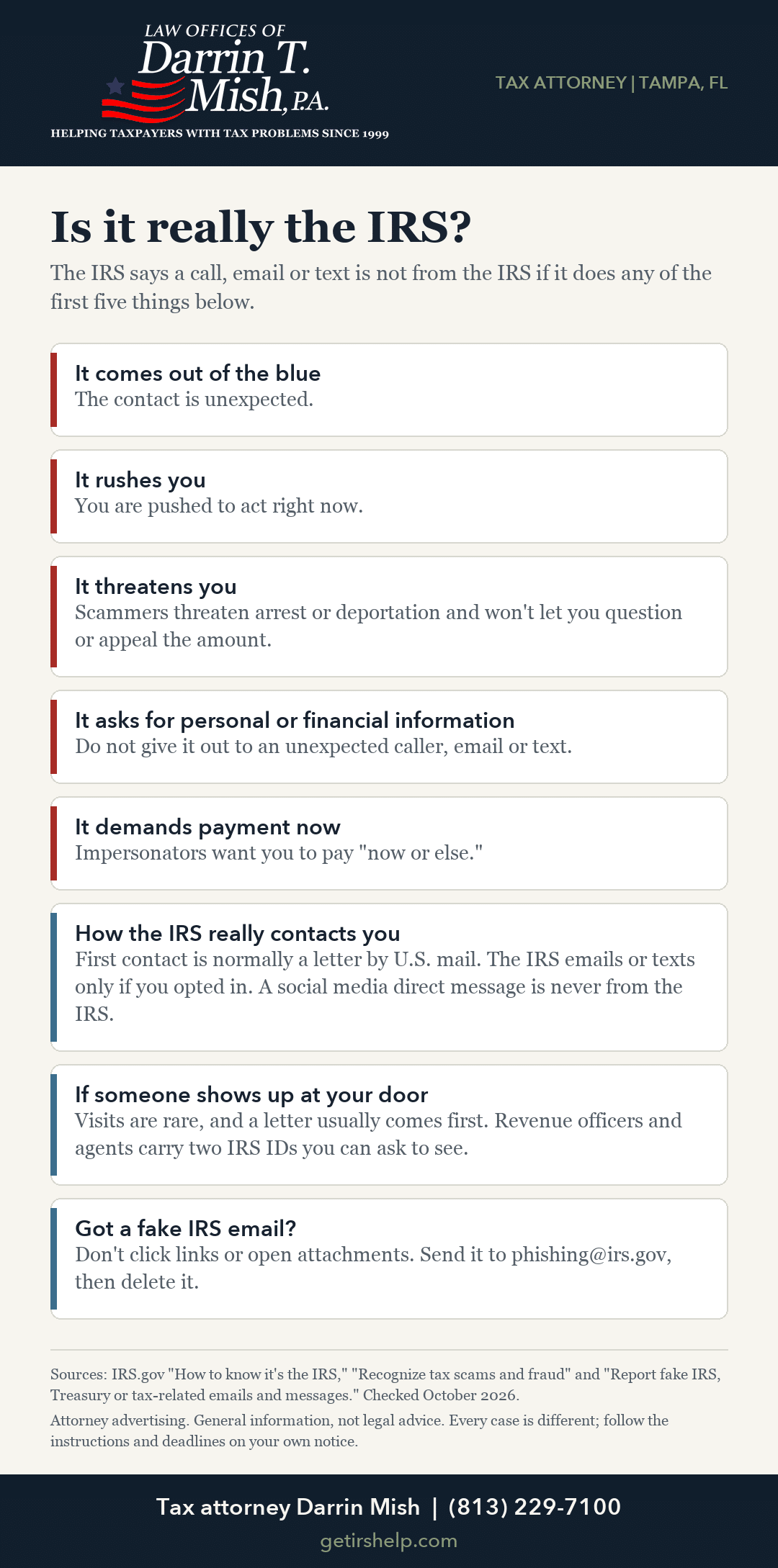
Is it really the IRS? The IRS says a call, email or text is not from the IRS if it does any of the first five things below.
- It comes out of the blue. The contact is unexpected.
- It rushes you. You are pushed to act right now.
- It threatens you. Scammers threaten arrest or deportation and won't let you question or appeal the amount.
- It asks for personal or financial information. Do not give it out to an unexpected caller, email or text.
- It demands payment now. Impersonators want you to pay "now or else."
- How the IRS really contacts you. First contact is normally a letter by U.S. mail. The IRS emails or texts only if you opted in. A social media direct message is never from the IRS.
- If someone shows up at your door. Visits are rare, and a letter usually comes first. Revenue officers and agents carry two IRS IDs you can ask to see.
- Got a fake IRS email?. Don't click links or open attachments. Send it to [email protected], then delete it.
Sources
- https://www.irs.gov/help/how-to-know-its-the-irs
- https://www.irs.gov/help/tax-scams/recognize-tax-scams-and-fraud
- https://www.irs.gov/help/report-fraud/report-fake-irs-treasury-or-tax-related-emails-and-messages
Checked October 2026.
If you have a question about your own situation, call tax attorney Darrin Mish at (813) 229-7100.
Attorney advertising. General information, not legal advice. Every case is different; follow the instructions and deadlines on your own notice.