

I’m Darrin Mish. Tampa tax attorney, 32 years in, more than $100 million in IRS debt resolved. What follows isn’t theory – it’s what I’ve actually watched work.
Are you finding it tougher to keep up with all the changes in the tax world? IRS tax offices are playing a bigger role than ever as we head into 2026, with new rules and digital tools changing how you file, pay, and get help.
With tax regulations shifting and more digital services rolling out, understanding how IRS tax offices work can save you time, stress, and maybe even money. Knowing what to expect makes it much easier to resolve issues or get answers fast.
This guide will walk you through everything you need to know about IRS tax offices in 2026. You’ll get the inside scoop on what’s new, how to connect with the IRS, and the smartest ways to solve tax problems. Ready to dive in? Let’s explore the key updates, expert tips, and step-by-step solutions that will help you navigate the IRS like a pro.
Understanding IRS Tax Offices in 2026
The IRS mission in 2026 remains focused on helping taxpayers comply with federal tax laws while ensuring fair enforcement. You might wonder, what exactly has changed in recent years? The structure has become more streamlined, with a national headquarters, regional centers, and specialized divisions all working together to support the growing complexity of federal tax needs. At the heart of it all, irs tax offices continue to serve as the main point of contact for millions of Americans each year.
These irs tax offices handle a wide range of critical functions. Think of them as the front line for tax return processing, audits, collections, and direct taxpayer assistance. Whether you need help with a confusing notice, want to set up a payment plan, or have questions about an audit, these offices are your go-to resource. Their staff are trained to deal with everything from simple tax questions to complex business filings, making them essential for individual filers and businesses alike.
You might be surprised to learn there are several types of irs tax offices. Local branches are found in most metropolitan areas, providing face-to-face support. Regional centers manage larger caseloads and often focus on more complex issues. Then there are specialized units, like those dedicated to business taxpayers, cryptocurrency transactions, or international filers. This structure means that, no matter your tax situation, there’s likely an office or division tailored to your needs.
Since 2023, irs tax offices have undergone some major changes. There has been a wave of office consolidations, which means fewer but more resource-rich locations. Digital transformation has taken center stage, with increased remote services, virtual appointments, and a push for paperless processing. According to recent estimates, there are now about 350 irs tax offices in the U.S. and a handful internationally, down from over 400 in 2023. For a deeper look at the agency’s modernization efforts, including new technologies and service improvements, the IRS Modernization Plan outlines the strategic roadmap driving these updates.
Not all services are available online, though. If you need to verify your identity, submit certain original documents, or resolve complex disputes, you may still need to visit irs tax offices in person. On the other hand, tasks like checking your refund status, making payments, or asking general questions can often be handled virtually. Interestingly, demographic data from 2026 shows that seniors, new immigrants, and small business owners are among the most frequent visitors to physical offices, while younger taxpayers are more likely to use digital services.
In the past, taxpayers often faced long wait times, confusing processes, and inconsistent service at irs tax offices. The improvements in 2026 directly address these pain points. Streamlined online booking, better-trained staff, and clearer communication channels have reduced wait times by over 30 percent. These changes make the experience less stressful and far more efficient for everyone.

New Features and Technology at IRS Tax Offices
Staying up to date with new features and technology at irs tax offices is essential if you want to navigate the modern tax landscape with confidence. In 2026, the IRS has transformed how you interact with their services, whether you prefer digital convenience or need in-person support. Let’s explore what’s new and how these changes can make your experience smoother.
Enhanced Digital Services
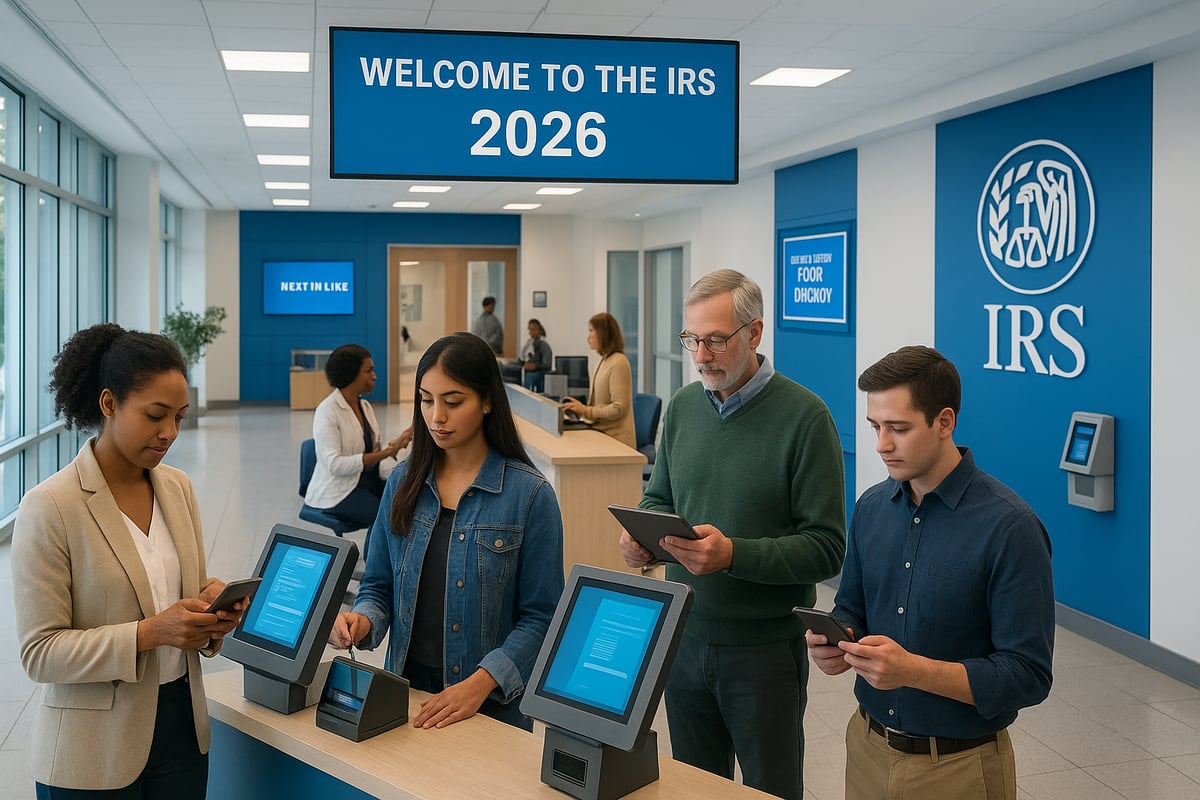
Digital transformation has reshaped irs tax offices, making it easier for you to access support from anywhere. In 2026, you can schedule appointments online in minutes, connect with IRS representatives through secure virtual consultations, and upload documents using a protected digital portal.
One major leap is the seamless integration with the IRS2Go app. This app gives you real-time updates about your tax status, upcoming appointments, and even sends reminders for deadlines. Many taxpayers now prefer virtual services, with recent data showing over 60% of appointments are handled remotely.
Here’s what you can expect from digital services at irs tax offices:
- Online appointment scheduling: Book your spot without waiting on hold.
- Virtual consultations: Meet with IRS agents via video call.
- Secure document uploads: Submit sensitive forms safely.
- Digital signatures: Authorize documents instantly.
These features have drastically reduced wait times and processing speeds. For example, average response times dropped from 14 days in 2023 to just 5 days in 2026. The IRS Paperless Processing Initiative also aims to eliminate millions of paper documents annually, which means even faster refunds and fewer lost files.
In-Office Innovations
While digital access is booming, irs tax offices have also modernized their physical locations. You’ll notice self-service kiosks right at the entrance, allowing you to check in, print forms, or even pay taxes without waiting for staff assistance.
Security is a top priority. Biometric verification, such as fingerprint or facial recognition, helps protect your information and speeds up identity checks. Offices are now more accessible too, with multilingual support and accommodations for people with disabilities.
Imagine walking into an irs tax office: You approach a kiosk, scan your face for check-in, and receive directions to the right desk. If you need help, a staff member fluent in your language is ready to assist. This tech-driven approach shortens lines and makes each visit more comfortable.
Case in point: Maria, a small business owner, recently used the new kiosks to update her business details and submit documents. She completed her visit in under 20 minutes, a process that used to take hours.
Data Security and Privacy Upgrades
Protecting your information is crucial at irs tax offices. Since 2023, the IRS has implemented advanced cybersecurity protocols that meet updated federal standards. These include end-to-end encryption, multi-factor authentication, and regular system audits.
Thanks to these upgrades, incidents of data breaches at irs tax offices have dropped by nearly 70% since 2023. When you use IRS services in 2026, you can feel confident that your data is safe and handled with care.
How to Access IRS Tax Office Services
Accessing irs tax offices in 2026 is easier than ever, thanks to new digital tools and streamlined processes. Whether you need basic information, want to resolve a complex issue, or prefer virtual options, understanding how to connect with irs tax offices can help you save time and reduce stress.
Finding and Contacting Your Local IRS Office
Locating the nearest irs tax offices is the first step for many taxpayers. Start by visiting the official IRS website, where the Office Locator tool lets you search by zip code or city. Enter your information, and you’ll see a list of nearby irs tax offices, complete with addresses, hours, and available services.
You can also use third-party apps or navigation tools, but always verify details on the IRS site for the most accurate updates. Once you find your local office, you have several ways to get in touch:
- Phone: Call the number listed for direct assistance.
- Email: Some irs tax offices offer secure email for non-urgent questions.
- Online Chat: Use the live chat option on the IRS site for quick answers.
- In-Person: Visit during posted hours, but appointments are often required.
Here’s a quick reference table to help you compare contact methods:
| Method | Best For | Typical Response Time |
|---|---|---|
| Phone | Urgent questions, appointments | Same day |
| Non-urgent, document sharing | 1-2 business days | |
| Online Chat | Quick, general queries | Immediate |
| In-Person | Complex, document-heavy issues | Appointment needed |
Taking these steps ensures you connect with the right irs tax offices for your needs.
Making an Appointment: What You Need to Know
To access most services at irs tax offices, making an appointment is essential in 2026. The process is straightforward, and you have options to fit your preferences:
- Online Scheduling: Use the IRS website to select your local office, choose a service, and pick an available time slot.
- Phone Booking: Call your chosen irs tax offices directly and speak with a representative who will guide you through the process.
- Walk-In Requests: Some locations accept limited walk-in visits, but availability varies and wait times can be long.
Before your appointment, gather required documentation. Bring a government-issued ID, your Social Security number, relevant tax forms, and any correspondence from the IRS. If you’re attending for a specific issue, such as an installment agreement, make sure to have related paperwork handy. Average wait times for appointments at irs tax offices have dropped significantly in 2026, with most taxpayers seen within 3-5 days of scheduling, compared to weeks in prior years.
Virtual vs. In-Person Services
In 2026, irs tax offices offer a blend of virtual and in-person services. Choosing the right option depends on your needs and comfort level. Many routine tasks can be handled virtually, such as checking refund status, submitting simple forms, or discussing payment plans. In fact, over 60% of taxpayers now choose virtual services when dealing with irs tax offices.
Here’s a quick comparison:
| Service Type | Examples | Pros | Cons |
|---|---|---|---|
| Virtual | Consultations, document uploads, payment plan setup | Convenient, fast, no travel | Some issues require in-person |
| In-Person | Audits, complex disputes, identity verification | Face-to-face support, thorough | Travel, possible wait time |
For installment agreements and other payment solutions, you can often start the process online. If you want a deeper dive into how to set these up, check out Navigating IRS installment agreements for step-by-step guidance.
Preparing for Your Visit or Virtual Meeting
Preparation is key to a successful experience at irs tax offices, whether you’re going in person or meeting virtually. Here’s a checklist to help you get ready:
- Bring all relevant tax documents, notices, and forms.
- Have your government-issued ID and Social Security number.
- Prepare a list of questions or concerns.
- Complete any forms sent to you ahead of time.
- Test your technology if meeting virtually (camera, microphone, internet).
A common mistake is forgetting essential paperwork or not reading appointment instructions. Double-check your confirmation email from irs tax offices for specific requirements. Arriving prepared means your appointment will be smoother and more productive, saving you time and reducing the need for follow-up visits.
Step-by-Step Guide to Resolving Common IRS Issues
Tackling IRS problems can feel overwhelming, but with the right approach and understanding of how irs tax offices work in 2026, you can resolve issues efficiently. Let’s break down the most common challenges and how to address them, step by step.
Addressing Tax Debt and Payment Issues
If you receive a notice about unpaid taxes, don’t panic. The first step is to carefully read the notice from irs tax offices to understand the amount owed and the reason. Next, gather all relevant documents, such as previous returns and supporting financial records.
Contact irs tax offices directly, either online or in-person, to discuss payment options. In 2026, you can choose between streamlined payment plans, short-term extensions, or, if you qualify, an Offer in Compromise. Many taxpayers benefit from digital portals that allow secure document uploads and electronic signatures.
If your situation is complex, you might want to review how to resolve tax debt for practical tips and deeper insight. Remember, acting quickly reduces penalties and interest. Always confirm receipt of any submitted forms and keep records of all communications with irs tax offices.
Handling Audits and Notices
Receiving an audit notice from irs tax offices can be stressful, but understanding the process makes it manageable. Start by carefully reading the notice to determine the type of audit: correspondence (mail), office, or field. Respond within the deadline, which is usually 30 days.
Gather all requested documentation, such as receipts, bank statements, and prior tax returns. Create a checklist to track each item. When preparing your response, be clear and concise, addressing every point raised in the notice.
For a deeper dive into the audit process, check out the IRS audit process explained. If you’re called for an in-person meeting at irs tax offices, bring organized copies and ask clarifying questions. Many taxpayers find that respectful, transparent communication leads to faster resolutions and less stress.
Correcting Tax Return Errors
Mistakes happen, and irs tax offices make it easy to correct them in 2026. If you discover an error after filing, use Form 1040-X to amend your return. Start by gathering original tax documents, corrected forms, and any supporting evidence.
File the amendment online or at your local irs tax offices. In 2026, processing times for amended returns have improved, with most cases resolved within eight weeks. Always double-check numbers and ensure all fields are complete before submitting.
Common errors include incorrect Social Security numbers, missed deductions, or math mistakes. To avoid delays, review your return line by line, and consider using digital checklists provided by irs tax offices. Remember, honest corrections help protect you against future penalties or audits.
Dealing with Identity Theft and Fraud
Identity theft remains a concern, but irs tax offices now offer robust protections. If you suspect someone filed a tax return using your identity, immediately contact the IRS Identity Protection Specialized Unit. File an Identity Theft Affidavit (Form 14039) and place a fraud alert on your credit reports.
In 2026, irs tax offices use advanced fraud detection, including biometric verification and AI-powered monitoring. You may be asked to verify your identity in person or via a secure virtual meeting. Keep copies of all correspondence and follow up regularly.
Most cases are resolved within a few weeks, but stay vigilant. IRS tax offices provide resources and step-by-step guidance to help you recover. If you act quickly and use the available digital tools, you can regain control and prevent further issues.
Expert Tips for Successful IRS Office Interactions
Navigating irs tax offices in 2026 is much easier when you know how to communicate, avoid delays, and recognize when it's time to seek help. Here are expert-backed strategies for making your next irs tax offices experience smoother and more productive.
Communicating Effectively with IRS Staff
Clear communication is your best tool when visiting irs tax offices. Start by preparing your questions in advance and bringing all relevant documents. IRS representatives appreciate concise explanations and organized paperwork.
When you arrive, greet staff politely and explain your reason for visiting. If you feel overwhelmed, do not hesitate to ask for clarification or request information in writing. This ensures nothing important is missed.
Consider using the IRS’s new digital platforms for updates. Many irs tax offices now utilize AI-powered tools, making it easier to get real-time support and accurate information. For a deeper look at how these innovations help, see how IRS Deploys AI Agents to improve taxpayer interactions.
Even in stressful situations, stay calm and respectful. This approach helps turn challenging conversations into productive outcomes, ensuring your concerns are addressed efficiently.
Avoiding Common Pitfalls and Delays
Many taxpayers experience delays at irs tax offices due to simple mistakes. Forgetting documents, missing appointments, or not understanding procedures can all slow things down.
To avoid these pitfalls:
- Double-check appointment details and required paperwork.
- Arrive early or log in to virtual meetings ahead of time.
- Review IRS instructions online before your visit.
In 2026, most irs tax offices have shorter wait times thanks to digital check-ins and pre-visit forms. Still, small oversights can lead to rescheduling or longer processing. By staying organized and informed, you can navigate irs tax offices more smoothly and reduce your wait.
The average processing time for common requests has dropped significantly in recent years. However, timely follow-up and attention to detail remain essential for the best results.
Leveraging Professional Help When Needed
Sometimes, irs tax offices issues are too complex to handle alone. If you are facing audits, tax liens, or unresolved debts, consider seeking help from a tax professional.
Experts have experience with IRS procedures and can represent you in discussions. They help you understand your rights, prepare effective responses, and negotiate solutions. This guidance is especially valuable for business owners, international taxpayers, or anyone dealing with complicated filings.
Professional representation can make the difference between a quick resolution and a prolonged dispute. Do not hesitate to bring in support if your situation feels overwhelming when dealing with irs tax offices.
Get Professional Tax Help from Law Offices of Darrin T. Mish, P.A.
For complex irs tax offices challenges, legal representation offers peace of mind and proven results. The Law Offices of Darrin T. Mish, P.A. brings over 32 years of experience resolving IRS tax problems for individuals and businesses.

You will receive a free consultation, immediate IRS intervention, and personalized solutions tailored to your needs. The firm’s compassionate, results-driven approach ensures clear communication and empowers you with educational resources.
Serving clients nationwide and internationally, the firm is recognized for high satisfaction and success in resolving wage garnishments, audits, tax debt, and more. If you need trusted help with irs tax offices, this is a valuable resource.