

The tax-relief industry loves to make IRS problems sound impossible without them. They're not. I'm Darrin Mish. I've been representing taxpayers before the IRS for 32 years. Let me explain how this actually works.
Tax attorney Darrin Mish put this one-page guide together from official sources. Save it, print it or share it with someone who needs it.
What the infographic says
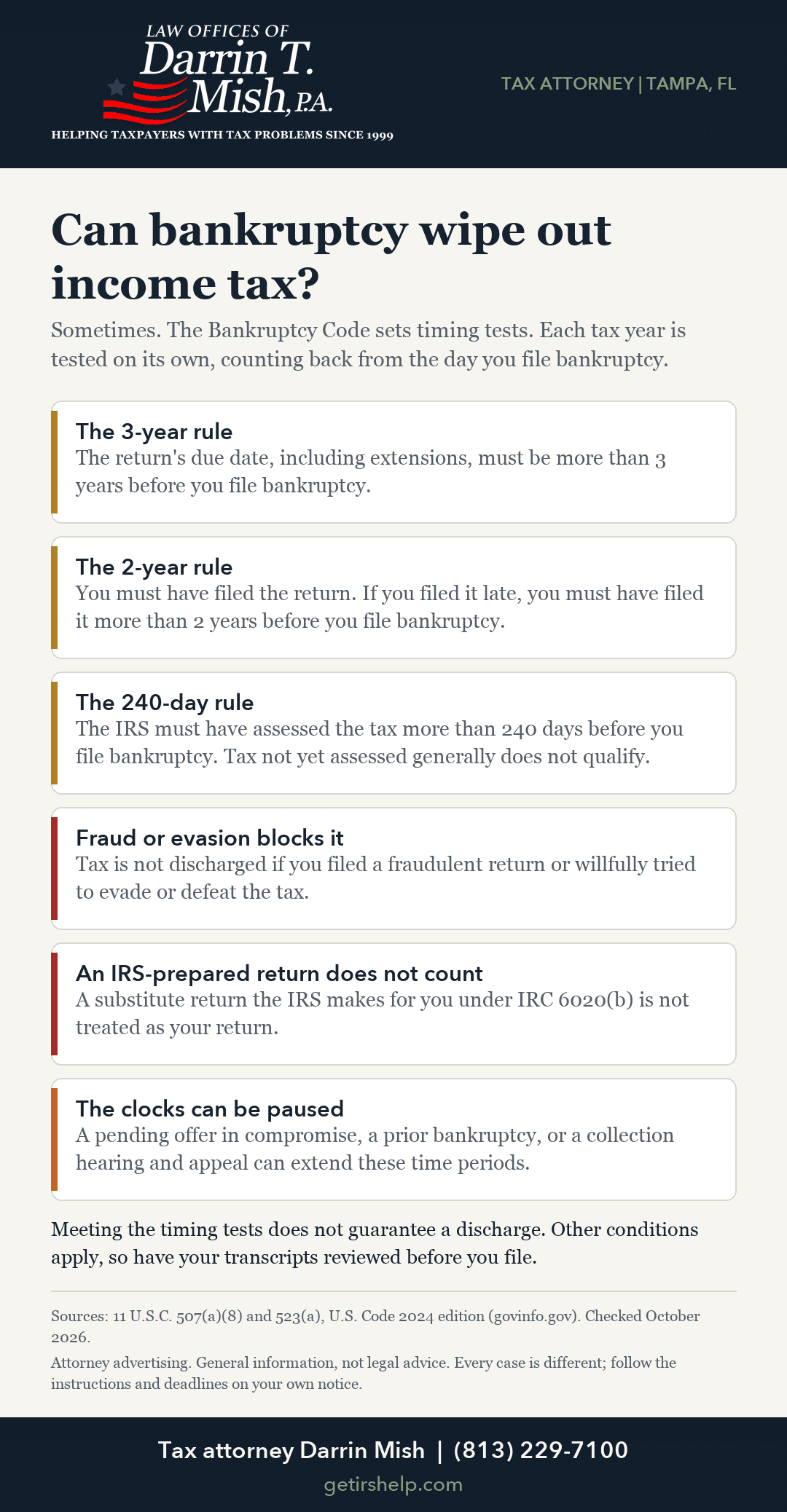
Can bankruptcy wipe out income tax? Sometimes. The Bankruptcy Code sets timing tests. Each tax year is tested on its own, counting back from the day you file bankruptcy.
- The 3-year rule. The return's due date, including extensions, must be more than 3 years before you file bankruptcy.
- The 2-year rule. You must have filed the return. If you filed it late, you must have filed it more than 2 years before you file bankruptcy.
- The 240-day rule. The IRS must have assessed the tax more than 240 days before you file bankruptcy. Tax not yet assessed generally does not qualify.
- Fraud or evasion blocks it. Tax is not discharged if you filed a fraudulent return or willfully tried to evade or defeat the tax.
- An IRS-prepared return does not count. A substitute return the IRS makes for you under IRC 6020(b) is not treated as your return.
- The clocks can be paused. A pending offer in compromise, a prior bankruptcy, or a collection hearing and appeal can extend these time periods.
Meeting the timing tests does not guarantee a discharge. Other conditions apply, so have your transcripts reviewed before you file.
Sources
- https://www.govinfo.gov/content/pkg/USCODE-2024-title11/html/USCODE-2024-title11-chap5-subchapI-sec507.htm
- https://www.govinfo.gov/content/pkg/USCODE-2024-title11/html/USCODE-2024-title11-chap5-subchapII-sec523.htm
Checked October 2026.
If you have a question about your own situation, call tax attorney Darrin Mish at (813) 229-7100.
Attorney advertising. General information, not legal advice. Every case is different; follow the instructions and deadlines on your own notice.