

I’m Darrin Mish. Tampa tax attorney, 32 years in, more than $100 million in IRS debt resolved. What follows isn’t theory – it’s what I’ve actually watched work.
Navigating the world of IRS taxation can feel overwhelming, especially when you're facing notices, audits, or mounting tax debt. Whether you're an individual taxpayer trying to understand your obligations or a business owner managing payroll taxes, the complexities of federal tax law touch every aspect of your financial life. In 2026, understanding how IRS taxation works isn't just about compliance-it's about protecting your financial future and knowing your rights when things go wrong.
Understanding the Foundation of IRS Taxation
The Internal Revenue Service operates under the authority of the Internal Revenue Code, Treasury regulations, and official guidance that form the backbone of American tax law. But what does that actually mean for you?
Think of IRS taxation as a comprehensive system that governs how the federal government collects revenue from individuals, businesses, estates, and trusts. This system isn't static-it evolves through legislation, court decisions, and administrative interpretations that shape how taxes are assessed, collected, and enforced.
The Structure of Tax Law
Tax law operates on multiple levels, creating a hierarchy that determines how taxation rules are applied:
- Statutory law from Congress establishing tax requirements
- Treasury regulations interpreting and implementing those statutes
- Revenue rulings and procedures providing official IRS positions
- Court decisions resolving disputes and setting precedents
- Internal guidance directing IRS employee actions
The Internal Revenue Manual serves as the operational guidebook for IRS personnel, outlining procedures that affect how your case might be handled. When you're dealing with tax issues, understanding this framework helps you anticipate what comes next.

How IRS Taxation Affects Different Taxpayers
Your relationship with IRS taxation depends heavily on your taxpayer category. Are you a W-2 employee with straightforward withholding? A self-employed professional managing quarterly estimates? A corporation navigating complex deduction rules?
Individual Income Tax Obligations
Most Americans interact with IRS taxation through individual income tax returns. In 2026, you're required to file if your gross income exceeds certain thresholds based on your filing status and age.
Here's what triggers filing requirements:
| Filing Status | Under 65 | 65 or Older |
|---|---|---|
| Single | $14,600 | $16,850 |
| Married Filing Jointly | $29,200 | $30,700+ |
| Head of Household | $21,900 | $24,150 |
But filing isn't just about meeting thresholds. You might need to file even with lower income if you owe special taxes, received distributions from health savings accounts, or qualify for refundable credits.
Business and Payroll Taxation
Business owners face a different IRS taxation landscape entirely. Whether you operate as a sole proprietor, partnership, S corporation, or C corporation, each structure carries unique tax obligations and reporting requirements.
Payroll tax responsibilities present particular challenges. You're not just calculating taxes-you're acting as a collection agent for the government, withholding employee taxes and matching certain contributions. Miss these deadlines, and you'll quickly discover that the IRS treats payroll tax violations seriously, sometimes holding business owners personally liable.
Common IRS Taxation Problems and Penalties
Let's be honest-tax problems happen to good people. Maybe you fell behind during a difficult financial period. Perhaps your business experienced cash flow problems. Or maybe you simply didn't understand your obligations under IRS taxation rules.
Assessment and Collection Actions
When you owe taxes, the IRS doesn't just send friendly reminders. The agency follows a structured collection process that escalates if you don't respond:
- Initial notice explaining the balance due
- Follow-up notices with increasing urgency
- Final notice of intent to levy
- Collection enforcement including liens, levies, and garnishments
The IRS guidance on collection procedures is extensive, but here's what matters most: you have rights at every stage, and acting quickly gives you more options.
Penalty Structures Under IRS Taxation
Penalties multiply your tax problems faster than interest alone. The IRS imposes various penalties depending on the violation:
- Failure to file: 5% per month up to 25% of unpaid taxes
- Failure to pay: 0.5% per month up to 25% of unpaid taxes
- Accuracy-related penalties: 20% of the underpayment for substantial understatement
- Fraud penalties: 75% of the underpayment attributable to fraud
Combined penalties can easily add 50% or more to your original tax debt. That's why understanding IRS taxation penalties and responding appropriately is critical to managing your total liability.

Resolution Options Within IRS Taxation Framework
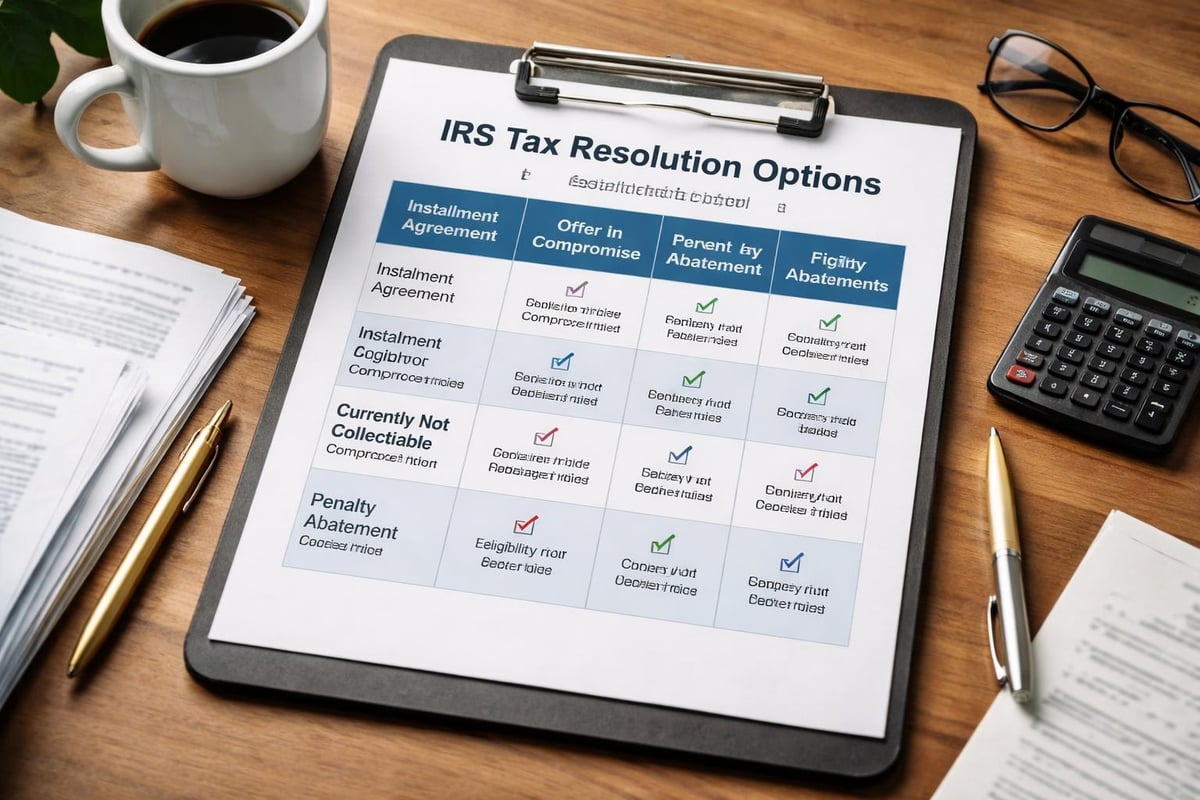
Here's the good news: IRS taxation law provides multiple pathways to resolve tax debt and compliance issues. The key is identifying which option fits your specific situation.
Installment Agreements and Payment Plans
Can't pay your full tax bill immediately? The IRS offers various payment plan options that let you resolve tax debt over time. Depending on how much you owe and your financial situation, you might qualify for:
Short-term payment plans (120 days or less) work when you need a brief extension to gather funds. You'll avoid the user fees associated with longer agreements, though interest and penalties continue accruing.
Long-term installment agreements spread payments over multiple years. For balances under $50,000, you can often set up these agreements online without extensive financial disclosure. Larger balances require more documentation but remain negotiable.
Offer in Compromise Settlements
An Offer in Compromise represents the IRS taxation equivalent of a settlement-you pay less than the full amount owed, and the IRS forgives the remaining debt. Sounds perfect, right?
Not so fast. The IRS accepts offers only when:
- Collection of the full amount would create economic hardship
- Doubt exists about your liability for the tax
- Exceptional circumstances make full payment inequitable
The acceptance rate hovers around 30-40%, making professional representation valuable for navigating the complex application process and financial analysis required.
Currently Not Collectible Status
Sometimes you genuinely can't pay anything toward your tax debt without creating financial hardship. The currently not collectible status offers temporary relief by suspending active collection while your financial situation improves.
This status doesn't eliminate your debt, but it stops levies and gives you breathing room. The IRS will periodically review your finances to determine whether your situation has improved enough to resume payment.
Navigating IRS Taxation Audits and Examinations
Getting that audit notice ranks among most taxpayers' worst nightmares. But understanding how IRS taxation audits work reduces anxiety and helps you respond effectively.
Types of Examinations
The IRS conducts examinations at different levels of intensity:
| Audit Type | Description | Complexity |
|---|---|---|
| Correspondence | Issues handled by mail | Low |
| Office Audit | Meeting at IRS office | Medium |
| Field Audit | IRS visits your location | High |
Correspondence audits typically address specific items like unreported income or questionable deductions. Field audits involve comprehensive examination of your financial records, often spanning multiple tax years.
Your Rights During Examination
The Taxpayer Bill of Rights guarantees specific protections during IRS taxation examinations. You have the right to professional representation-and you should exercise it. Tax attorneys, CPAs, and enrolled agents can appear on your behalf, handle communications, and negotiate outcomes.
You're also entitled to understand why the IRS selected your return, what documentation they need, and how to disagree with findings. The Taxpayer Advocate Service provides independent assistance when you've exhausted normal channels.
Professional Practice and IRS Taxation
If you work with tax professionals, understanding the regulations governing their conduct helps you evaluate their competence and ethics. Circular 230 establishes practice standards for attorneys, CPAs, and enrolled agents representing clients before the IRS.
Practitioner Responsibilities
Tax professionals operating under IRS taxation rules must:
- Exercise due diligence in preparing returns and advising clients
- Avoid conflicts of interest or prohibited contingent fees
- Maintain client confidentiality within legal boundaries
- Provide accurate information and correct errors promptly
The Office of Professional Responsibility enforces these standards, sanctioning practitioners who violate professional conduct rules. When choosing representation, verify their credentials and check whether they're in good standing.
Strategic Approaches to IRS Taxation Compliance
Prevention beats cure when dealing with IRS taxation issues. Building solid compliance practices protects you from future problems and simplifies resolution if issues arise.
Record Keeping Best Practices
Proper documentation forms your first line of defense in IRS taxation disputes. The IRS generally has three years to audit returns, but that extends to six years for substantial understatements. Keep records supporting:
- Income from all sources
- Deductible expenses with receipts
- Asset basis for calculating gains or losses
- Prior year returns and supporting schedules
Digital record-keeping systems make organization easier, but ensure you maintain backup copies and can produce hard copies if requested during examination.
Estimated Tax Payments and Withholding
Underpayment penalties catch many taxpayers by surprise. If you don't pay at least 90% of your current year tax liability or 100% of the prior year amount (110% for higher-income taxpayers) through withholding or estimates, you'll owe penalties even if you file timely and pay the full amount due.
Self-employed individuals and those with significant investment income should calculate quarterly estimates carefully. When circumstances change mid-year-a big sale, unexpected income, or major deduction-adjust your payments to avoid surprises.
When Tax Liens and Levies Enter the Picture
Among the most serious IRS taxation enforcement tools are tax liens and levies. These collection mechanisms give the IRS powerful leverage to secure payment.
Federal Tax Liens
A federal tax lien represents the government's legal claim against your property when you fail to pay tax debt. The IRS files a Notice of Federal Tax Lien publicly, which:
- Attaches to all current and future property
- Damages your credit rating significantly
- Makes selling or refinancing property difficult
- Takes priority over many other creditors
Liens don't disappear until you satisfy the debt, the IRS releases it, or the collection statute expires. You can petition for lien withdrawal in certain circumstances, particularly if it facilitates debt collection or you've entered a direct debit installment agreement.
Tax Levies and Garnishments
While liens claim your property, levies actually seize it. The IRS can levy bank accounts, wages, retirement accounts, and other assets to satisfy tax debt. Wage garnishments leave you with minimal exempt amounts, making it nearly impossible to meet basic living expenses.
Stopping a levy requires immediate action-requesting a Collection Due Process hearing, demonstrating financial hardship, or arranging alternative payment terms. Time matters critically because once the IRS seizes funds, recovering them becomes difficult.
Innocent Spouse Relief and Joint Return Issues
Marriage complicates IRS taxation, especially when one spouse handles financial matters. Joint returns create joint and several liability-both spouses are fully responsible for the entire tax debt, even if one spouse earned all the income or claimed improper deductions.
Qualifying for Relief
Innocent spouse relief provides an escape when your spouse or former spouse improperly reported items without your knowledge. You must demonstrate:
- A joint return was filed
- Understatement exists due to erroneous items of your spouse
- You didn't know and had no reason to know of the understatement
- Holding you liable would be inequitable under the circumstances
Separation of liability and equitable relief offer alternative paths when you don't meet innocent spouse criteria. These provisions recognize that holding someone responsible for a spouse's tax misconduct isn't always fair.
Statute of Limitations in IRS Taxation
Time limits protect taxpayers from indefinite IRS taxation exposure. Understanding these deadlines helps you evaluate your situation and potential liability.
Assessment and Collection Periods
The IRS generally must assess additional tax within three years after you file a return. This period extends to six years if you omit more than 25% of gross income, and never expires if you don't file or file a fraudulent return.
Once assessed, the IRS has ten years to collect the debt. This Collection Statute Expiration Date (CSED) gets suspended during certain events-bankruptcy, Collection Due Process hearings, or periods when you're outside the United States. Tracking your CSED helps you understand whether waiting out the statute represents a viable strategy.
Addressing Unfiled Returns and Back Taxes
Unfiled returns represent one of the most common IRS taxation problems. Maybe you couldn't afford to pay, so you didn't file. Perhaps you lost records or felt overwhelmed by complexity. Whatever the reason, unfiled returns create compounding problems.
Voluntary Compliance Advantages
Filing before the IRS files returns for you (Substitute for Return) gives you control over deductions, filing status, and credits that reduce your tax liability. The IRS won't give you the benefit of doubt when preparing returns on your behalf.
Additionally, voluntary disclosure before the IRS contacts you positions you favorably for penalty abatement and demonstrates good faith. You're showing willingness to comply rather than forcing enforcement action.
The relief available for back taxes often depends on your compliance history. Get current on filing obligations first, then address payment arrangements for balances owed.
The Role of Tax Attorneys in IRS Taxation Matters
Tax controversies often require specialized legal expertise. While CPAs excel at preparing returns and enrolled agents handle many representation matters, tax attorneys bring unique advantages for complex IRS taxation disputes.
Attorney-Client Privilege
Communications with tax attorneys enjoy broader privilege protection than discussions with other tax professionals. This privilege extends to tax advice and planning, not just litigation, giving you confidentiality when discussing sensitive matters.
When criminal tax issues arise-whether fraud allegations, willful failure to file, or evasion charges-only attorneys provide the representation you need. The stakes in criminal tax cases include imprisonment, making qualified legal counsel essential.
Litigation and Appeals Experience
Many IRS taxation disputes ultimately reach Tax Court, district court, or the Court of Federal Claims. Tax attorneys handle litigation, present evidence, examine witnesses, and argue legal positions before judges.
Even before litigation, attorneys negotiate effectively with IRS appeals officers and counsel, leveraging legal arguments and hazards of litigation to reach favorable settlements. Their training in advocacy and procedural rules creates advantages throughout the dispute resolution process.
Understanding IRS taxation in 2026 requires more than just knowing rules-it demands recognizing your rights, available remedies, and when professional help becomes necessary. If you're facing tax debt, liens, levies, or other IRS problems, the experienced team at Law Offices of Darrin T. Mish, P.A. offers the personalized legal solutions you need, backed by over 32 years of experience helping taxpayers worldwide. Don't navigate IRS taxation challenges alone-contact Law Offices of Darrin T. Mish, P.A. today for a free consultation and take the first step toward resolving your tax issues.