

I’m Darrin Mish. Tampa tax attorney, 32 years in, more than $100 million in IRS debt resolved. What follows isn’t theory – it’s what I’ve actually watched work.
You open your paycheck and freeze. The amount is hundreds of dollars less than expected. No, it's not a mistake. The IRS has started garnishing your wages, and suddenly your carefully balanced budget is in freefall. If you're facing this situation or worried it might happen to you, you're not alone. Thousands of Americans deal with wage garnishments every year, but understanding how they work and what rights you have can make all the difference between financial disaster and a manageable path forward.
What Are Wage Garnishments and How Do They Work?
Wage garnishments represent one of the most aggressive collection tools available to creditors and government agencies. When you owe money and haven't made arrangements to pay, a portion of your earnings gets automatically deducted from your paycheck before you even see it.
The process isn't instant, though. Before your employer starts withholding money, specific legal steps must occur. For most creditors, this means filing a lawsuit, winning a judgment, and then obtaining a court order. The IRS, however, operates differently.
The IRS Advantage in Wage Garnishments
Unlike other creditors who need to go through the court system, the IRS can initiate wage garnishments administratively. This means they don't need a judge's permission to start taking money from your paycheck. They just need to follow their own internal procedures.
Here's how the IRS process typically unfolds:
- You receive multiple notices about your unpaid tax debt
- The IRS sends a Final Notice of Intent to Levy and Notice of Your Right to a Hearing (CP90 or LT11)
- You have 30 days to respond or request a Collection Due Process hearing
- If you don't respond, the IRS sends a notice to your employer
- Your employer begins withholding money from your wages
The entire process can feel impersonal and overwhelming, especially when you're already stressed about money.

How Much Can Actually Be Garnished From Your Paycheck?
This is where things get tricky, because the answer depends on who's doing the garnishing. Federal law provides some protections, but they vary significantly based on the type of debt.
Federal Limits on Wage Garnishments
For most creditors, federal law restricts wage garnishment to the lesser of two amounts: 25% of your disposable earnings or the amount by which your weekly disposable earnings exceed 30 times the federal minimum wage. Disposable earnings mean what's left after legally required deductions like taxes and Social Security.
The IRS can’t take everything — even when they’re trying. There are 13 specific categories of income and property protected by federal law from IRS seizure. I walk through every one in What the IRS Can and Can’t Take: Your Complete Guide to Garnishment Exemptions.
But the IRS plays by different rules entirely.
IRS Wage Garnishment Calculations
When the IRS garnishes wages, they use a formula based on your filing status and number of dependents. They're not limited to 25% of your income. Instead, they calculate how much they think you need to live on, then take everything above that amount.
Here's what makes this particularly harsh: the IRS uses standard deduction amounts and exemptions that may not reflect your actual living expenses. Your rent might be $2,000, but if the IRS tables say housing should cost $1,500 in your area, tough luck.
| Filing Status | Standard Exemption (2026) | Additional per Dependent |
|---|---|---|
| Single | $350/month | $110/month |
| Married Filing Jointly | $700/month | $110/month |
| Head of Household | $525/month | $110/month |
These amounts get adjusted annually but rarely keep pace with actual cost of living increases in expensive cities.
Your Legal Protections Against Wage Garnishments
Even when facing wage garnishments, you're not completely without options or protections. Federal law provides several safeguards designed to prevent complete financial devastation.
Protection From Termination
One crucial protection: your employer cannot fire you because of a wage garnishment for a single debt. If you face garnishment for one tax debt and your employer retaliates by firing you, that's illegal under federal law.
However, this protection has limits. If you have multiple garnishment orders for different debts, the law doesn't protect you from termination. Some employers view repeated garnishments as administrative burdens and may look for reasons to let you go.
Minimum Income Protections
You always get to keep a portion of your income, even with IRS wage garnishments. The calculations ensure you have enough for basic necessities, though "enough" is subjective and often insufficient in high cost-of-living areas.
Social Security benefits receive special protections. Generally, the IRS can only garnish 15% of Social Security payments, and certain types of Social Security income may be completely exempt.
Different Types of Wage Garnishments You Might Face
Not all wage garnishments come from the IRS. Understanding the different types helps you know what you're dealing with and what options you have.
Tax-Related Garnishments
Beyond federal income taxes, you might face wage garnishments for:
- Unpaid state income taxes: Most states can garnish wages for unpaid state taxes, following procedures similar to the IRS
- Property taxes: Local governments can place liens and eventually garnish wages for delinquent property taxes
- Payroll tax debts: If you own a business with unpaid payroll taxes, the IRS can pursue both business and personal assets
When dealing with IRS delinquent taxes, the clock starts ticking immediately. Ignoring notices only accelerates the collection process.
Non-Tax Wage Garnishments
You might also face wage garnishments for:
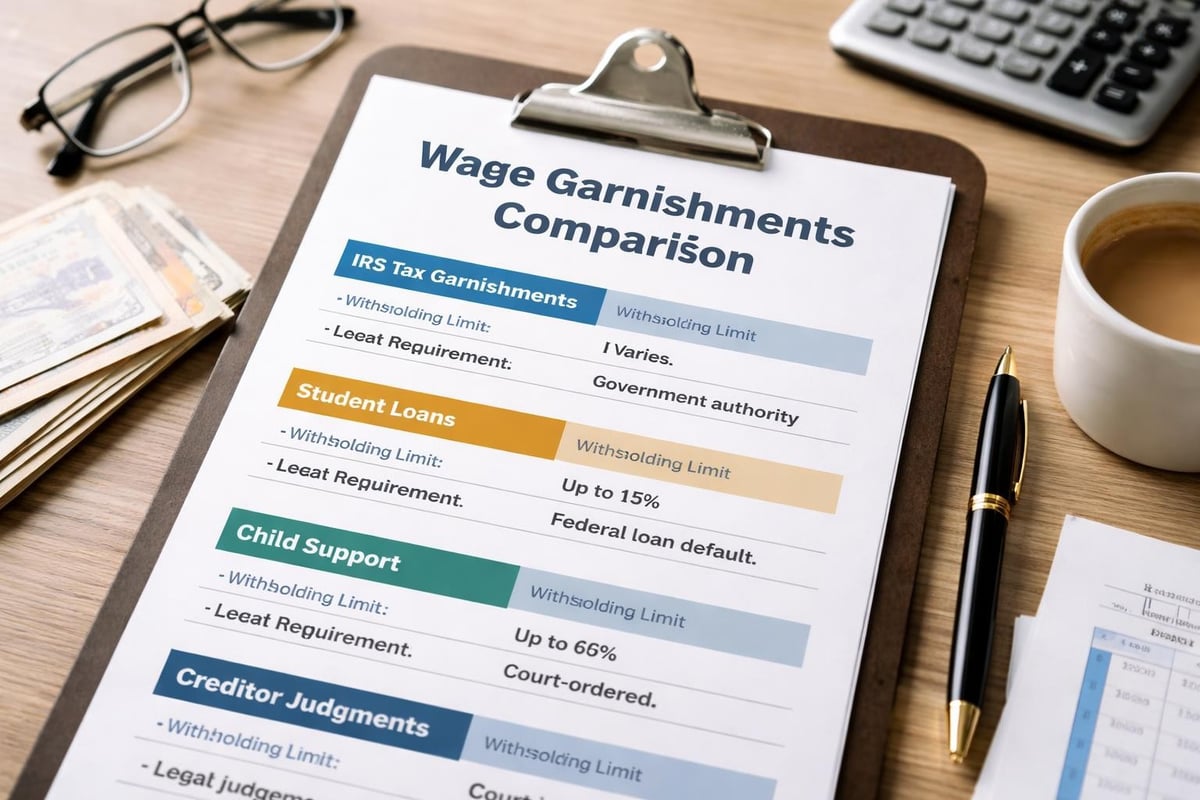
- Child support and alimony (can take up to 50-60% of disposable income)
- Federal student loans (up to 15% through Administrative Wage Garnishment)
- Unpaid court judgments from creditors
- Federal agency debts
Each type follows different rules and allows different amounts to be withheld. The wage garnishment process varies depending on who's collecting and what you owe.
How Employers Handle Wage Garnishment Orders
Your employer plays a crucial but sometimes uncomfortable role in the wage garnishment process. They're legally required to comply with valid garnishment orders, but employer responsibilities extend beyond simply withholding money.
What Your Employer Must Do
When your employer receives a garnishment order, they must:
- Verify you're currently employed and provide employment information
- Calculate the correct garnishment amount based on your earnings
- Begin withholding within the timeframe specified in the order
- Send withheld amounts to the appropriate agency or creditor
- Maintain accurate records of all garnishment activity
- Continue garnishment until officially notified to stop
Under Code of Federal Regulations 20 CFR 422.440, employers face specific obligations regarding administrative wage garnishment orders, including strict timelines for compliance.
What Your Employer Cannot Do
While compliance is mandatory, employers cannot:
- Share information about your garnishment with other employees unnecessarily
- Refuse to process a valid garnishment order
- Fire you for one garnishment (though some find creative ways around this)
- Charge you administrative fees for processing garnishments (in most states)
Most employers don't enjoy this process. It creates extra work for payroll departments and puts them in an awkward position. Some smaller employers, especially those using basic payroll systems, struggle with the administrative burden.
Stopping Wage Garnishments Before They Start
Prevention beats cure, especially with wage garnishments. If you owe taxes but haven't yet faced a levy, you have several options to avoid garnishment altogether.
Payment Agreements and Installment Plans
The IRS would rather receive steady payments than go through the garnishment process. An installment agreement lets you pay your tax debt over time in manageable monthly payments.
For debts under $50,000, you can often get approved for a streamlined installment agreement without providing detailed financial information. Larger debts require more documentation but are still possible.
Once you have an approved payment plan and make payments on time, the IRS typically won't garnish your wages. The key word is "approved." An informal promise to pay doesn't stop collection activities.
Offers in Compromise
Sometimes you genuinely cannot pay your full tax debt, even over time. An Offer in Compromise lets you settle your tax debt for less than you owe, based on your ability to pay.
The IRS approves these relatively rarely, looking at your income, expenses, asset equity, and future earning potential. But when you qualify, an OIC can reduce your debt significantly and stop wage garnishments.
Currently Not Collectible Status
If you're facing genuine financial hardship, you might qualify for Currently Not Collectible status. This doesn't eliminate your debt, but it temporarily suspends IRS collection activities, including wage garnishments.
The IRS reviews your income and necessary living expenses. If paying your tax debt would prevent you from meeting basic needs, they may grant CNC status. Interest and penalties continue accruing, but at least you're not facing immediate garnishment.
What To Do When You're Already Being Garnished
So the worst has happened. Your employer just notified you that they've received a garnishment order. What now? You still have options, but you need to act quickly.
Request a Collection Due Process Hearing
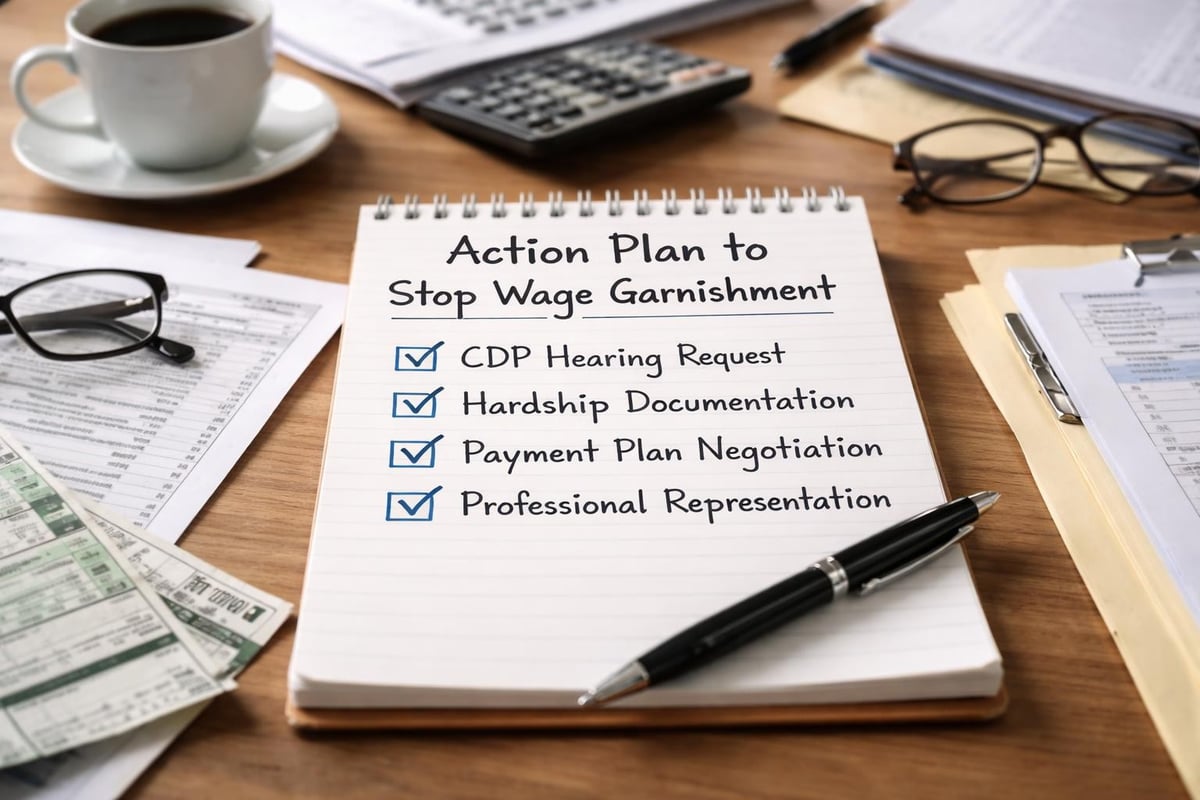
If you're within 30 days of receiving the Final Notice of Intent to Levy, you can request a Collection Due Process (CDP) hearing. This stops the garnishment while your case is reviewed.
During the CDP hearing, you can:
- Challenge the amount of tax debt
- Propose alternative collection options
- Argue that the levy creates economic hardship
- Raise procedural issues with IRS collection actions
Even if you're past the 30-day deadline, you might still request an equivalent hearing. It won't automatically stop the garnishment, but it gives you a forum to explore solutions.
Explore Tax Debt Solutions
Multiple tax debt solutions exist beyond simply paying in full. Working with an experienced tax attorney helps you identify which options fit your situation.
Some taxpayers qualify for penalty abatement, which reduces their total debt. Others benefit from innocent spouse relief if a former partner created the tax problem. Still others need complex negotiations to restructure payment terms.
Demonstrate Financial Hardship
If the wage garnishment creates immediate economic hardship, preventing you from paying for housing, food, transportation, or medical care, you can request a levy release based on hardship.
You'll need to document your financial situation thoroughly:
- Recent pay stubs showing your income
- Bank statements demonstrating your financial position
- Bills and expenses proving the garnishment prevents meeting basic needs
- Any evidence of special circumstances (medical issues, dependent care, etc.)
The IRS takes legitimate hardship seriously, but you need compelling documentation.
The Real Cost of Wage Garnishments Beyond the Money
While the financial impact of wage garnishments is obvious, the hidden costs can be equally devastating. Understanding these helps you appreciate why acting quickly matters so much.
Employment Relationships and Career Impact
Even though firing someone for one garnishment is illegal, the reality is more complex. Garnishments create awkward conversations with employers and HR departments. Some employers become concerned about your financial responsibility, especially if your job involves handling money or financial decision-making.
Multiple garnishments exponentially increase these risks. Without legal protection against termination for multiple debts, some employers decide the administrative headache isn't worth keeping the employee.
Credit and Financial Reputation
Wage garnishments themselves don't appear on credit reports, but the debts that led to them probably do. Tax liens used to devastate credit scores before the major bureaus stopped reporting them in 2018, but the underlying tax debt still creates problems.
Future creditors can discover tax liens through public records. Mortgage lenders specifically search for tax liens because IRS debts take priority over almost all other claims against your property.
Stress and Mental Health
The psychological impact of watching your paycheck disappear before you receive it creates constant stress. You're working hard, earning money, but can't access it. This feeling of helplessness affects mental health, relationships, and overall quality of life.
Some people become so discouraged they consider extreme options like not working at all, working under the table, or even bankruptcy. These reactions usually make situations worse, not better.
Working With Tax Professionals to Resolve Wage Garnishments
Facing wage garnishments alone feels overwhelming because it is overwhelming. The IRS has specialized attorneys and revenue officers working full-time on collections. You need someone equally knowledgeable on your side.
What Tax Attorneys Can Do
Experienced tax attorneys bring several advantages to wage garnishment situations:
- Immediate representation: Once you hire an attorney, the IRS must communicate with them instead of you
- Technical expertise: Tax law is complex, and attorneys understand the nuances that create opportunities
- Negotiation power: IRS agents take attorney representation seriously and may offer better terms
- Legal protection: Attorneys ensure the IRS follows proper procedures and respects your rights
The Law Offices of Darrin T. Mish, P.A. has spent over 32 years helping taxpayers resolve wage garnishments and other IRS problems. Experience matters when your paycheck is on the line.
The Value of Free Consultations
Many tax attorneys, including our firm, offer free initial consultations. This gives you a chance to:
- Explain your situation without financial risk
- Understand your options clearly
- Learn what outcomes are realistic for your circumstances
- Decide if professional representation makes sense for your case
Sometimes taxpayers discover their situation is simpler than they thought and can be resolved with straightforward steps. Other times, the consultation reveals complex issues requiring immediate professional intervention.
Common Myths About Wage Garnishments Debunked
Misinformation about wage garnishments spreads quickly, often leading taxpayers to make poor decisions. Let's clear up some persistent myths.
Myth 1: The IRS will negotiate before starting garnishment. Reality: While the IRS sends notices, they're not negotiating. They're informing you of upcoming action. You must initiate any negotiation.
Myth 2: Wage garnishments stop automatically when you set up payments. Reality: Even if you arrange a payment plan after garnishment starts, the levy continues until officially released. Setting up payments doesn't automatically stop the garnishment.
Myth 3: You can't get garnished if you're barely making ends meet. Reality: The IRS formula determines what you keep, not your actual expenses. If you live in an expensive area or have legitimate high costs, you might face garnishment despite genuine hardship.
Myth 4: Changing jobs stops wage garnishment. Reality: The IRS will simply send the garnishment order to your new employer. This might buy you a few weeks, but it's not a solution.
Myth 5: Bankruptcy always eliminates tax debt and stops garnishment. Reality: Some tax debts can be discharged in bankruptcy, but many cannot. Recent tax debts and payroll taxes typically survive bankruptcy. It's complicated and requires careful analysis.
Moving Forward After Wage Garnishment Resolution
Once you've resolved a wage garnishment, whether through payment, compromise, or other means, you're not quite finished. Taking steps to prevent future problems protects you from going through this nightmare again.
Staying Current With Ongoing Tax Obligations
The most common reason people face wage garnishments is falling behind on current taxes while dealing with past debts. If you're self-employed or have income not subject to withholding, make estimated tax payments quarterly.
Even if you're paying off old tax debt, you must stay current on new tax obligations. Missing current year filings or payments while addressing past debts can restart the collection cycle.
Building an Emergency Fund
Financial emergencies often trigger the cascade leading to tax debt. An unexpected medical bill, car repair, or job loss forces you to choose between current expenses and tax payments.
Even a small emergency fund of $1,000-2,000 creates a buffer that might prevent future tax problems. It's hard to save money when paying off tax debt, but even $25-50 per month builds up over time.
Understanding Your Tax Withholding
Many wage garnishments result from consistent under-withholding from paychecks. If you face a tax bill every April instead of getting a refund, you're probably not withholding enough.
Review your W-4 with your employer and adjust your withholding to more closely match your actual tax liability. Yes, this means smaller paychecks now, but it prevents larger problems later.
Keeping Better Financial Records
Good records help in multiple ways. They make tax filing easier and more accurate, reducing mistakes that create tax debt. They also provide documentation if you need to negotiate with the IRS or prove financial hardship.
You don't need an elaborate system. Basic organization of income records, expense receipts, and tax documents prevents many problems before they start.
Special Considerations for Different Employment Situations
Your employment type affects how wage garnishments work and what strategies might help you.
Traditional Employees
If you work for an employer who issues a W-2, the garnishment process is straightforward. Your employer receives the order and begins withholding. You have limited ability to control timing or amounts beyond negotiating with the IRS.
Self-Employed and Independent Contractors
Wage garnishments technically don't apply to self-employed individuals because you don't receive "wages." However, the IRS has other tools to collect from you, including:
- Bank account levies that freeze and seize funds
- Levies against accounts receivable from your clients
- Seizure of business assets
- Levies against any income streams you receive
Some self-employed people mistakenly think they're safe from garnishment. You're actually more vulnerable because the IRS can target your business accounts and client payments.
Multiple Job Holders
If you work multiple jobs, the IRS can garnish wages from each employer simultaneously. They're not limited to taking money from just one source of income. This can create severe financial strain but also motivates quick resolution.
Commission-Based Compensation
Commission income is subject to wage garnishment just like salary. The challenge is that fluctuating income makes it harder to predict garnishment amounts month to month. A good commission month means a larger garnishment. This unpredictability complicates budgeting and financial planning.
Wage garnishments represent serious situations requiring immediate attention and strategic action. Whether you're facing your first notice or already watching your paycheck shrink, understanding your rights and options empowers you to take control of the situation. The IRS collection machine is powerful, but it's not unstoppable. With over three decades of experience helping taxpayers resolve wage garnishments and other IRS problems, Law Offices of Darrin T. Mish, P.A. offers the expertise and personalized attention you need to protect your paycheck and find a path forward. Don't let wage garnishments control your financial future. Contact us today for a free consultation to explore your options.