

I’m Darrin Mish. Tampa tax attorney, 32 years in, more than $100 million in IRS debt resolved. What follows isn’t theory – it’s what I’ve actually watched work.
Nobody wants to see their paycheck shrink because the IRS is taking a chunk of it. Yet thousands of Americans face this reality every year when they fall behind on their tax obligations. IRS wage garnishments represent one of the most aggressive collection tools the government uses to recover unpaid taxes, and understanding how they work is your first step toward protecting your income. Whether you're currently facing garnishment or worried about the possibility, knowing your rights and options can make all the difference between financial hardship and a manageable resolution.
What Are IRS Wage Garnishments and How Do They Work?
IRS wage garnishments, officially called "levies" by the Internal Revenue Service, allow the government to seize a portion of your wages directly from your employer before you ever see your paycheck. Unlike most creditors who need court approval to garnish wages, the IRS can implement wage garnishment through administrative action alone.
Here's what makes the IRS different: they don't need to sue you or get a judgment. Once you owe back taxes and haven't responded to their notices, they have the authority to contact your employer directly and demand a portion of your earnings.
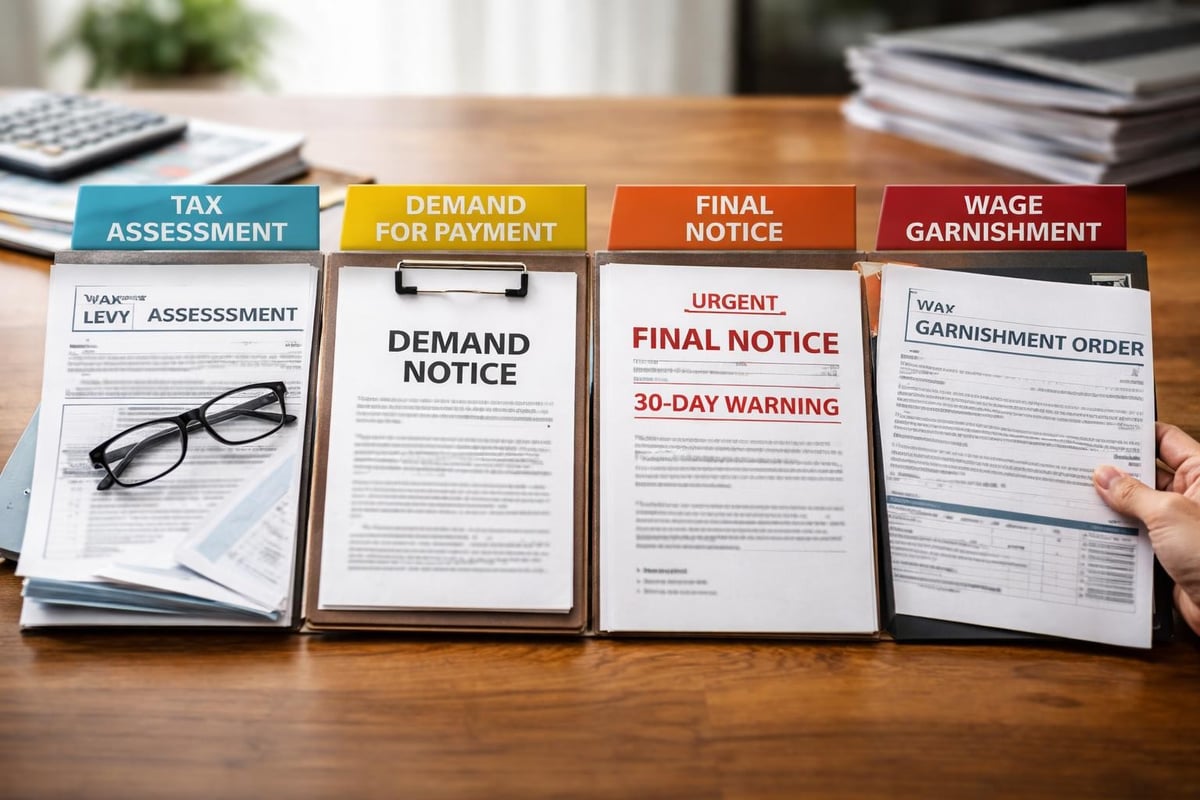
The process isn't instantaneous, though. The IRS must follow specific procedures before implementing a wage garnishment:
- Assessment of tax debt – The IRS determines you owe taxes and records the debt
- Notice and demand for payment – You receive a bill explaining the amount owed
- Final Notice of Intent to Levy – Sent at least 30 days before garnishment begins
- Levy implementation – Your employer receives the garnishment order
Your employer has no choice but to comply once they receive the levy notice. Federal law requires them to send a portion of your wages to the IRS each pay period until the debt is satisfied or the levy is released.
How Much Can the IRS Take From Your Paycheck?
This is where IRS wage garnishments become particularly harsh. Unlike other creditors who typically can only take 15-25% of your disposable income, the IRS takes a very different approach. They calculate what you're allowed to keep rather than what they can take.
The IRS uses Publication 1494 to determine your exempt amount based on:
Want the full picture of what’s actually protected? I broke down all 13 categories of income and assets the IRS can’t legally take from you — including the protections most taxpayers don’t know about — in What the IRS Can and Can’t Take: Your Complete Guide to Garnishment Exemptions.
- Your filing status (single, married, head of household)
- Your number of dependents
- Your standard deduction
- Current pay period (weekly, biweekly, monthly)
Everything above this exempt amount goes to the IRS. In practice, this often means the IRS can take 70-80% of your net pay, leaving you with barely enough to cover basic living expenses.
Wage Garnishment Exemption Amounts for 2026
| Filing Status | Annual Exemption | Weekly Exemption (approx.) |
|---|---|---|
| Single | $15,000 | $288 |
| Married Filing Jointly | $30,000 | $577 |
| Head of Household | $22,500 | $433 |
Note: Exemption amounts increase with each dependent claimed
These numbers show why IRS wage garnishments create immediate financial crisis for most taxpayers. If you're earning $1,000 per week net pay and you're single with no dependents, the IRS could potentially take over $700 of that paycheck.
Your Rights When Facing IRS Wage Garnishments
You're not powerless when the IRS initiates wage garnishment. Federal law provides specific taxpayer rights and protections, even though the IRS doesn't need court approval for garnishment.
Due Process Rights under Internal Revenue Code Section 6330 give you the right to a Collection Due Process (CDP) hearing before or after the IRS implements a levy. This hearing, conducted by the IRS Office of Appeals, allows you to:
- Challenge the underlying tax liability
- Discuss collection alternatives like installment agreements
- Present evidence of financial hardship
- Raise procedural issues with the levy
You must request this hearing within 30 days of receiving your Final Notice of Intent to Levy to prevent the garnishment from starting. If you miss that window, you can still request an Equivalent Hearing, though it won't stop collection action while your case is reviewed.
The IRS provides resources on avoiding levies that outline your proactive options before garnishment begins. Taking action early significantly increases your chances of preventing wage garnishment altogether.
Additional Taxpayer Protections
- Statute of Limitations: The IRS generally has 10 years to collect tax debt from the date of assessment
- Partial Payment Rights: You can often negotiate reduced payment amounts based on your financial situation
- Hardship Status: If garnishment creates genuine hardship, you may qualify for Currently Not Collectible status
- Innocent Spouse Relief: When tax debt stems from a spouse's or former spouse's actions, innocent spouse relief may eliminate your liability
How to Stop IRS Wage Garnishments
Once wage garnishment starts, every paycheck reminds you of the urgency to resolve your tax situation. Fortunately, several options exist to stop IRS wage garnishments, though each requires specific qualifications and documentation.
Pay the Tax Debt in Full
The most straightforward solution is paying your entire tax balance. This immediately releases the levy and stops all garnishment. Of course, if you had the funds available, you probably wouldn't be facing garnishment in the first place.
For many taxpayers dealing with back tax debt, paying in full isn't realistic. That's where alternative resolution methods become essential.
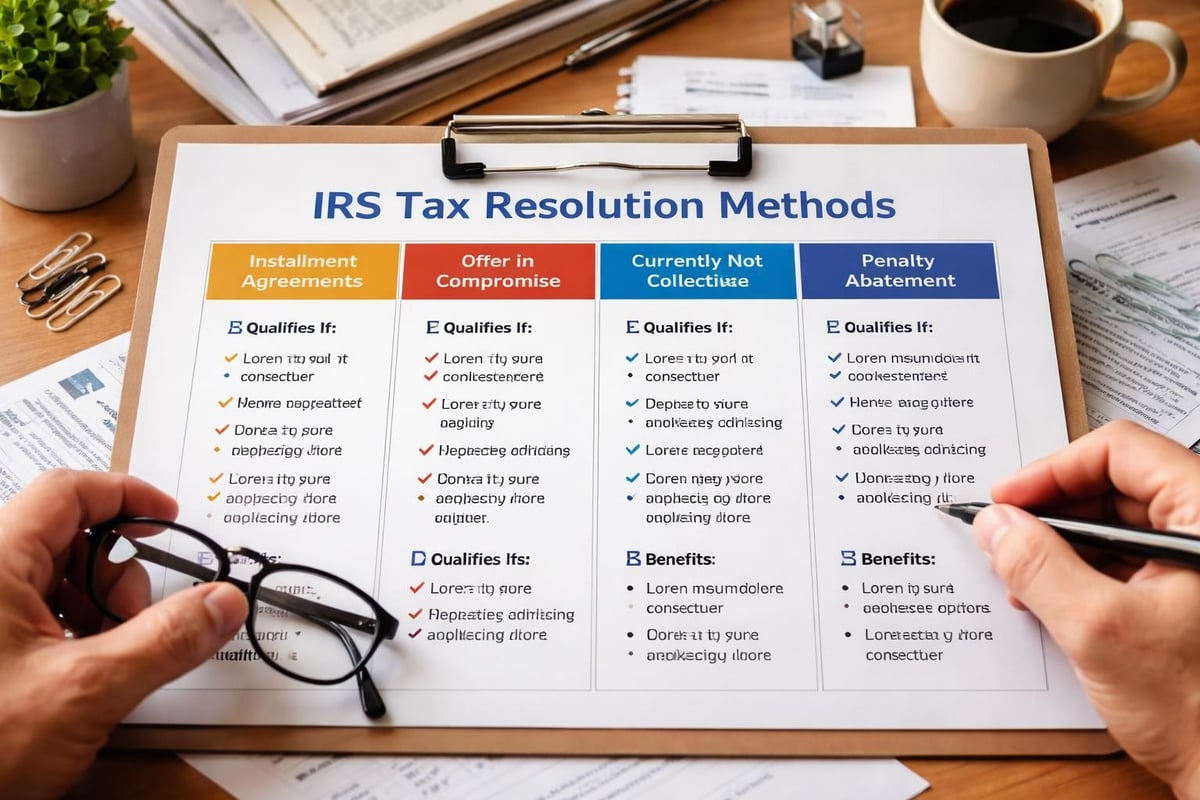
Set Up an Installment Agreement
An IRS installment agreement allows you to pay your tax debt over time through monthly payments. Once approved and properly set up, the IRS typically releases wage garnishments.
You'll need to demonstrate that you can maintain the payment schedule and stay current on all future tax obligations. The IRS won't release a levy for an installment agreement until you've made at least three consecutive payments in most cases.
Monthly payment amounts depend on:
- Total tax debt owed
- Your ability to pay based on income and expenses
- The remaining collection statute expiration date
- Your compliance history with the IRS
Request an Offer in Compromise
An Offer in Compromise lets you settle your tax debt for less than the full amount owed. While this option gets significant attention because it can dramatically reduce tax liability, qualification requirements are strict.
The IRS considers:
- Your income and future earning potential
- Your expenses and assets
- Your ability to pay
If approved, wage garnishment stops once you're complying with the Offer terms, which includes making your initial payment and staying current on all filing and payment requirements during the Offer period.
Prove Financial Hardship
When IRS wage garnishments create genuine financial hardship, you can request Currently Not Collectible (CNC) status. This temporarily halts all collection activities, including wage garnishment.
To qualify for hardship status, you must demonstrate that levy enforcement prevents you from meeting basic living expenses like housing, food, transportation, and medical care. The IRS explains hardship relief options on their website, but approval requires detailed financial documentation.
Important consideration: CNC status doesn't eliminate your tax debt. Interest and penalties continue accruing, and the IRS can resume collection efforts if your financial situation improves.
What Happens to Your Employer During Wage Garnishment
Your employer becomes an unwilling participant in the IRS collection process when they receive a levy notice. Understanding their obligations helps you navigate workplace dynamics during this challenging time.
Federal law requires employers to:
- Respond within the specified timeframe (usually within one pay period)
- Calculate the exempt amount using IRS tables
- Remit the garnished wages to the IRS each pay period
- Continue garnishment until receiving a release notice from the IRS
Employers who fail to comply face liability for the amounts they should have withheld. This creates strong incentive for immediate compliance, regardless of any hardship it creates for you.
Can You Be Fired for Wage Garnishment?
Federal law under the Consumer Credit Protection Act prohibits employers from firing employees because of a single wage garnishment. However, this protection doesn't extend to multiple garnishments, and it doesn't prevent other employment consequences.
Many taxpayers worry about the embarrassment and potential career impact when their employer learns about their tax problems. These concerns are valid, but hiding from the problem only makes it worse. The IRS provides guidance for employers who receive levy notices, ensuring they understand their legal obligations.
| Employer Obligation | Timeline | Consequence of Non-Compliance |
|---|---|---|
| Respond to levy notice | 1 pay period | Liability for unpaid amounts |
| Begin wage withholding | Next pay period | Penalties and interest |
| Remit payments to IRS | Each pay period | Federal enforcement action |
| Continue until released | Until IRS sends release | Extended liability |
Common Mistakes That Make IRS Wage Garnishments Worse
When facing wage garnishment, panic leads many taxpayers to make decisions that compound their problems rather than solving them. Avoiding these common mistakes protects your financial future.
Ignoring IRS notices tops the list of costly errors. Every notice the IRS sends includes important information about your rights, deadlines, and options. The Final Notice of Intent to Levy specifically gives you 30 days to respond before garnishment begins. Missing this deadline eliminates your ability to request a CDP hearing that would prevent garnishment.
Quitting your job to avoid garnishment might seem logical, but it accomplishes nothing. The IRS will simply levy your next employer once you find new employment. Meanwhile, you've lost income and potentially damaged your career trajectory.
Filing for bankruptcy without understanding tax implications represents another serious mistake. While bankruptcy can discharge some tax debts under specific circumstances, it doesn't automatically stop IRS wage garnishments for non-dischargeable tax debt. You need expert guidance to determine whether bankruptcy helps your specific tax situation.
Attempting to negotiate with the IRS without representation often results in less favorable outcomes. The IRS has professional revenue officers whose job is collecting tax debt, not minimizing your payment. Having experienced representation ensures you understand all available options and pursue the most beneficial resolution strategy.
Failing to stay current on new tax obligations while resolving old debt creates additional problems. Even if you successfully negotiate an installment agreement or other resolution, defaulting on current year taxes typically voids that agreement and restarts aggressive collection efforts.

How IRS Wage Garnishments Affect Federal Employees
Federal employees and retirees face unique considerations with IRS wage garnishments. The IRS has implemented specific programs targeting government workers with unresolved tax issues, recognizing their stable income streams make wage garnishment particularly effective.
The Federal Payment Levy Program (FPLP) allows the IRS to continuously levy up to 15% of certain federal payments, including Social Security benefits, federal salaries, and federal retirement benefits. This differs from standard wage garnishment procedures and can create additional complications for federal workers.
Federal employees should understand that security clearances and employment status can be affected by serious tax delinquencies. While a single tax issue won't automatically cost you your job or clearance, ongoing tax problems without resolution efforts create risk.
Alternative Collection Methods Beyond Wage Garnishment
IRS wage garnishments represent just one collection tool in the IRS arsenal. Understanding other methods helps you recognize the full scope of potential consequences for unpaid taxes.
Bank levies allow the IRS to freeze and seize funds directly from your bank accounts. Unlike wage garnishments that take a portion of each paycheck, bank levies can empty your entire account balance in a single action.
Tax liens don't directly take your property but create a public record of your tax debt that attaches to all your current and future assets. Federal tax liens damage your credit, complicate property sales, and can prevent you from obtaining financing.
Property seizure and sale represents the IRS's most extreme collection method. While relatively rare, the IRS can legally seize and sell your property, including your home, vehicles, and business assets, to satisfy tax debt.
The IRS typically uses these methods in escalating order. Wage garnishment often comes after you've ignored multiple notices but before property seizure. This progression gives you multiple opportunities to resolve your tax debt before facing the most severe consequences.
Preventing Future IRS Wage Garnishments
Once you've stopped an active wage garnishment, preventing future garnishments requires consistent attention to your tax obligations. You can't simply forget about taxes once your immediate crisis resolves.
File all tax returns on time, even if you can't pay the full amount due. Filing penalties are significantly higher than payment penalties, and unfiled returns prevent you from accessing most resolution options.
Adjust your withholding to ensure sufficient tax is withheld from your paychecks. Many people face wage garnishment because they consistently underpay throughout the year. Use the IRS withholding calculator annually to verify your withholding covers your actual tax liability.
Make estimated tax payments if you're self-employed or have income not subject to withholding. Quarterly estimated payments prevent the accumulation of large tax balances that trigger collection action.
Communicate with the IRS if you anticipate difficulty paying. The IRS offers various payment options for taxpayers who proactively address payment challenges rather than ignoring them.
Maintain your installment agreement or other resolution by making all required payments on time and staying current on new tax obligations. Defaulting on an agreement immediately restarts aggressive collection efforts, often leading directly to wage garnishment without additional notices.
Annual Tax Health Checklist
- All tax returns filed by the deadline
- Withholding or estimated payments cover expected tax liability
- No outstanding IRS notices requiring response
- Current on any existing installment agreement payments
- Business taxes (if applicable) paid quarterly
- Prior year refunds applied to outstanding balances if needed
Working with Tax Professionals on Wage Garnishment Issues
The complexity of tax law and IRS procedures makes professional representation valuable for most taxpayers facing wage garnishment. While you can technically handle IRS negotiations yourself, the stakes are high and the process is complicated.
Tax attorneys bring specific advantages to wage garnishment cases. Attorney-client privilege protects your communications, ensuring anything you discuss remains confidential. This protection doesn't extend to CPAs or enrolled agents in the same way.
Experienced tax professionals understand the nuances of IRS collection procedures and know which resolution strategies work best for different situations. They've handled cases like yours before and can anticipate IRS responses to various approaches.
Professional representation also removes the emotional component from negotiations. Tax debt creates enormous stress, and that stress can cloud judgment when dealing with the IRS. Having someone negotiate on your behalf ensures decisions are based on strategic considerations rather than emotional reactions.
The cost of professional help often pays for itself through better resolution outcomes, reduced penalties and interest, and faster resolution timelines. Many tax attorneys offer free consultations to evaluate your situation and explain your options before you commit to representation.
When selecting tax representation, look for:
- Specific experience with IRS wage garnishments and collection issues
- Clear communication about fees, timelines, and expected outcomes
- Credentials and standing with relevant professional organizations
- Willingness to explain your options and involve you in strategy decisions
- Availability to respond to urgent situations quickly
Remember that resolving wage garnishment requires ongoing effort even after initial resolution. Your tax professional should provide guidance on maintaining compliance and preventing future issues, not just stopping the immediate garnishment.
IRS wage garnishments can devastate your finances and create overwhelming stress, but you have more options than you might realize. Understanding the garnishment process, knowing your rights, and taking prompt action give you the best chance of protecting your income while resolving your tax debt. Whether you're currently facing garnishment or worried about future collection action, professional guidance makes navigating these complex situations significantly easier. The Law Offices of Darrin T. Mish, P.A. has helped countless clients stop wage garnishments and achieve lasting tax resolution over more than three decades of practice. If you're struggling with tax debt or facing IRS collection action, Law Offices of Darrin T. Mish, P.A. offers free consultations to discuss your specific situation and develop a personalized strategy for resolving your tax challenges.