

I’m Darrin Mish. Tampa tax attorney, 32 years in, more than $100 million in IRS debt resolved. What follows isn’t theory – it’s what I’ve actually watched work.
Waiting for your IRS tax back refund can feel like watching paint dry, especially when you've got bills to pay or plans for that money. Whether you're expecting a refund or dealing with the opposite problem-owing the IRS money you're trying to get back-understanding how the IRS tax back process works can save you stress and help you make smarter decisions. In 2026, with electronic filing more prevalent than ever, most taxpayers get their refunds within 21 days, but that timeline isn't guaranteed for everyone. Let's walk through what you need to know about getting your money from the IRS or resolving tax debt that's keeping you up at night.
Understanding How the IRS Processes Tax Refunds
When you file your tax return and it shows you're owed money, that refund doesn't magically appear in your bank account overnight. The IRS has to verify your information, confirm your calculations, and process millions of returns during tax season.
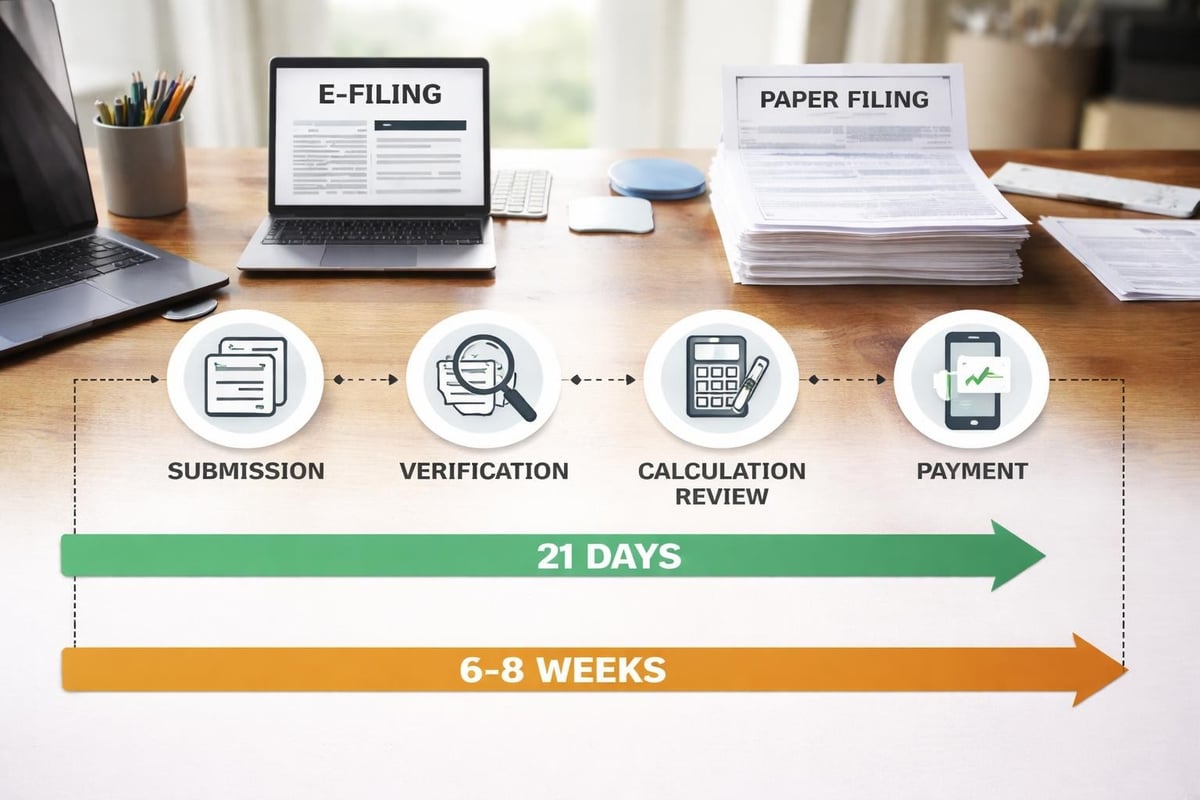
The official IRS refund page explains that most refunds arrive within 21 days if you file electronically and choose direct deposit. Paper returns? You're looking at six to eight weeks, minimum. That's a significant difference, and it's why tax professionals always recommend electronic filing when possible.
Why Direct Deposit Gets Your IRS Tax Back Faster
Direct deposit isn't just convenient-it's the fastest way to receive your IRS tax back refund. When you provide your bank account information on your return, the IRS can transfer funds electronically without waiting for checks to be printed, mailed, and deposited.
Benefits of choosing direct deposit:
- Funds arrive in as little as 10 days for early filers
- No risk of lost or stolen checks
- No trips to the bank required
- You can split your refund across multiple accounts
- Immediate access to your money
Paper checks add processing time on both ends. The IRS has to print and mail them, then you have to wait for postal delivery and bank processing.
Tracking Your Tax Refund Status
You don't have to sit in the dark wondering where your money is. The Where’s My Refund tool lets you check your refund status 24 hours after the IRS receives your e-filed return, or four weeks after mailing a paper return.
You'll need three pieces of information:
- Your Social Security number or ITIN
- Your filing status (single, married filing jointly, etc.)
- Your exact refund amount
The tool updates once daily, usually overnight, so checking multiple times per day won't give you new information. The IRS shows your refund in three stages: return received, refund approved, and refund sent.
What to Do When Your Refund Gets Delayed
Sometimes your IRS tax back refund doesn't arrive on schedule. Several factors can trigger delays, and understanding them helps you know whether to worry or just wait patiently.
| Delay Reason | Typical Timeline | What You Can Do |
|---|---|---|
| Math errors | 2-4 extra weeks | Nothing; IRS corrects automatically |
| Identity verification | 4-12 weeks | Respond to IRS letters immediately |
| Incomplete return | Varies | Provide requested documentation |
| Earned Income Credit claim | February 15 or later | Wait; mandated by law |
| Offset for debts | 2-3 weeks | Check offset status at 800-304-3107 |
The 2026 IRS tax refund calendar shows that if you claim the Earned Income Tax Credit or Additional Child Tax Credit, your refund won't be issued before mid-February by law. This gives the IRS extra time to prevent fraud, but it means legitimate taxpayers have to wait longer.
Common Problems That Affect Getting Your IRS Tax Back
Not every delay is the IRS just being slow. Sometimes there are legitimate issues with your return that need resolution before you see your money. Recognizing these problems early can help you address them faster.
Amended Returns and Refund Adjustments
If you discover an error after filing, you might need to file an amended return using Form 1040-X. The process for handling tax return mistakes varies depending on whether the error affects your refund amount.
Some mistakes the IRS fixes automatically without you doing anything. Mathematical errors, for instance, get corrected and you'll receive an explanation of the change. But if you forgot to report income or claimed a credit you weren't eligible for, you'll need to file that amended return yourself.
Amended returns take significantly longer to process:
- Paper Form 1040-X: up to 16 weeks
- Electronically filed amendments: up to 12 weeks
- Complex issues: potentially longer
When the IRS Keeps Your Tax Back for Offsets
Here's where things get frustrating for many taxpayers. Even if you're owed an IRS tax back refund, the government can intercept it to pay other debts you owe. This is called a tax refund offset, and it happens more often than you might think.
The Treasury Offset Program can grab your refund for:
- Past-due federal tax debt
- State income tax obligations
- Child support arrears
- Federal student loan defaults
- Unemployment compensation debts
You'll receive a notice explaining the offset, but by then your refund is already gone. If you believe the offset was made in error, you have the right to dispute it, but you'll need to act quickly and provide documentation supporting your case.

Resolving Tax Debt to Get Money Back from the IRS
What if instead of waiting for a refund, you need to get money back from the IRS because you overpaid or the agency made an error? This situation is less common but definitely happens, and it requires a different approach than simply tracking a refund.
Correcting IRS Errors and Overpayments
The IRS makes mistakes. When they do and you've paid more than you actually owe, you're entitled to get that money back. But you have to know your rights and how to pursue them.
Common scenarios where you might get IRS tax back after overpaying:
- The IRS assessed penalties or interest incorrectly
- Your payment was misapplied to the wrong tax year
- You qualified for an exemption the IRS didn't recognize
- An IRS levy or wage garnishment took too much
When you identify an IRS error, you typically start by calling the agency directly. But if you're dealing with significant amounts or complex tax situations, working with experienced tax debt professionals often resolves issues faster and more completely.
Installment Agreements and Getting Current
Sometimes the path to getting your IRS tax back involves first getting current on what you owe. If you're behind on taxes, setting up an installment agreement stops collection actions and can position you to receive future refunds.
The IRS offers several types of payment plans:
- Short-term payment plan (120 days or less): No setup fee if you pay within four months
- Long-term payment plan (monthly payments): Available for balances up to $50,000
- Partial payment installment agreement: For taxpayers who can't pay the full amount
Once you're in an active installment agreement and making regular payments, the IRS may allow you to keep future refunds rather than automatically applying them to your balance, depending on your specific agreement terms.
Penalty Abatement: Getting Money Back You've Already Paid
Here's something many taxpayers don't realize: you can request that the IRS remove penalties you've already paid and send you that money back. Penalty abatement is one of the most underutilized tools for getting IRS tax back.
First-Time Penalty Abatement
If you have a clean compliance history, you might qualify for first-time penalty abatement. This administrative waiver removes failure-to-file, failure-to-pay, and failure-to-deposit penalties if you meet three criteria:
- No penalties in the prior three tax years
- All required returns filed (or extensions filed)
- All tax owed paid or arranged through installment agreement
You don't even need a specific reason beyond having a clean record. Simply requesting first-time abatement is often enough to get those penalties removed and refunded.
Reasonable Cause Abatement
Beyond first-time relief, you can request penalty abatement based on reasonable cause. This requires explaining why you couldn't meet your tax obligations despite exercising ordinary business care and prudence.
Acceptable reasonable cause situations include:
- Serious illness or death in the family
- Natural disasters affecting your business or records
- Reliance on incorrect advice from a tax professional
- System failures preventing timely payment
- Fire, casualty, or civil disturbance
The key is documentation. The IRS wants proof that your circumstances genuinely prevented compliance, not just that paying was inconvenient or difficult.

Offers in Compromise: Settling Tax Debt for Less
An Offer in Compromise lets you settle your tax debt for less than you owe, potentially getting you back to zero and allowing future refunds to come to you rather than being offset. But it's not easy to qualify, and the IRS rejects most applications.
The IRS accepts an offer when it represents the most they can expect to collect within a reasonable time. They analyze your income, expenses, asset equity, and future earning ability to determine your "reasonable collection potential."
Who Should Consider an Offer in Compromise
Not everyone should pursue this option. You're a good candidate if:
- You genuinely can't pay the full amount now or through installments
- Paying would create economic hardship
- There's legitimate doubt about whether you actually owe the amount assessed
- You have limited income and minimal assets
The application fee is $205 (waived for low-income taxpayers), and you'll need to make an initial payment with your offer. If the IRS rejects it, you don't get that payment back-it goes toward your balance.
Currently Not Collectible Status: Temporary Relief
If you're facing serious financial hardship, the IRS can place your account in Currently Not Collectible status. This doesn't get you IRS tax back money, but it stops collection actions while you get back on your feet.
When your account is placed in CNC status:
- The IRS stops collection activities
- Levies and garnishments are released
- You get time to improve your financial situation
- Interest and penalties continue accruing (unfortunately)
This status isn't permanent. The IRS reviews your situation periodically, and if your finances improve, they'll resume collection efforts. But it provides breathing room when you're truly unable to pay.
Smart Ways to Use Your Tax Refund When It Arrives
Once you finally get your IRS tax back refund, how you use it matters. That lump sum feels like found money, but strategic use can improve your financial situation significantly.
The strategies for investing your tax return include several smart options that provide long-term benefits rather than short-term satisfaction.
Priority uses for your refund:
- Build or boost emergency savings to 3-6 months of expenses
- Pay down high-interest credit card debt
- Contribute to retirement accounts (traditional or Roth IRA)
- Make extra mortgage payments to reduce interest over time
- Invest in education or skills that increase earning potential
If you're consistently getting large refunds, consider adjusting your withholding. Getting a huge refund means you gave the government an interest-free loan all year. You could have used that money throughout the year instead.
Checking Your Federal and State Tax Refund Status
Don't forget about state refunds if you live in a state with income tax. The process for checking your tax status differs by state, and states often process returns on different timelines than the federal government.
Most states offer online tools similar to Where's My Refund for tracking state returns. You'll typically need your Social Security number, filing status, and refund amount, just like with the federal tool.
When State and Federal Refunds Arrive Separately
Your federal and state refunds almost never arrive simultaneously. States have their own processing systems and timelines. Some states are faster than the IRS, others slower.
| Processing Aspect | Federal (IRS) | State (Varies) |
|---|---|---|
| E-file with direct deposit | 10-21 days | 7-45 days |
| Paper filing | 6-8 weeks | 4-12 weeks |
| Peak season delays | Possible | Common |
| Offset for debts | Federal debts only | State debts primarily |
If you're expecting both and only one arrives, that doesn't mean something's wrong. Check each refund separately using the appropriate tool.
What Happens When You File Late
Filing late doesn't necessarily mean you lose your IRS tax back refund, but it complicates things. If you're owed a refund, there's no penalty for filing late-the penalty only applies when you owe money.
However, you only have three years from the original due date to claim a refund. If you never filed your 2022 return and you were owed money, you have until April 15, 2026 to file and claim that refund. Miss that deadline and the money becomes property of the U.S. Treasury permanently.
For taxpayers with unfiled tax returns from multiple years, prioritizing which returns to file first can be tricky. Generally, you should file all delinquent returns, but if you owe money for some years and are owed refunds for others, the IRS may offset refunds against debts.
Professional Help with IRS Tax Back Issues
Sometimes DIY approaches to getting your IRS tax back refund or resolving tax debt don't work. The IRS makes mistakes, situations get complicated, and taxpayers get overwhelmed trying to navigate the system alone.
Working with experienced tax professionals who understand IRS procedures can make a substantial difference in outcomes. They know which arguments work, how to present documentation effectively, and when to escalate issues through proper channels.
Whether you're dealing with delayed refunds, incorrect assessments, penalty disputes, or complex tax debt situations, having someone on your side who speaks the IRS's language changes the dynamic completely.
Getting your IRS tax back-whether it's a refund you're waiting for or money you need to recover from the agency-doesn't have to be a mystery. Understanding the process, knowing your rights, and taking action when problems arise puts you in control of your tax situation. If you're facing complex IRS issues, dealing with tax debt, or need help recovering money from the IRS, the Law Offices of Darrin T. Mish, P.A. offers free consultations to help you find the best path forward with over 32 years of experience resolving IRS problems for taxpayers worldwide.