

I’m Darrin Mish. Tampa tax attorney, 32 years in, more than $100 million in IRS debt resolved. What follows isn’t theory – it’s what I’ve actually watched work.
Have you ever felt that tax season arrives faster every year? The irs deadline for taxes can catch even the most prepared off guard, turning a simple task into a stressful scramble.
This guide is here to clear up the confusion. By breaking down the irs deadline for taxes in 2026, you'll know exactly when and how to file, so you can avoid penalties and last-minute panic.
Whether you're an individual, a family, or a business owner, understanding these critical dates gives you the power to plan ahead. With this guide, you'll discover all the essential deadlines, what happens if you miss them, step-by-step filing tips, extension options, and expert advice to keep you on track.
Understanding the IRS Deadline for Taxes in 2026
Tax season always brings a sense of urgency, and knowing the irs deadline for taxes is critical for staying ahead. Whether you file as an individual, run a small business, or manage a nonprofit, understanding these key dates can help you avoid penalties, maximize refunds, and keep stress levels low.

Importance of the IRS Tax Deadline
The irs deadline for taxes is more than just a date on your calendar. Each year, the IRS sets a specific deadline for filing federal income tax returns. In most cases, it falls on April 15. However, if April 15 lands on a weekend or federal holiday, the deadline shifts to the next business day. For instance, in 2025, Tax Day was April 15, but if April 15 in 2026 is a holiday, the deadline could move.
Why is the irs deadline for taxes so strictly enforced? The IRS relies on timely filings to keep government operations running and to ensure everyone pays their fair share. Missing this deadline can result in late fees, interest, and the loss of certain tax benefits. For families and businesses, missing the deadline can create financial headaches, from cash flow disruptions to missed refunds.
Sometimes, the IRS changes deadlines in response to emergencies. During the COVID-19 pandemic, for example, the federal deadline was extended to provide relief. Natural disasters may also prompt extensions for affected regions. Staying aware of these changes is essential for compliance.
Key Dates and Calendar for 2026
Planning ahead for the irs deadline for taxes in 2026 means knowing all the important dates. The main federal filing deadline is expected to be April 15, unless adjusted for holidays. But that's just the start.
Here’s a quick look at key 2026 IRS tax deadlines:
| Deadline Type | 2026 Date (Expected) |
|---|---|
| Main Tax Filing Deadline | April 15, 2026 |
| 1st Quarter Estimated | April 15, 2026 |
| 2nd Quarter Estimated | June 15, 2026 |
| 3rd Quarter Estimated | September 15, 2026 |
| 4th Quarter Estimated | January 15, 2027 |
| Partnerships/1120S | March 16, 2026 |
| C-Corporations/1120 | April 15, 2026 |
State tax deadlines may differ, so check your local rules. Some states align with the federal date, while others set their own. Special deadlines exist for Americans living abroad and for military personnel, often granting extra time to file. IRS e-file systems typically open in late January and close in November.
For a complete and updated list, consult the IRS tax deadlines for 2026 calendar, which includes all major dates for individuals and businesses.
Types of Tax Returns Affected
The irs deadline for taxes impacts a wide range of returns. Most commonly, individuals use Form 1040, but businesses and organizations have their own deadlines and forms.
- Individual Returns: Form 1040, due by the main deadline.
- Business Returns: Partnerships (Form 1065) and S-corporations (Form 1120S) are generally due in March. C-corporations (Form 1120) match the main April deadline.
- Nonprofits: Form 990, with a deadline based on fiscal year-end.
- Other Returns: Gift (Form 709), estate (Form 706), and trust (Form 1041) returns each have specific due dates.
- Amended Returns: Generally, you have three years from the original deadline to amend.
Filing late or missing the irs deadline for taxes can also affect your ability to amend past returns or claim certain credits. Knowing which forms apply to your situation makes it easier to stay compliant and avoid surprises.
What Happens If You Miss the IRS Deadline?
Missing the irs deadline for taxes can feel overwhelming, but understanding what happens next can help you take control. If you find yourself running late, it’s important to know the potential consequences and what steps you can take to minimize the damage.

Penalties and Interest Explained
When you miss the irs deadline for taxes, the IRS can hit you with two main penalties: the failure-to-file penalty and the failure-to-pay penalty. The failure-to-file penalty is typically 5% of your unpaid taxes for each month your return is late, up to a maximum of 25%. The failure-to-pay penalty is 0.5% per month, also up to 25%. Both penalties can stack, making the total add up quickly.
Interest also accrues daily on any unpaid amount, calculated based on the federal short-term rate plus 3%. For example, if you file your return one month late and owe $2,000, you could face a $100 late filing penalty plus $10 in late payment penalties, not counting interest.
Want the exact penalty rates and how they’re calculated? The IRS explains these details on their IRS penalties for late tax filing page.
Impact on Refunds and Credits
Missing the irs deadline for taxes doesn’t just mean penalties. If you’re due a refund, filing late can delay when you get your money. Even worse, if you wait more than three years to file, you lose the right to claim your refund altogether.
Certain tax credits, like the Earned Income Tax Credit or Child Tax Credit, may be lost if you file too late. The IRS also sets a statute of limitations for claiming these credits, so acting promptly is crucial.
If you’re counting on a refund or valuable credits, don’t let missing the irs deadline for taxes cost you money you deserve.
IRS Enforcement Actions
Ignoring the irs deadline for taxes can escalate quickly. The IRS will start by sending notices about your overdue return or unpaid taxes. If you still don’t respond, they can file a substitute return for you, which often leads to a higher tax bill since the IRS won’t include deductions or credits you might qualify for.
If the debt remains unpaid, the IRS can place a lien on your property, levy your bank account, or even garnish your wages. They have a strict collection timeline, and ignoring notices only makes things worse.
Real-world cases show that people who ignore the irs deadline for taxes often face aggressive enforcement, so it’s best to address issues as soon as possible.
Options If You Can’t Pay on Time
If you know you won’t make the irs deadline for taxes, don’t panic. The IRS offers several options to help you get back on track. You can apply for an installment agreement to pay your balance over time, or request an offer in compromise if you can’t afford to pay the full amount.
In cases of extreme hardship, you may qualify for currently not collectible status, which temporarily pauses IRS collection efforts. It’s always better to communicate with the IRS and set up a plan than to ignore the problem.
Taking these steps early can help you minimize penalties and interest, and keep things from spiraling out of control.
Step-by-Step Guide: How to File Your Taxes On Time in 2026
Getting ready for the irs deadline for taxes in 2026 does not have to feel overwhelming. By breaking down the process into manageable steps, you can stay organized, avoid last-minute stress, and ensure you meet every important due date. Let’s walk through each stage so you can file with confidence and peace of mind.
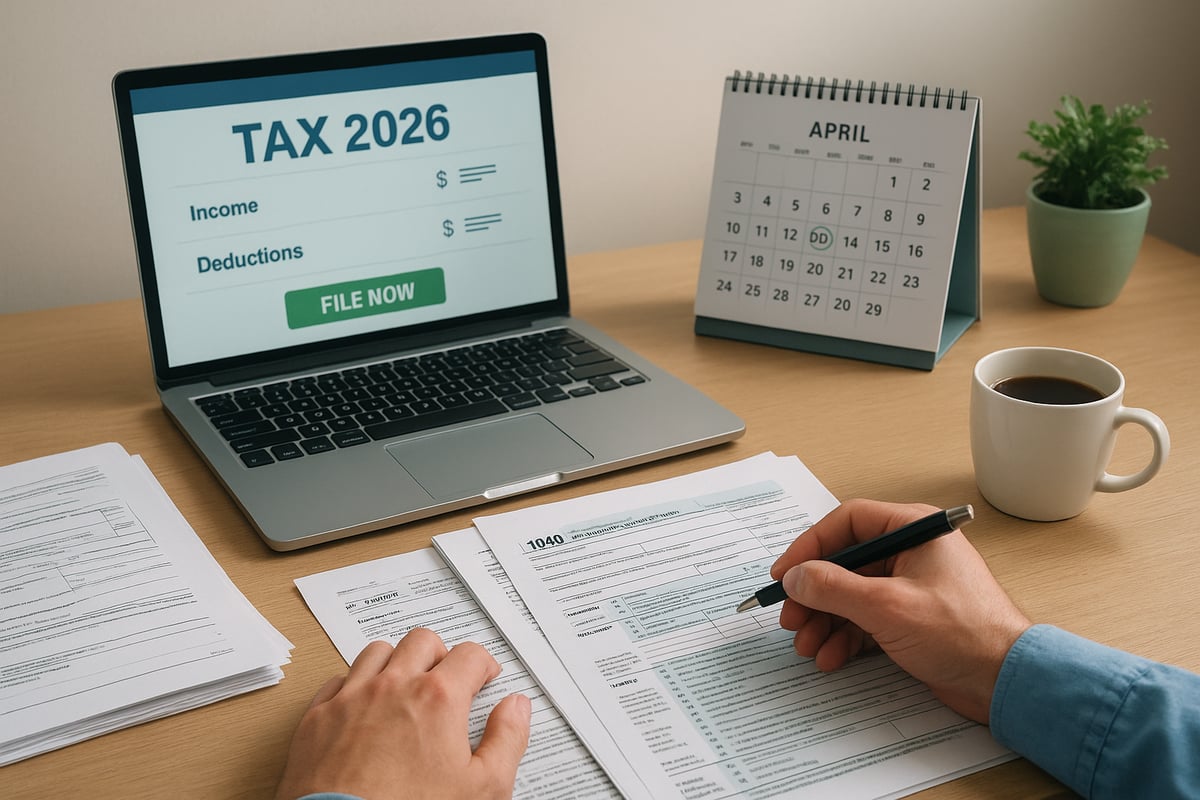
Step 1: Gather All Necessary Documentation
Before you even think about filling out forms, gather every document you might need for the irs deadline for taxes. This is your foundation for a smooth filing experience.
- W-2s from employers
- 1099s for freelance, contract, or interest income
- Investment income statements (1099-INT, 1099-DIV, 1099-B)
- Mortgage interest and property tax records
- Receipts for charitable donations and deductible expenses
- Student loan interest and tuition statements (Form 1098-E, 1098-T)
- Health insurance forms (1095-A, 1095-B, 1095-C)
- Previous year’s tax return
Many people overlook documents like HSA contributions, childcare expenses, or proof of estimated tax payments. Create a checklist for your personal situation. For business owners, add business receipts, mileage logs, and payroll records. If you’re not sure what you need, the IRS provides a comprehensive tax document checklist on its website. Double-check every item, because missing paperwork can cause delays or errors.
Step 2: Choose Your Filing Method
Now that your paperwork is ready, decide how you’ll actually file your return before the irs deadline for taxes. Your two main options are e-filing and paper filing.
E-filing is the most popular choice. It’s faster, more secure, and you receive confirmation when the IRS accepts your return. Most refunds are processed in under three weeks. Many tax prep software providers are IRS-authorized and offer step-by-step guidance.
Paper filing is still available, but it takes longer to process and you won’t get instant confirmation. If you choose this route, make sure your return is postmarked by the deadline.
Here’s a quick comparison:
| Filing Method | Pros | Cons |
|---|---|---|
| E-filing | Fast, secure, instant confirmation | Requires internet, may have software fees |
| Paper filing | No tech required, tangible records | Slower, risk of mail delays, no instant feedback |
Consider your comfort with technology, the complexity of your taxes, and your need for speed when making your choice.
Step 3: Prepare Your Tax Return
When it comes to preparing your return for the irs deadline for taxes, you have two main paths: do it yourself or work with a professional.
DIY software is great for straightforward tax situations. Many platforms offer intuitive interfaces and error checks. If your income is below a certain threshold, you may qualify for IRS Free File.
Professional tax preparers (CPAs, enrolled agents) are a smart choice for complex returns, major life changes, or if you own a business. They can help you uncover deductions you might miss and ensure accuracy.
No matter your method, double-check every entry. Mistakes with Social Security numbers, math errors, or missing signatures are common reasons for IRS rejections. If you need help, look into free tax preparation services like VITA or TCE, especially if you’re a senior, have a disability, or qualify for low-income assistance.
Step 4: Submit Payment or Arrange for Payment
With your return ready, it’s time to pay any taxes owed before the irs deadline for taxes. The IRS offers several ways to pay:
- Direct debit from your bank account
- Credit or debit card payments online
- Mailing a check or money order
- IRS2Go mobile app
If you can’t pay your full balance by the due date, don’t panic. Set up a payment plan to avoid larger penalties. The IRS allows installment agreements so you can pay over time. For a detailed walkthrough, check out this guide on setting up IRS installment agreements if you need more flexibility.
Always pay as much as you can by the deadline to minimize interest. Even partial payment can reduce your penalty burden.
Step 5: Confirm Submission and Track Status
After submitting your tax return, don’t just move on. Make sure your filing for the irs deadline for taxes was accepted.
- If you e-filed, you’ll get a confirmation email within 24 hours.
- For paper returns, use certified mail and keep your receipt as proof.
Track your refund using the IRS “Where’s My Refund?” tool or the IRS2Go app. Always keep digital and paper copies of your return, W-2s, and other key documents for at least three years. This protects you in case of audits or future questions.
Step 6: Plan for Next Year
Meeting the irs deadline for taxes in 2026 is a victory, but don’t wait until next spring to think about next year. Set yourself up for even less stress.
- If you’re self-employed or have side income, set calendar reminders for quarterly estimated tax payments.
- Check your withholdings using the IRS estimator to avoid a surprise bill or refund.
- Use digital tools to track deductible expenses all year.
- Sign up for IRS deadline alerts or add key dates to your electronic calendar.
A little year-round planning goes a long way. You’ll be more prepared, less rushed, and ready to take on the next irs deadline for taxes with confidence.
Filing Extensions: How to Get More Time and What It Means
Ever found yourself scrambling as the irs deadline for taxes approaches? If you need more time, you're not alone. Filing an extension is a practical solution for many taxpayers, whether you’re an individual or a business. Let’s explore how extensions work, what they cover, and how to use them wisely.

When and Why to File an Extension
Wondering if you should file for an extension as the irs deadline for taxes draws near? Life can throw curveballs – unexpected events, missing documents, or complicated tax situations may leave you needing extra time. Filing an extension is a smart move if you can’t gather all your paperwork, are waiting on forms from others, or have experienced a personal emergency.
To request an extension, individuals typically file Form 4868, while businesses use Form 7004. These forms must be submitted by the original irs deadline for taxes, not after. Extensions are not just for procrastinators; they’re a helpful tool for anyone aiming for accuracy and completeness. Just remember, an extension to file is not an extension to pay – payments are still due by the regular deadline.
Key deadlines for submitting extension requests depend on your filing status. For most, it’s the same date as the regular irs deadline for taxes, which is usually April 15. Missing this window can mean penalties, so mark your calendar early.
What an Extension Covers (and What It Doesn’t)
It’s important to understand what a tax extension really offers. Filing an extension gives you extra time – typically six months – to submit your completed tax return. This means you have until October to file if you request an extension by the irs deadline for taxes in April.
However, an extension does not give you more time to pay any taxes you owe. If you don’t pay at least 90% of your estimated tax bill by the original deadline, you may face penalties and interest. For a deeper dive into the advantages and drawbacks, check out this helpful resource discussing the pros and cons of tax extensions.
Here’s a quick table to clarify:
| Extension Covers | Extension Does Not Cover |
|---|---|
| Extra time to file your return | Extra time to pay taxes owed |
| Avoidance of late filing penalty | Interest on unpaid taxes |
| More time to gather documents | Penalties for late payment |
If you file late with an extension but pay on time, you’ll avoid the late filing penalty. However, filing late without payment means both penalties and interest can stack up quickly.
Strategies to Avoid Penalties with Extensions
Getting an extension doesn’t mean you can ignore the irs deadline for taxes. You still need to estimate and pay what you owe by the original due date. Not sure how much? Use last year’s return as a starting point, or consult a tax professional to avoid underpayment.
Consider making a partial payment if you can’t pay in full. The IRS allows installment agreements, which can help reduce stress and keep you on track. Even if you can’t pay everything now, paying as much as possible by the irs deadline for taxes will cut down on penalties and interest.
More tips for minimizing penalties:
- Double-check your estimated payment calculations.
- Use IRS Direct Pay or EFTPS for quick, trackable payments.
- File for an extension electronically for faster confirmation.
- Keep records of all payments and extension confirmations.
Remember, extensions are almost always granted if you file the right form on time and make an honest effort to pay what you owe.
Special Extension Rules
Some taxpayers have unique circumstances when it comes to the irs deadline for taxes. If you’re living abroad on Tax Day, you may automatically get two extra months to file – until June 15. Military personnel serving in combat zones also receive automatic extensions, sometimes up to 180 days after leaving the combat zone.
If you’re affected by a federally declared disaster, the IRS may extend both filing and payment deadlines for you. Always check the IRS website for the latest updates on these special rules, as policies can change from year to year.
Recently, the IRS has updated its policies to make it easier for disaster victims and overseas filers to qualify for extensions. No matter your situation, it’s crucial to stay informed and act before the irs deadline for taxes passes.
Special Situations and Common Challenges for 2026 Filers
Navigating the irs deadline for taxes can feel overwhelming, especially when your situation is anything but straightforward. If you find yourself juggling multiple jobs, investments, or living arrangements, you are not alone. Let us explore some of the most common challenges filers face in 2026 and how you can tackle them with confidence.
Dealing with Complex Tax Situations
Do you have income from more than one state, freelance gigs, or maybe even cryptocurrency transactions? The irs deadline for taxes applies to everyone, but the complexity of your return can make meeting it trickier.
If you are a remote worker crossing state lines, you might need to file in several states, each with its own rules and deadlines. Crypto investors must report every transaction, as the IRS now closely tracks these digital assets. Gig workers and digital nomads also face extra forms and documentation, making it easy to overlook something important.
Families with foreign assets or investments have additional reporting, like the FBAR and FATCA forms. Missing these can lead to steep penalties. Staying organized and starting early is crucial when your tax life is complicated.
To keep everything on track, create a checklist for each income source and document type. Use tax software or a professional preparer who understands multi-state and international filings. That way, you will not get caught off guard by the irs deadline for taxes.
Late Filers and Unfiled Returns
Sometimes, life gets in the way, and you miss the irs deadline for taxes. Maybe you have not filed for several years, or you just realized a previous return was never submitted. The good news is, you are not alone, and there are clear steps you can take to get back on track.
Start by gathering as much documentation as you can for the missing years. The IRS offers programs like Fresh Start and penalty abatement to help filers who are ready to come forward. If you want a detailed guide on what to do with unfiled tax returns, this resource walks you through each step, from requesting old W-2s to arranging payment plans.
If penalties are piling up, you may qualify for relief through the IRS penalty abatement process. This option is especially helpful if you have a reasonable cause, like illness or a natural disaster, for missing the irs deadline for taxes. Acting quickly is key, as penalties and interest can grow rapidly. Do not ignore IRS letters, even if they seem intimidating. Taking action now can save you a lot of stress and money.
Handling IRS Notices and Audits
Receiving an IRS notice after filing late or missing the irs deadline for taxes can feel like a punch to the gut. But do not panic. Many notices are just requests for clarification or missing documents. Still, some can signal an audit or collection action.
Audit triggers often include large deductions, mismatched income, or complicated investment activity. If you are selected, respond promptly and provide all requested information. Remember, you have rights as a taxpayer, including the right to representation and to appeal decisions.
Keep copies of all correspondence and your filed returns. If you are unsure how to respond, consider consulting a tax professional. They can help you navigate the process and ensure you stay compliant with the irs deadline for taxes, even if you have had trouble in the past.
Pro Tips to Stay Ahead of IRS Deadlines in 2026
Staying ahead of the irs deadline for taxes can feel like a juggling act, but a few smart habits and the right tools make all the difference. Let’s break down practical strategies you can use year-round to keep tax stress at bay and avoid costly surprises.
Organizational Strategies and Tools
Organization is your first line of defense against the irs deadline for taxes. Start by setting up digital calendars with built-in reminders for every key IRS date. Use apps or your phone’s calendar to create alerts a month, a week, and a day before each deadline.
Keep a tax preparation checklist handy, either digitally or in a notebook. Document organizers, whether physical folders or cloud storage, ensure nothing slips through the cracks.
- Digital calendars and reminders
- Tax preparation checklists
- Secure document storage apps
With these tools, you’ll always know what’s due and when.
Year-Round Tax Planning
If you want to breeze through tax season, proactive tax planning is essential. Schedule quarterly reviews, especially if you’re self-employed or own a business, to assess your income and estimated payments. This simple habit helps you avoid last-minute scrambles before the irs deadline for taxes.
Adjust your withholdings as needed, and track deductible expenses using a spreadsheet or budgeting app. Staying organized throughout the year makes filing much less stressful.
Staying Informed About IRS Changes
IRS rules and deadlines can change with little notice, especially if natural disasters or emergencies affect your area. Stay updated by subscribing to IRS newsletters and alerts, and regularly check the IRS newsroom for the latest announcements.
For example, the IRS sometimes offers tax relief for disaster-affected taxpayers, which can extend or modify the irs deadline for taxes. Being informed protects you from missing critical changes.
Avoiding Common Filing Mistakes
One of the easiest ways to miss the irs deadline for taxes is by making simple errors that delay your return. Double-check all Social Security numbers, bank account info, and signatures before submitting.
Review last year’s return to spot any missed deductions or credits. Common mistakes include:
- Transposing numbers
- Forgetting to sign or date the return
- Overlooking required forms
A quick review can save you from costly delays.
Leveraging Professional Help When Needed
Sometimes, even the most prepared taxpayers need a little extra support. If you encounter complex situations, like multiple income streams, cryptocurrency, or a confusing IRS notice, consider reaching out to a CPA, enrolled agent, or tax attorney.
Professional advice is invaluable when you spot red flags or feel overwhelmed. Knowing when to ask for help can be the key to staying compliant and confident.