

There's the version of tax resolution the late-night commercials sell you. Then there's how it actually works. I'm Darrin Mish, a Tampa tax attorney. I've spent 32 years on the inside of these cases. Here's the real version.
Tax attorney Darrin Mish put this one-page guide together from official sources. Save it, print it or share it with someone who needs it.
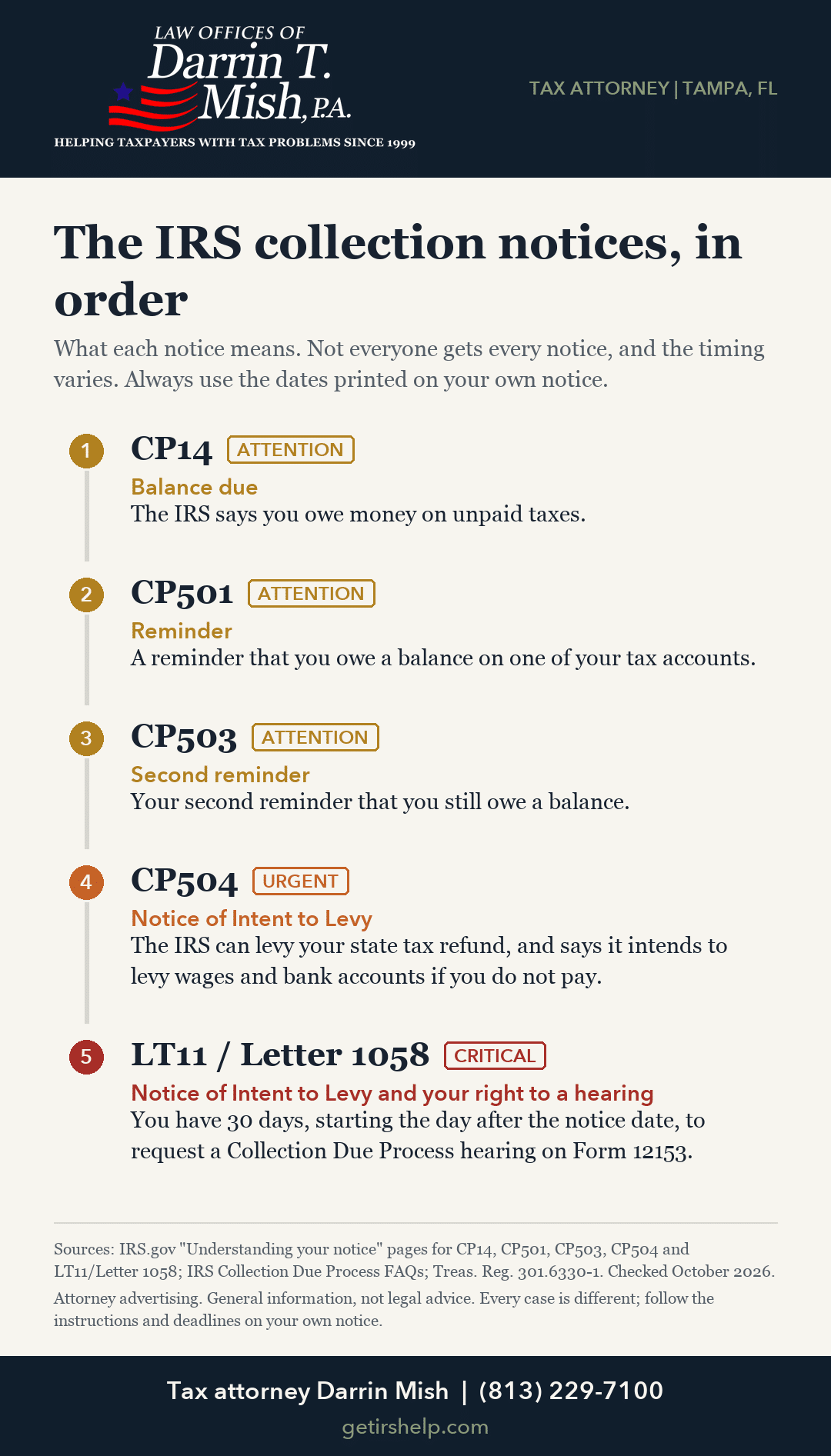
What the infographic says
The IRS collection notices, in order. Not everyone gets every notice, and the timing varies. Always use the dates printed on your own notice.
- CP14 (balance due): The IRS says you owe money on unpaid taxes.
- CP501 (reminder): A reminder that you owe a balance on one of your tax accounts.
- CP503 (second reminder): Your second reminder that you still owe a balance.
- CP504 (Notice of Intent to Levy): The IRS can levy your state tax refund, and says it intends to levy wages and bank accounts if you do not pay.
- LT11 or Letter 1058 (Notice of Intent to Levy and your right to a hearing): You have 30 days, starting the day after the notice date, to request a Collection Due Process hearing on Form 12153.
The last notice is the one with the hearing deadline. Do not let it pass.
Sources
- https://www.irs.gov/individuals/understanding-your-cp14-notice
- https://www.irs.gov/individuals/understanding-your-cp501-notice
- https://www.irs.gov/individuals/understanding-your-cp503-notice
- https://www.irs.gov/individuals/understanding-your-cp504-notice
- https://www.irs.gov/individuals/understanding-your-lt11-notice-or-letter-1058
- https://www.irs.gov/appeals/collection-due-process-cdp-faqs
- Treas. Reg. 301.6330-1
Checked October 2026.
If you have a question about your own situation, call tax attorney Darrin Mish at (813) 229-7100.
Attorney advertising. General information, not legal advice. Every case is different; follow the instructions and deadlines on your own notice.