

I’m Darrin Mish. Tampa tax attorney, 32 years in, more than $100 million in IRS debt resolved. What follows isn’t theory – it’s what I’ve actually watched work.
Have you ever needed to prove your income for a mortgage application, only to realize you can't find last year's tax return? Or maybe you're dealing with an IRS issue and need documentation from several years back? You're not alone. Getting tax returns from IRS is something thousands of Americans need to do every year, and the good news is that the IRS offers multiple ways to access your past tax information. Whether you need a quick verification of income or a complete copy of your return from five years ago, understanding your options will save you time and frustration. Let's walk through everything you need to know about retrieving your tax documents from the IRS.
Why You Might Need Old Tax Returns
Life throws all kinds of situations at us where we suddenly need documentation of our past tax filings. Maybe you're applying for a student loan, refinancing your home, or working with a tax attorney to resolve back taxes.
The most common reasons people find themselves getting tax returns from IRS include:
- Mortgage or loan applications requiring income verification
- Student financial aid documentation for FAFSA
- Resolving IRS disputes or preparing amended returns
- Lost or damaged personal copies from natural disasters
- Identity theft recovery and verification
- Business purposes like applying for contracts or licenses
Sometimes the IRS itself will request documentation from previous years during an audit. In these cases, having quick access to your returns becomes critical. If you're facing tax debt or other IRS challenges, having complete records helps your tax professional build a stronger case.
The Difference Between Transcripts and Copies
Here's where things get interesting. The IRS actually offers two different types of documents when you're getting tax returns from IRS, and they serve different purposes.

A tax return transcript is a free document that shows most line items from your original return. According to the IRS guidance on transcript types, transcripts don't show your adjusted gross income calculations or any changes made after you filed. They're perfect for most financial transactions because lenders and schools accept them for verification purposes.
A copy of your actual return, on the other hand, is a photocopy of the exact document you filed, including all W-2s, 1099s, and schedules. The IRS charges a fee for this service, currently $43 per tax year requested. You'd need this if you're amending a return or need to see specific details not shown on transcripts.
Methods for Getting Tax Returns from IRS
You've got several pathways to access your information, each with its own timeline and requirements. Let's break down your options.
Online Access Through IRS Website
The fastest method for getting tax returns from IRS is through their online system. The IRS offers immediate transcript access through your online account.
Here's how it works:
- Create or log into your IRS account at IRS.gov
- Verify your identity using ID.me or IRS secure access
- Select "Get Transcript"
- Choose the tax year and transcript type
- Download or print immediately
The beauty of this method? You get instant access to transcripts for the current year and three prior years. The system is available 24/7, so you can grab what you need at midnight on a Sunday if that's when inspiration strikes.
Important note: You'll need to verify your identity using government-issued ID, a mobile phone in your name, and access to your financial accounts. This security measure protects your sensitive information but can be tricky if you've recently moved or changed phone numbers.
Requesting by Mail
Not everyone wants to create an online account, and that's perfectly fine. Getting tax returns from IRS by mail is a tried-and-true method that's been around for decades.
To request transcripts by mail:
- Complete Form 4506-T (Request for Transcript of Tax Return)
- Mail it to the address listed for your state on the form
- Wait 5 to 10 business days for delivery
For actual return copies, you'll use Form 4506 instead, include a $43 fee per tax year, and wait 75 calendar days for processing. Yes, that's a long time. The IRS processes these requests manually, which explains the delay.
| Request Type | Form | Fee | Processing Time |
|---|---|---|---|
| Tax Return Transcript | 4506-T | Free | 5-10 business days |
| Tax Account Transcript | 4506-T | Free | 5-10 business days |
| Return Copy | 4506 | $43/year | 75 calendar days |
| Record of Account | 4506-T | Free | 5-10 business days |
Phone Requests
If you prefer speaking with someone, getting tax returns from IRS by phone is possible, though it comes with limitations.
Call the IRS at 800-908-9946 to order transcripts. You'll need:
- Your Social Security number or Individual Taxpayer Identification Number
- Your date of birth
- The address on your most recent return
The automated system walks you through the process, and your transcript arrives by mail within 5 to 10 days. You can't get actual return copies this way, only transcripts.
One quirk: the phone system sometimes gets overwhelmed during tax season. If you're calling between January and April, expect longer wait times or occasional system unavailability.
Understanding Different Transcript Types
When you're getting tax returns from IRS, you'll encounter several transcript options. Each serves a specific purpose, and choosing the right one matters.
Tax Return Transcript
This shows most line items from your original return exactly as filed. It includes your AGI, which is what most lenders and schools need for verification. According to IRS guidance on transcript types and ordering methods, this is the most commonly requested transcript type.
Tax Account Transcript
This shows any adjustments made after you filed, including IRS changes, amended return information, and payment history. If you're dealing with IRS penalty abatement or other complex tax issues, this transcript tells the complete story of your account.
Wage and Income Transcript
This compilation shows information from W-2s, 1099s, and other income documents reported to the IRS. It's incredibly useful when you've lost your own copies or when you're verifying what the IRS has on file.
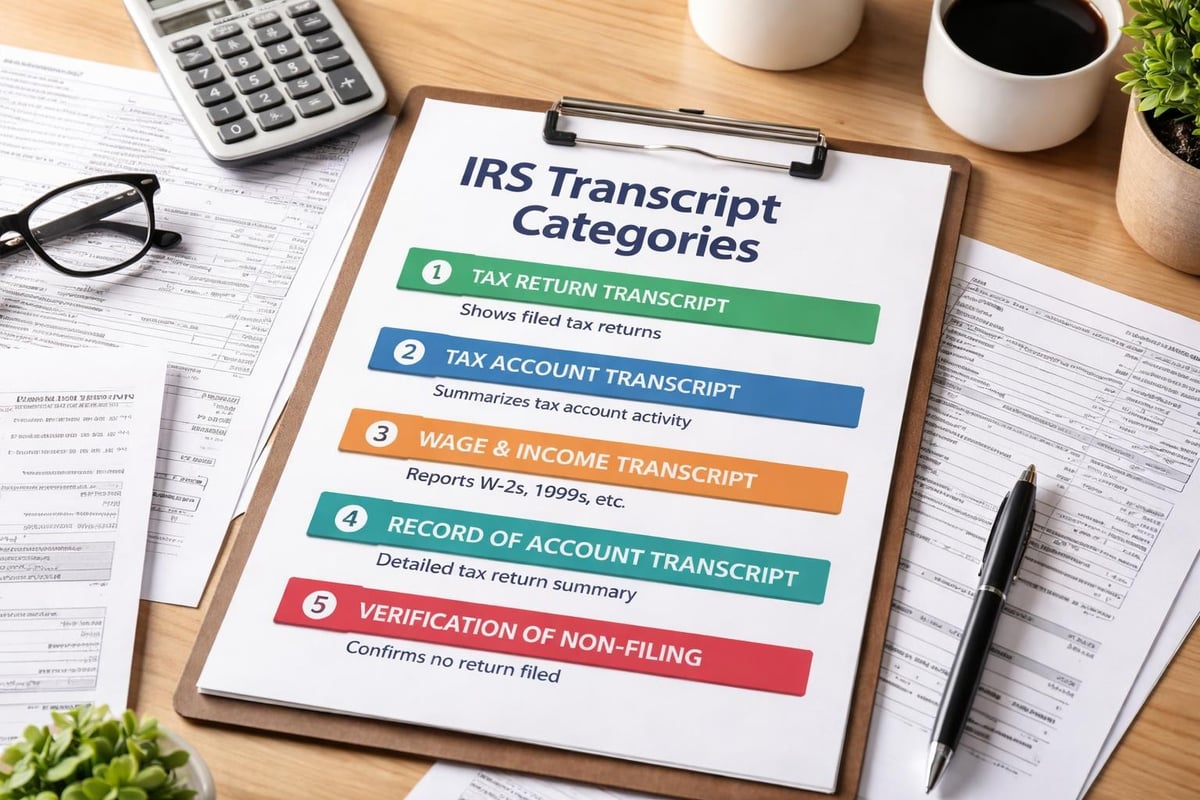
Record of Account
This combines the tax return transcript and tax account transcript into one document. It's comprehensive and shows your original return plus any subsequent changes.
Verification of Non-Filing Letter
Need to prove you didn't file a return for a specific year? This letter confirms non-filing status, which some financial aid offices or benefit programs require.
How Far Back Can You Go?
Here's a question I get asked constantly: how many years back can you access when getting tax returns from IRS?
For transcripts, the IRS maintains records indefinitely, but practical access varies:
- Online: Current year plus three prior years
- By mail or phone: Generally up to 10 years, sometimes more
- Return copies: Typically available for seven years
After seven years, the IRS destroys actual return copies but maintains transcript data. If you need information from more than seven years ago, you'll only be able to get transcripts, not copies.
Why does this matter? If you're working on tax liens or other long-standing tax issues, older returns might be critical to your case. Knowing the limitations helps you plan accordingly.
Special Situations and Considerations
Getting tax returns from IRS gets more complex in certain situations. Let's address some common scenarios.
Deceased Taxpayer Records
If you're the executor or legal representative of a deceased taxpayer's estate, you can request their returns. You'll need to include Form 56 (Notice Concerning Fiduciary Relationship) or a court certificate showing your appointment.
The process is similar to requesting your own returns, but documentation requirements are stricter. This often comes up when settling estates or dealing with inherited tax debt issues.
Business Returns
Sole proprietors request their business tax information through their personal return transcripts since they file Schedule C. Corporations, partnerships, and LLCs use the same forms (4506-T or 4506) but must be requested by authorized individuals listed with the IRS.
Prior Year Unfiled Returns
What if you're getting tax returns from IRS for years you never filed? Obviously, there's nothing to retrieve. However, the IRS can provide a wage and income transcript showing what third parties reported about you, which helps reconstruct what you should have filed.
This situation is common when people are catching up on unfiled tax returns. The wage and income transcript becomes your starting point for preparing those missing returns.
Common Problems and Solutions
Murphy's Law applies to tax documents just like everything else. Here are issues people encounter when getting tax returns from IRS and how to solve them.
Problem: Identity verification fails online
Solution: Try the mail or phone method instead, or visit a local IRS Taxpayer Assistance Center with proper identification
Problem: Address has changed since filing
Solution: The IRS sends transcripts to your address of record. Update your address first using Form 8822, or use the online system which emails transcripts instead
Problem: Processing takes longer than expected
Solution: IRS processing times are estimates. During peak periods (tax season, economic stimulus distributions), delays are common. Building buffer time into your deadlines prevents stress
Problem: Transcript shows unexpected changes
Solution: Your tax account transcript will show IRS adjustments. If you disagree with changes, you can file an amended return or work with a tax attorney to dispute them
Protecting Your Information
When getting tax returns from IRS, you're accessing sensitive personal data. Identity thieves would love to get their hands on this information.
Follow these security practices:
- Never share your IRS username or password with anyone, including family members
- Download transcripts to a secure device, not a public computer
- Shred paper transcripts when you're done with them
- Watch for phishing emails claiming to be from the IRS (they never email taxpayers)
- Check your credit reports regularly for signs someone might be using your information
The IRS takes security seriously, which is why their identity verification process is thorough. Those extra steps might feel inconvenient, but they protect you from fraud.
How Long Should You Keep Tax Records?
Tax record retention guidelines suggest keeping your returns for at least three years from the filing date, or seven years if you've claimed a loss from worthless securities or bad debt deduction.
However, I recommend keeping tax records indefinitely if storage isn't an issue. You never know when you'll need to reference an old return for IRS verification, Social Security benefit calculations, or other purposes decades down the road.
Digital storage makes this easier than ever. Scan your returns and store them encrypted in the cloud or on an external hard drive. This protects you from disasters while keeping documents accessible.
Working With Tax Professionals
Sometimes getting tax returns from IRS is just the first step in resolving a larger tax issue. If you're dealing with wage garnishments, tax liens, or years of unfiled returns, having your documentation is essential, but professional help might be necessary.
Tax attorneys can request transcripts on your behalf using Form 2848 (Power of Attorney). This authorization allows them to speak directly with the IRS about your account, obtain transcripts, and negotiate installment agreements or other relief options.
The advantage? Your attorney knows exactly which transcripts to request and how to interpret the information. They spot issues you might miss and build a comprehensive strategy for resolving your tax problems.
When you're facing serious IRS challenges, those transcripts become evidence in your case. Your attorney uses them to verify what the IRS claims you owe, identify incorrect assessments, and demonstrate your tax history when negotiating settlements.
Getting tax returns from IRS doesn't have to be complicated once you understand your options and choose the method that fits your timeline and needs. Whether you need quick online access to verify income or detailed copies for complex tax resolution, the IRS provides multiple pathways to retrieve your information. If you're dealing with tax debt, liens, wage garnishments, or other IRS challenges and need professional guidance, the Law Offices of Darrin T. Mish, P.A. offers free consultations to help you understand your options and develop a personalized strategy for resolving your tax issues.