

Most people I talk to about their IRS problem have already built the worst-case scenario in their head. The reality is usually much more manageable. I'm Darrin Mish, and I've been representing taxpayers before the IRS for 32 years. Here's what actually tends to happen.
I'm Darrin Mish. Tampa tax attorney, 32 years in, more than $100 million in IRS debt resolved. What follows isn't theory – it's what I've actually watched work.
You hear "estate tax lawyer" and think it's only for the ultra-wealthy. That's half true. The federal estate tax exemption sits at $13.99 million per individual in 2026, so most estates never touch it. But if you're anywhere close to that number, or if you've got complicated assets, trusts that need drafting, or beneficiaries who'll fight over every dollar, you need specialized legal help. Not a generalist. Not your cousin who passed the bar last year.
An estate tax lawyer does more than file Form 706. They structure your estate to minimize taxes, navigate state-level estate taxes, handle trust administration, and keep the IRS from taking more than they're owed. Some people think their CPA can handle it. CPAs are great at numbers. They're not lawyers. They can't represent you in Tax Court, can't draft irrevocable trusts, and can't give you legal advice on fiduciary duties.
What an Estate Tax Lawyer Actually Does
Estate planning touches tax law, probate law, trust law, and property law. An estate tax lawyer operates at the intersection. They calculate whether your estate will owe federal or state estate tax. They draft wills and trusts that shelter assets. They advise on lifetime gifting strategies that reduce your taxable estate. They file estate tax returns when someone dies.
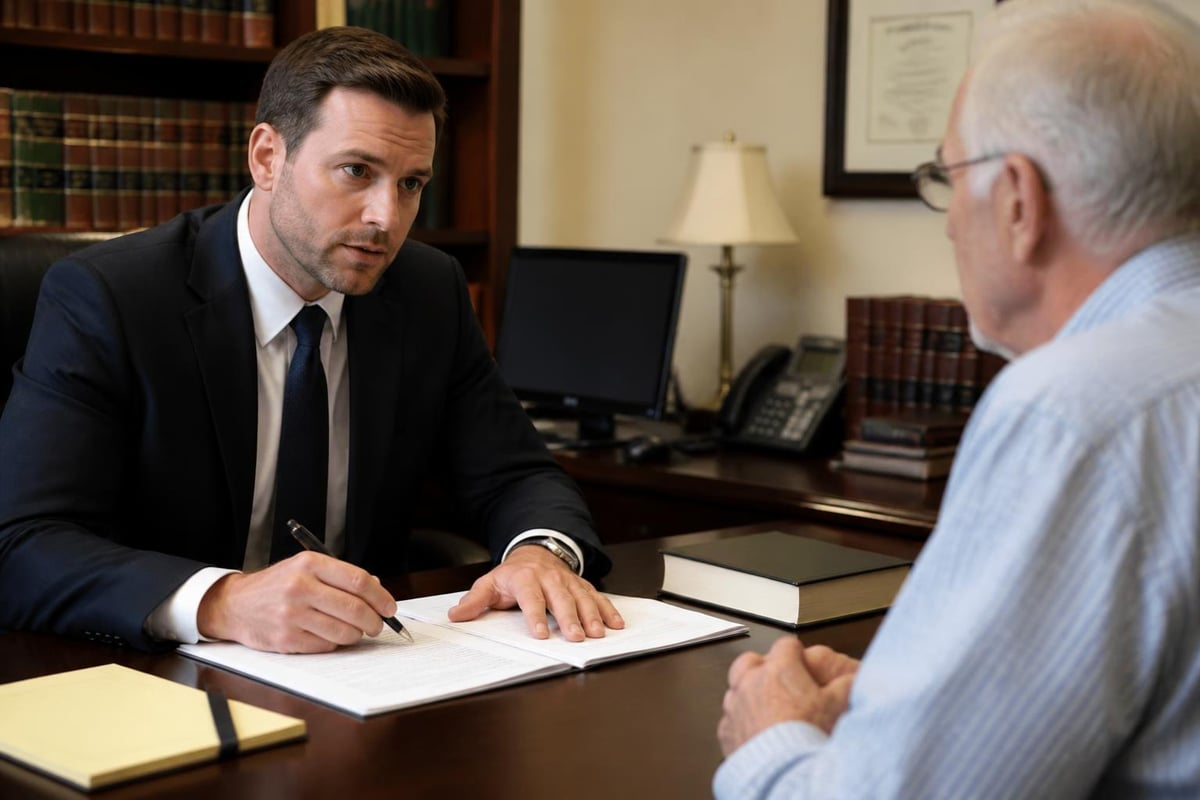
When you die, your executor has nine months to file Form 706 with the IRS. Miss that deadline or make mistakes, and the penalties stack up fast. An estate tax lawyer prepares that return, values assets correctly, claims available deductions, and makes portability elections so your surviving spouse can use your unused exemption.
Trusts and Tax Planning
Trusts are the backbone of estate tax planning. Revocable living trusts avoid probate but don't save estate tax. Irrevocable trusts remove assets from your taxable estate. An estate tax lawyer will draft:
- Irrevocable life insurance trusts (ILITs) to keep life insurance proceeds out of your estate
- Grantor retained annuity trusts (GRATs) to transfer appreciation to heirs tax-free
- Qualified personal residence trusts (QPRTs) to move your home out of your estate
- Charitable remainder trusts (CRTs) for income now, charity later, tax deduction today
Each trust has IRS requirements. Mess up the drafting and the IRS won't recognize it. Your estate pays tax on assets you thought you'd sheltered. That's expensive incompetence.
Dealing With the IRS on Estate Matters
The IRS audits estate tax returns. They question valuations, challenge deductions, and dispute whether transfers were completed gifts or still part of the estate. If your estate gets audited, you need an estate tax lawyer who understands both IRS audit procedures and estate tax law.
Sometimes estates can't pay the tax owed. The IRS can file tax liens against estate assets or pursue heirs for unpaid liabilities. An estate tax lawyer negotiates payment plans, challenges incorrect assessments, and protects beneficiaries from IRS collection actions.
When You Need an Estate Tax Lawyer
Not everyone needs one. If your estate is under $13 million and you don't own a business, vacation homes in multiple states, or complicated investment structures, a basic estate plan from a general attorney might suffice. But certain situations demand a specialist.
You need an estate tax lawyer if:
- Your estate exceeds the federal exemption. The $13.99 million exemption is scheduled to drop to around $7 million in 2026 unless Congress acts. If you're close to that line, plan now.
- You live in a state with its own estate or inheritance tax. Twelve states and D.C. impose estate taxes with lower exemptions than federal. Oregon's starts at $1 million. Maryland has both an estate tax and an inheritance tax.
- You own a business. Valuation gets complicated. An estate tax lawyer works with appraisers to establish fair market value and structures buy-sell agreements funded by life insurance.
- You have beneficiaries with special needs. You need a special needs trust that preserves government benefits. Drafting these wrong disqualifies your heir from SSI or Medicaid.
- You're making large lifetime gifts. The gift tax exemption is unified with the estate tax exemption. Give away $13.99 million during life, and you've used up your estate tax exemption too. File Form 709 wrong and you'll hear from the IRS.
| Situation | Why You Need a Lawyer | What They Do |
|---|---|---|
| Estate over $13.99M | Federal estate tax applies | Draft trusts, file Form 706, minimize tax |
| Business ownership | Valuation disputes, succession | Appraisal, buy-sell agreements, structure |
| State estate tax | Lower exemption thresholds | Multi-state planning, trust situs |
| Blended families | Competing beneficiary claims | Marital trusts, QPRTs, clear directives |
| IRS audit of estate | Penalties, interest, liens | Representation, negotiations, appeals |
High Net Worth Doesn't Always Mean Ultra-Wealthy
You don't need a private jet to need an estate tax lawyer. Real estate in expensive markets pushes people over the exemption. A paid-off home in Tampa worth $1.2 million, retirement accounts totaling $3 million, life insurance with a $2 million death benefit, and a small business valued at $8 million puts you at $14.2 million. You're over the line.
People forget that life insurance counts toward your estate unless it's owned by an ILIT. Your 401(k), IRA, Roth IRA-all countable. The vacation cabin you bought for $200,000 in 1995 that's now worth $1.8 million. It adds up faster than you think.
Estate Tax Law Changes You Should Know
Congress changes estate tax law constantly. The Tax Cuts and Jobs Act of 2017 doubled the exemption from roughly $5.5 million to $11.2 million (adjusted for inflation annually). That increase sunsets December 31, 2025. On January 1, 2026, the exemption drops back unless Congress extends it.

If you've made large gifts relying on the high exemption, you're likely protected by anti-clawback regulations. But future gifts and your estate at death will be measured against the lower exemption. An estate tax lawyer monitors these changes and adjusts your plan accordingly. Estate planning experts recommend reviewing your plan every three to five years, or whenever tax law shifts significantly.
Portability Changed the Game
Before 2011, if you died and didn't use your full estate tax exemption, the unused portion vanished. Your surviving spouse had their own exemption but couldn't use yours. The 2010 Tax Relief Act introduced portability, allowing a surviving spouse to claim the deceased spouse's unused exemption.
But portability isn't automatic. Your executor must file Form 706 and make a portability election, even if your estate doesn't owe tax. Miss that filing and your spouse loses millions in exemption. I've seen estates fail to file because they assumed they were under the threshold. Estate tax portability election mistakes cost families hundreds of thousands in unnecessary taxes.
An estate tax lawyer ensures that election gets made correctly and timely. It's a one-time opportunity. Blow it and it's gone forever.
How Estate Tax Lawyers Work With Other Professionals
Your estate tax lawyer doesn't work in isolation. Effective estate planning requires coordination with your CPA, financial advisor, insurance agent, and sometimes a trust company. The lawyer drafts the legal documents. Your CPA handles income tax reporting and advises on tax-efficient liquidation of assets. Your financial advisor restructures investments to align with your estate plan.
When someone dies, the estate tax lawyer often works alongside the estate's CPA. The lawyer handles the legal filings and court proceedings. The CPA prepares the estate's income tax returns (Form 1041) and assists with asset valuation. Together they ensure compliance with both IRS requirements and state probate law.
What to Look for in an Estate Tax Lawyer
Not all tax attorneys handle estate work. Some focus on tax controversy and IRS disputes. Others work exclusively on corporate tax. You need someone with specific estate and gift tax experience.
Ask about:
- Years practicing estate tax law specifically. General tax experience doesn't count.
- Familiarity with your state's estate and inheritance tax laws. State rules vary wildly.
- Involvement in IRS estate tax audits. Have they defended valuations in Tax Court?
- Continuing education in estate planning. Tax law changes. Do they keep up?
Check if they've published articles or spoken at estate planning seminars. Academic resources on estate planning often cite practitioners who are thought leaders in the field. Credentials matter less than actual experience, but designations like the Accredited Estate Planner (AEP) indicate serious commitment to the field.
Common Estate Tax Mistakes That Cost Families
I've cleaned up a lot of messes. Most stem from DIY estate planning or hiring an attorney who doesn't specialize in estate tax. Here are the expensive errors I see repeatedly.
Failing to fund the trust. You pay an attorney to draft a beautiful revocable living trust, then never retitle your assets into it. The trust controls nothing. Your estate goes through probate anyway.
Improper beneficiary designations. Your will says your estate goes to your three kids equally. But your IRA names only your oldest as beneficiary because you set it up 20 years ago and forgot. The IRA passes outside the will. Two kids get nothing from your largest asset.
Ignoring state estate taxes. You structure everything to avoid federal estate tax but forget that your state imposes its own. New York's exemption is $7.16 million in 2026. Plan for federal, pay state tax anyway.
Not updating the plan after divorce or remarriage. Your ex-spouse is still the beneficiary on your life insurance. You die. She gets $3 million. Your current spouse and kids get the house with a mortgage.
Making gifts without filing Form 709. You give your daughter $100,000 for a down payment. That's over the annual exclusion ($18,000 in 2026). You don't file a gift tax return. The IRS finds out during the estate tax audit. Penalties and interest pile up.
| Mistake | Consequence | Fix |
|---|---|---|
| Unfunded trust | Probate, delays, expense | Retitle assets to trust |
| Wrong beneficiaries | Assets go to unintended heirs | Review and update annually |
| Skipping Form 709 | IRS penalties, audit risk | File gift tax returns timely |
| No portability election | Lost exemption for spouse | File Form 706 within 9 months |
| DIY trust drafting | Invalid trust, tax liability | Hire an estate tax lawyer |
Estate Tax Lawyer vs. General Estate Planning Attorney
Estate planning attorneys handle wills, trusts, powers of attorney, and healthcare directives. They're generalists. Most of their clients don't face estate tax. An estate tax lawyer focuses on minimizing tax liability for high-net-worth individuals. They understand the Internal Revenue Code sections that govern estates, gifts, and generation-skipping transfers.
If your estate is under $5 million, a general estate planning attorney probably works fine. If you're approaching the exemption threshold or already over it, you need someone who practices estate tax law daily. The difference in fees is negligible compared to the tax you'll save.
Costs and Fee Structures
Estate tax lawyers charge in different ways. Some bill hourly, typically $400 to $800 per hour depending on location and experience. Others offer flat fees for specific services like drafting an ILIT or filing Form 706. Complex estate plans involving multiple trusts, business succession, and multi-generational planning can run $15,000 to $50,000 or more.
That sounds expensive until you compare it to estate tax. The federal rate is 40% on amounts over the exemption. If an estate tax lawyer saves you $2 million in taxes through proper planning and their fee is $30,000, that's a 6,567% return on investment.
Some tax attorneys offer free consultations to assess your situation and quote a fee. That initial meeting helps you understand whether you need their services and what the engagement will cost.

Trust Administration and Post-Death Responsibilities
Your estate tax lawyer's job doesn't end when you die. Someone has to administer the trusts you created. If you set up an irrevocable trust, it needs a trustee. That trustee has fiduciary duties-legal obligations to manage the trust for the beneficiaries' benefit. Screw it up and beneficiaries can sue.
An estate tax lawyer guides trustees through their responsibilities. They advise on distribution decisions, tax filings for the trust, and compliance with trust terms. Many trusts require annual accounting to beneficiaries. The lawyer ensures those accountings meet legal standards.
Trustees often hire the estate tax lawyer as ongoing counsel to the trust. The trust pays the legal fees as an administrative expense. It's money well spent to avoid personal liability for mistakes.
Generation-Skipping Transfer Tax
If you're leaving assets to grandchildren or great-grandchildren, there's another tax layer: the generation-skipping transfer (GST) tax. It's also 40%, and it's in addition to estate tax. The GST exemption equals the estate tax exemption ($13.99 million in 2026), but you have to allocate it correctly.
An estate tax lawyer allocates GST exemption to trusts and direct gifts to skip persons. Mess this up and your grandchildren pay 40% tax on top of whatever estate tax applied. Proper allocation is technical, formula-driven, and absolutely critical for multi-generational wealth transfer.
Working With an Estate Tax Lawyer in Florida
Florida has no state estate tax. That's one reason wealthy people retire here. But if you moved from a state with estate tax, or if you own property in multiple states, you still have planning to do. Florida residents with a vacation home in North Carolina face that state's estate tax if they die owning the property.
Tax and real estate attorneys in Florida often deal with multi-state estate issues. They coordinate with attorneys in other jurisdictions to ensure your plan works everywhere you own assets. They advise on whether to put out-of-state real estate in a separate LLC or trust to avoid ancillary probate.
Florida also has strong asset protection laws. An estate tax lawyer can structure your plan to protect assets from creditors while still achieving tax efficiency. The homestead exemption, tenancy by the entireties, and irrevocable trust planning all play a role.
An estate tax lawyer protects your wealth from unnecessary taxation and ensures your assets pass to your heirs according to your wishes. Whether you need trust drafting, Form 706 filing, or IRS audit defense, the right legal guidance makes the difference between preserving your legacy and watching the government take 40%.
The Law Offices of Darrin T. Mish, P.A. has helped clients navigate complex tax issues for more than three decades, including estate tax planning and IRS disputes. If you're facing estate tax questions or need help resolving IRS problems, a free consultation can clarify your options and put you on the path to resolution.