

I’m Darrin Mish. Tampa tax attorney, 32 years in, more than $100 million in IRS debt resolved. What follows isn’t theory – it’s what I’ve actually watched work.
You just received a settlement offer on that crushing credit card debt you've been carrying for years. Relief washes over you as you imagine finally being free from those monthly bills. But before you celebrate too hard, there's something important you need to know: the IRS might consider that forgiven debt as taxable income. Understanding the connection between debt relief and taxes can save you from an unwelcome surprise when tax season rolls around. Let me walk you through everything you need to know about how debt forgiveness impacts your tax situation.
Why Does the IRS Consider Forgiven Debt as Income?
Here's the basic principle that trips up so many people: when a creditor forgives or cancels your debt, the IRS generally views that canceled amount as income you've received. Think about it from the tax code's perspective. You borrowed $10,000, spent it, and now you don't have to pay it back. In the government's eyes, you've essentially gained $10,000 in wealth.
The IRS explains the tax implications of canceled debt through a straightforward rule. If a creditor cancels $600 or more of your debt, they're required to send you Form 1099-C, Cancellation of Debt. This form reports the canceled amount to both you and the IRS, and you'll typically need to include it as income on your tax return.
The Form 1099-C: Your Official Notice
When you settle a debt or have it forgiven, you'll receive Form 1099-C by January 31st of the following year. This document shows:
- The amount of debt canceled
- The date of cancellation
- The creditor's information
- Whether you were personally liable for the debt
Don't ignore this form when it arrives. The IRS receives a copy too, and they'll expect to see that income reported on your return unless you qualify for an exception.

Major Exceptions That Could Save You From Taxes
Not all forgiven debt creates a tax headache. Several important exceptions exist that might eliminate or reduce your tax liability from debt relief and taxes situations. Let's explore the most common ones that could apply to your circumstances.
Bankruptcy Discharge
If your debt was discharged through bankruptcy proceedings, you generally don't owe taxes on that canceled amount. This is one of the most powerful protections available. When you file for bankruptcy under Title 11 of the United States Code, debts wiped out in that process aren't considered taxable income.
You'll need to file Form 982, Reduction of Tax Attributes, with your tax return to claim this exclusion. This form tells the IRS that your debt was canceled under bankruptcy protection.
Insolvency Exception
Were you insolvent when the debt was canceled? This might be your ticket to tax relief. Insolvency means your total debts exceeded the fair market value of your total assets immediately before the debt cancellation. Understanding when debt cancellation is tax-free often hinges on proving insolvency to the IRS.
Here's a simple example:
| Assets | Amount | Debts | Amount |
|---|---|---|---|
| Home equity | $50,000 | Mortgage | $180,000 |
| Car value | $8,000 | Credit cards | $25,000 |
| Bank accounts | $2,000 | Personal loans | $15,000 |
| Total Assets | $60,000 | Total Debts | $220,000 |
In this case, you're insolvent by $160,000. If $10,000 of credit card debt is forgiven, you can exclude it from income because you were insolvent when it was canceled.
Qualified Principal Residence Indebtedness
Between 2007 and 2025, Congress provided special relief for homeowners who had mortgage debt forgiven on their primary residence through foreclosure, short sale, or loan modification. While this provision has expired and been extended multiple times, it's worth checking current law when you're dealing with mortgage forgiveness.
This exception only applies to debt used to buy, build, or substantially improve your main home, and it's secured by that home. Investment properties and second homes don't qualify.
Types of Debt and Their Tax Treatment
Different types of debt receive different treatment when canceled. Understanding these distinctions helps you navigate the complexities of debt relief and taxes more effectively.
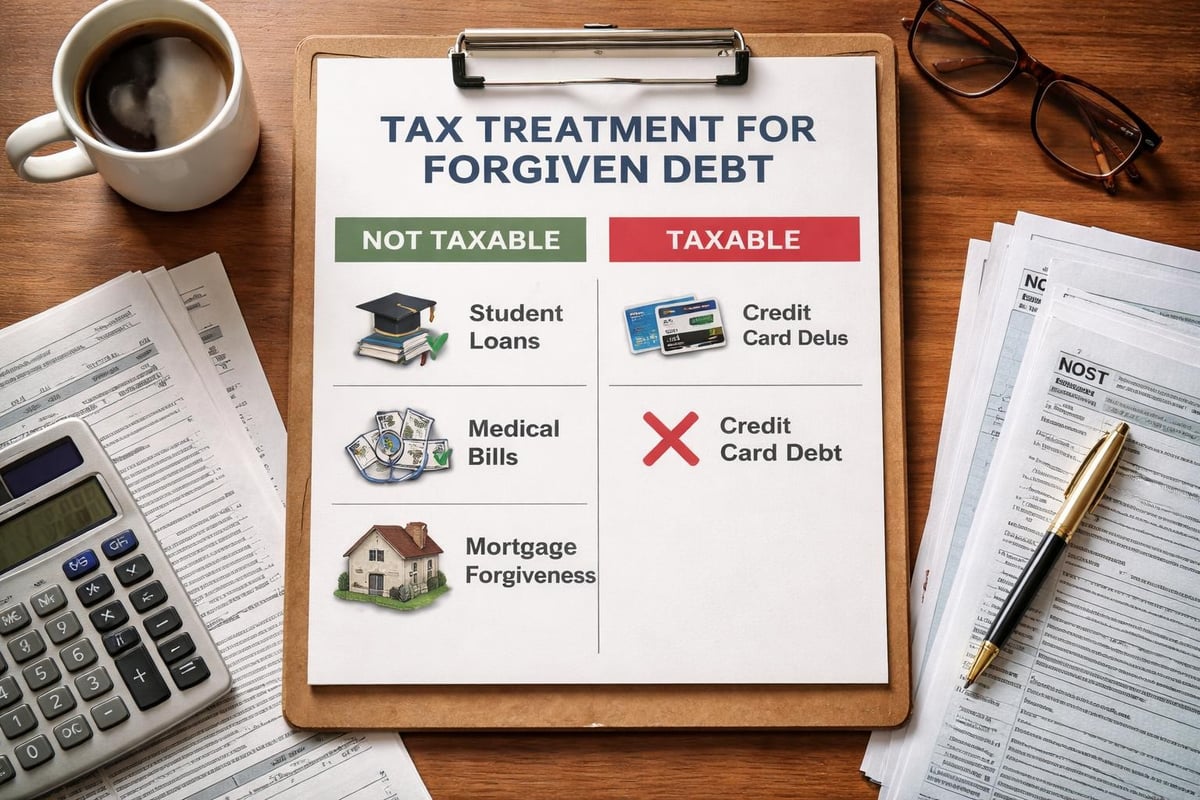
Credit Card Debt Settlement
When you negotiate with credit card companies to settle your balance for less than you owe, that's when tax consequences of debt settlement become most relevant. Credit card debt is typically considered recourse debt, meaning you're personally liable for it.
If you settle a $15,000 credit card balance for $8,000, the $7,000 difference is generally taxable income unless you qualify for an exception. Many people who successfully negotiate credit card settlements don't realize they might face a tax bill until Form 1099-C arrives.
Student Loan Forgiveness
Student loan forgiveness creates unique tax situations. Prior to recent changes, most forgiven student loan debt was taxable. However, the American Rescue Plan Act of 2021 made student loan forgiveness tax-free through 2025. This means if your student loans are forgiven through income-driven repayment plans or other programs during this period, you won't owe federal income tax on the forgiven amount.
After 2025, unless Congress extends this provision, student loan forgiveness will likely return to being taxable income. State tax treatment may vary regardless of federal rules.
Medical Debt
Medical debt forgiven by hospitals or healthcare providers follows the same general rules as other canceled debt. However, if you can prove insolvency when the debt was canceled, you may avoid taxation. Many people facing significant medical debt are indeed insolvent, making this exception particularly relevant for understanding IRS tax debt help in medical situations.
How to Calculate Your Tax Liability on Forgiven Debt
When you receive a Form 1099-C and can't claim an exception, you need to calculate how much tax you'll actually owe. The forgiven debt gets added to your other income for the year, and you'll pay taxes based on your marginal tax rate.
Let's walk through an example:
- Your regular income for 2026: $55,000
- Canceled credit card debt: $12,000
- Total taxable income: $67,000
If your marginal tax rate is 22%, you'd owe approximately $2,640 in additional federal tax on that forgiven debt ($12,000 x 22%). This doesn't include any state income tax implications.
Planning for the Tax Impact
You have several options when facing taxes on debt relief and taxes situations:
- Set aside funds when settling: If you know you're settling a debt, calculate the potential tax and save accordingly
- Adjust your withholding: Increase withholding from your paycheck to cover the anticipated tax
- Make estimated tax payments: Send quarterly payments to the IRS to avoid underpayment penalties
- Negotiate payment arrangements: If you can't pay the tax all at once, the IRS offers payment plan options
Documenting Your Exceptions and Exclusions
If you qualify for an exception to taxation on forgiven debt, proper documentation is critical. The IRS won't just take your word for it. You need to prove your eligibility.
Proving Insolvency
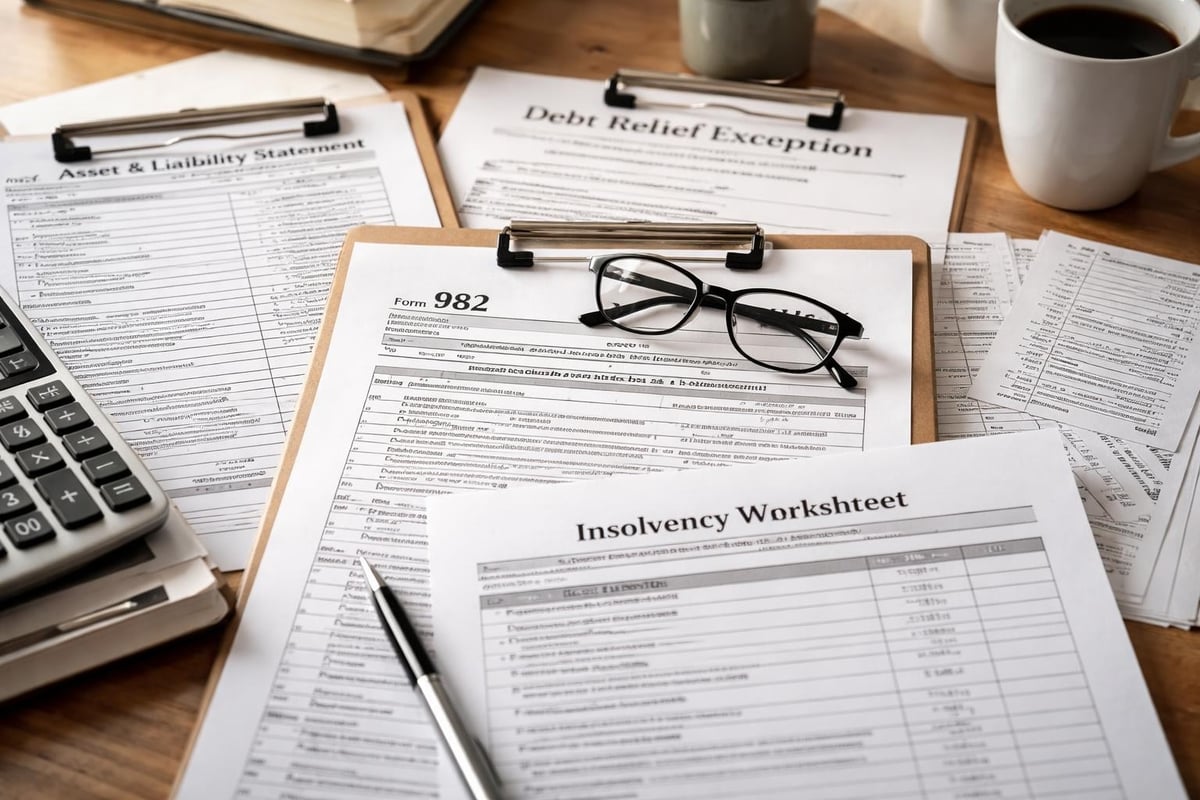
To claim the insolvency exception, you must complete Form 982 and potentially attach a detailed insolvency worksheet. This worksheet should list:
- Every asset you owned and its fair market value on the cancellation date
- Every debt you owed on that same date
- The calculation showing your liabilities exceeded your assets
- Supporting documentation (bank statements, property valuations, loan statements)
Keep these records for at least three years after filing, or longer if you want extra protection. The burden of proof rests on you if the IRS questions your claim.
Bankruptcy Documentation
For bankruptcy discharge exclusions, you'll need:
- The bankruptcy case number
- The date of discharge
- Court documentation showing which debts were discharged
- Form 982 properly completed
Most bankruptcy attorneys provide discharge papers that clearly show what debts were eliminated, making this exception relatively straightforward to document.
Common Mistakes to Avoid
Having worked with countless taxpayers over the years, I've seen some recurring mistakes that create unnecessary problems with debt relief and taxes. Let me help you avoid these pitfalls.
Ignoring Form 1099-C
Some people receive Form 1099-C and simply ignore it, hoping the IRS won't notice. This is a terrible strategy. The IRS definitely has a copy, and their computers will flag the missing income when they match your return against the forms they've received. This often leads to automated notices, penalties, and interest charges.
Claiming Exceptions Without Proper Documentation
You might genuinely qualify for an exception, but if you can't document it properly, you'll struggle if the IRS questions your return. Always complete Form 982 correctly and maintain thorough records supporting your claim.
Not Seeking Professional Guidance
The tax implications of debt settlement and forgiveness can be complex, especially when multiple debts are involved or when you're dealing with both IRS tax debt and private creditor settlements. Working with experienced tax resolution professionals helps ensure you're handling everything correctly.
State Tax Considerations
While we've focused primarily on federal tax implications, don't forget about state taxes. Not all states follow federal tax treatment of canceled debt. Some states may tax forgiven debt even when it's excluded from federal income.
For example, California doesn't conform to all federal exclusions for canceled debt. If you live in a state with income tax, research how your state treats debt forgiveness or consult with a tax professional familiar with your state's rules.
When Debt Relief Creates IRS Debt
Here's an ironic situation I've seen many times: you finally escape from crushing private debt through settlement or forgiveness, only to discover you now owe the IRS for taxes on that forgiven amount. This can feel like jumping from the frying pan into the fire.
The good news? IRS tax debt often comes with more flexible resolution options than private creditor debt. The IRS offers various tax relief programs that can help you manage this new obligation, including:
- Installment agreements that spread payments over time
- Currently Not Collectible status if you're facing financial hardship
- Offer in Compromise to settle for less than the full amount
- Penalty abatement in certain circumstances
Understanding your options for managing resulting tax debt is just as important as understanding the initial tax consequences of debt relief.
Record-Keeping Best Practices
Proper records make dealing with debt relief and taxes much smoother. Start maintaining a dedicated file as soon as you begin negotiating debt settlements or enter programs that might result in forgiveness.
Your file should include:
- All correspondence with creditors about settlements or forgiveness
- Copies of settlement agreements
- Proof of payments made
- Form 1099-C when received
- Documentation of your financial situation at the time of cancellation
- Copies of filed tax returns and Form 982
| Document Type | Retention Period | Purpose |
|---|---|---|
| Form 1099-C | 7 years | Proof of reported cancellation |
| Form 982 | 7 years | Support for claimed exceptions |
| Insolvency worksheet | 7 years | Prove insolvency calculation |
| Settlement agreements | Permanent | Legal record of debt resolution |
| Supporting financials | 7 years | Verify asset/liability values |
Tax Planning Opportunities
Sometimes you have control over when debt is forgiven, which creates planning opportunities. If you're negotiating a settlement and expect to be in a lower tax bracket next year, you might consider delaying the settlement until January to push the tax consequence into the following year.
Similarly, if you're on the cusp of insolvency, timing matters. Being insolvent by even $1 on the cancellation date can make a significant difference in your tax outcome.
Resources for Additional Guidance
The IRS provides several helpful resources for understanding debt cancellation and its tax implications. The official IRS guidance on debt forgiveness explains the basic principles in plain language. For more detailed information, you can review comprehensive IRS publications on cancellation of debt income.
Third-party resources also provide valuable context. Organizations like Debt.org explain tax implications in consumer-friendly terms that complement the official IRS guidance.
Moving Forward After Debt Relief
Once you've navigated the tax implications of debt relief, it's important to use this fresh start wisely. Create a budget that prevents future debt accumulation, build an emergency fund, and stay current on all tax obligations going forward.
If you're dealing with both delinquent taxes and private debt, prioritize strategically. Sometimes resolving IRS issues first makes sense because tax debt carries special collection powers like wage garnishment protections and liens that private creditors don't have.
Remember that debt relief, while potentially creating a tax consequence, still often leaves you better off financially than continuing to carry high-interest debt you can't afford. The key is being prepared for the tax impact rather than being blindsided by it.
Understanding the relationship between debt relief and taxes doesn't have to be overwhelming when you have the right guidance and support. Whether you're facing tax consequences from recently forgiven debt or trying to plan ahead before settling with creditors, professional tax help makes all the difference. The Law Offices of Darrin T. Mish, P.A. has spent over 32 years helping taxpayers across the globe navigate complex IRS challenges, from managing tax debt resulting from debt forgiveness to negotiating comprehensive resolution strategies. If you're uncertain about how debt relief will impact your tax situation or you're already dealing with IRS problems from forgiven debt, schedule a free consultation to explore your options and find the personalized solution that works for your unique circumstances.